
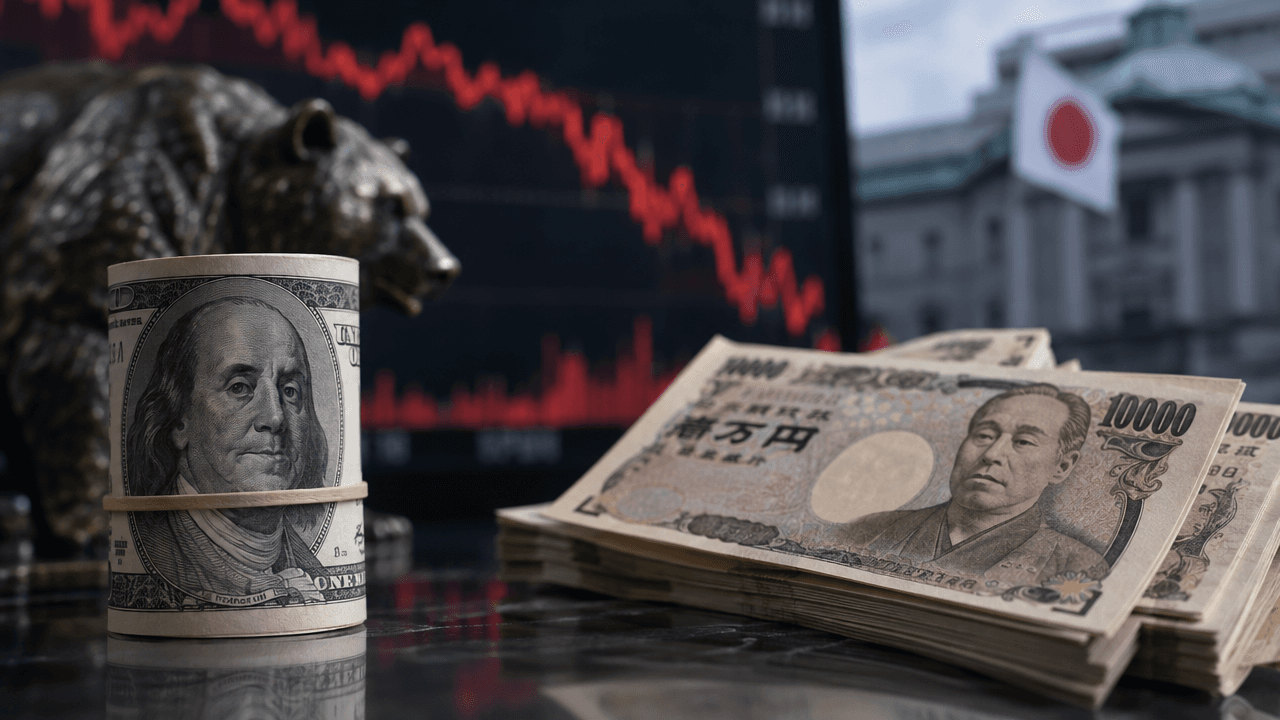
The foreign exchange market is being pulled in two directions. The U.S. dollar is benefiting from renewed demand for defensive assets, while the Japanese yen is strengthening even more decisively as investors reduce exposure to riskier markets. USD/JPY fell roughly 0.5% toward 157.70, reflecting a stronger yen despite continued support for the greenback. [9]
The move highlights an important feature of currency markets: safe-haven currencies do not always rise or fall together. When investors become nervous, they may buy both the dollar and the yen, but the preferred currency can change depending on interest rates, bond yields, the source of the risk and expectations for central-bank policy.
Why The Dollar Is Finding Safe-haven Support
The immediate catalyst has been a broad retreat from risk. Technology and artificial-intelligence shares came under heavy selling pressure, sending equity markets sharply lower. The Nasdaq dropped 5.52% in one session, while the S&P 500 fell 4.36%, encouraging investors to reduce exposure to volatile assets. [6]
During periods of market stress, the dollar often attracts demand because it is the world’s primary reserve currency and sits at the center of global funding markets. Investors and institutions commonly hold or acquire dollars when they need liquidity, want to reduce currency risk or must meet obligations denominated in U.S. currency.
However, the dollar’s gains have been limited by falling Treasury yields. Lower yields can reduce the appeal of dollar-denominated assets, particularly when investors believe the Federal Reserve may eventually ease policy or when economic uncertainty creates demand for government bonds. Recent market reporting noted that lower Treasury yields were capping the dollar’s advance despite its defensive appeal. [1]
This creates a more balanced dollar outlook. The currency can receive support from fear in equity markets, but that support may weaken if falling stock prices trigger a larger decline in U.S. yields.
Why The Yen Is Outperforming
The yen has gained because it is receiving support from two separate forces: defensive demand and a more hawkish interpretation of Bank of Japan policy.
Japan’s currency has traditionally benefited when traders unwind riskier positions. During calm periods, investors may borrow yen at relatively low interest rates and use the funds to buy higher-yielding assets elsewhere. When volatility rises, those trades can be reduced. Investors then buy back yen, creating additional demand for the currency.
That process appears to be underway as market participants respond to the global equity selloff. The yen reached a one-week high near 157.27 per dollar before giving back part of its advance. [1] A lower USD/JPY reading means that fewer yen are required to purchase one dollar, which indicates yen appreciation.
The yen’s performance has also been supported by minutes from the Bank of Japan’s September meeting. The minutes showed that several officials saw room for further rate increases and that some policymakers could support a faster pace of tightening if inflation accelerated. [8]
The Bank of Japan’s policy rate was reported at 1.25%, a 31-year high, and the minutes suggested that officials were considering how quickly policy could move closer to a neutral setting. [8] Even if no immediate rate increase is delivered, the possibility of tighter policy can encourage traders to reassess the long-term cost of holding short-yen positions.
The Importance Of Interest-rate Expectations
Foreign exchange prices are driven not only by current interest rates but also by expectations about where rates are heading. For much of the past several years, the wide interest-rate gap between the United States and Japan weighed heavily on the yen. Investors could earn substantially more by holding dollar assets, while the Bank of Japan maintained comparatively accommodative policy.
That relationship becomes less straightforward when the Federal Reserve’s outlook softens and the Bank of Japan signals further tightening. Lower U.S. yields reduce the advantage of owning dollars, while higher expected Japanese rates improve the relative appeal of yen assets.
This does not mean the interest-rate gap has disappeared. Nor does it guarantee a lasting yen rally. Currency markets can quickly reverse if U.S. economic data strengthens, Treasury yields rebound or the Bank of Japan adopts a more cautious tone. The key point is that the yen is no longer relying solely on temporary safe-haven flows. It is also receiving support from a potentially more favorable policy backdrop.
What Traders Should Watch Next
The next major focus is the U.S. employment report. Payrolls data can significantly affect expectations for Federal Reserve policy, Treasury yields and the dollar. A stronger-than-expected report could push yields higher and revive dollar demand. A weak report could reinforce expectations for lower rates and provide additional support for the yen against the dollar.
Equity-market behavior will remain equally important. If the technology selloff stabilizes, some defensive yen buying may fade. Conversely, another wave of selling could encourage more investors to unwind leveraged positions and seek liquid safe-haven assets.
Traders should also monitor USD/JPY around recent price levels. The move toward 157.70 demonstrates that the pair can fall quickly when risk aversion and hawkish Bank of Japan expectations appear together. Yet a single decline should not automatically be treated as the beginning of a sustained trend.
Practical takeaways are clear. Watch U.S. Treasury yields alongside USD/JPY rather than analyzing the currency pair in isolation. Track equity volatility for clues about defensive flows. Read Bank of Japan communication for changes in the expected pace of tightening. Finally, manage position size carefully, because safe-haven trades can reverse rapidly when economic data changes the interest-rate outlook.
Conclusion
The latest move in USD/JPY reflects a contest between two safe-haven stories. The dollar is benefiting from its global liquidity and reserve-currency status, while the yen is gaining from defensive flows and expectations that the Bank of Japan may continue raising rates.
For traders, the most important lesson is that risk aversion alone does not determine the winner. The direction of bond yields, central-bank expectations and positioning all matter. As markets await U.S. payrolls and reassess the outlook for global equities, the yen’s ability to strengthen alongside a supported dollar will remain one of the clearest signals of changing conditions in the foreign exchange market.