
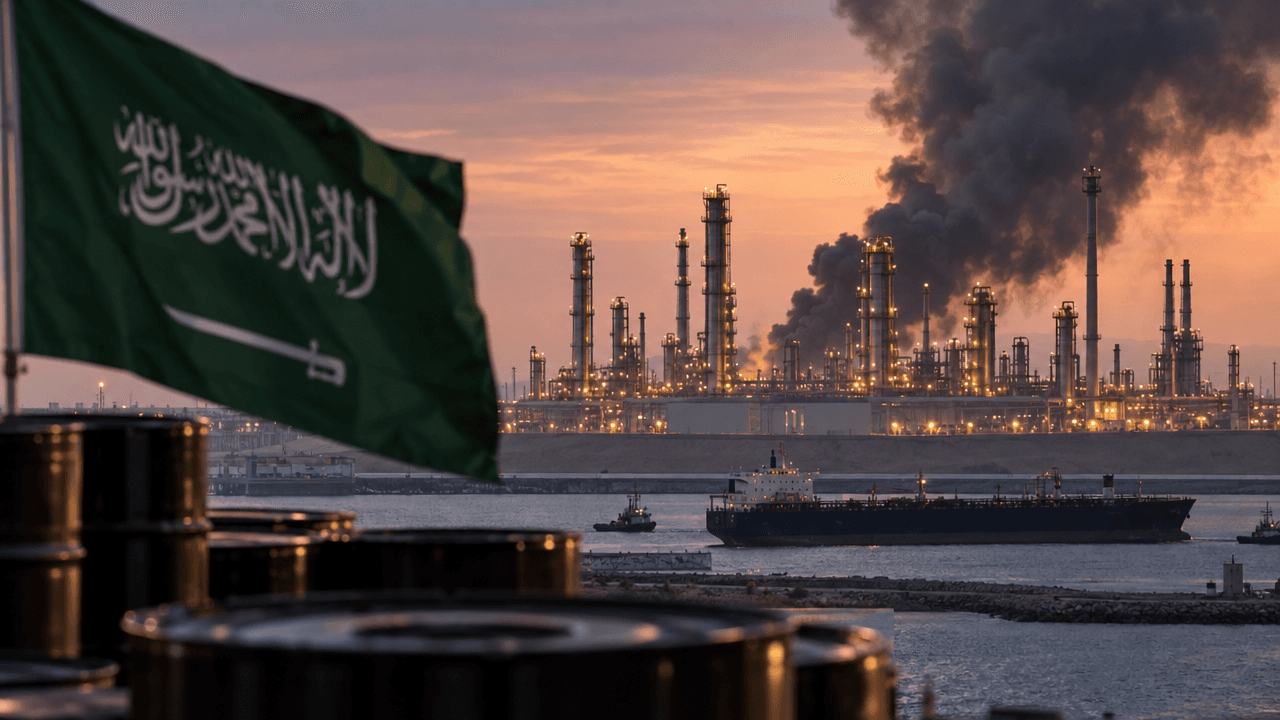
Oil futures surged as renewed conflict in the Middle East placed a fresh premium on the security of crude production, refining and shipping infrastructure. Reports that Yemen’s Houthi forces attacked Saudi Arabia’s Ras Tanura refinery pushed Brent crude close to $95 per barrel and lifted West Texas Intermediate above $83. Brent later settled at $94.61, a gain of $3.21, or 3.5%, while WTI rose $1.63, or 2%, to $83.68. [2]
The move highlights how quickly geopolitical risk can reshape energy markets. Even when physical supply has not yet been confirmed as disrupted, traders often reprice futures contracts immediately because a successful attack on major oil infrastructure could reduce exports, interrupt refinery operations or force shipping companies to reroute vessels.
Why The Attack Matters To Oil Markets
Ras Tanura is more than a refinery. The Saudi facility forms part of a major industrial complex and export terminal, giving it importance in both domestic processing and international crude flows. Any sustained damage could therefore affect refined-product availability, crude exports or the logistics used to move oil to overseas buyers. [1]
Saudi Arabia remains one of the world’s most important oil producers, so even a temporary threat to its infrastructure can influence global pricing. Oil markets do not need to lose millions of barrels immediately for prices to rise. Traders price the possibility of future disruption, especially when the threatened facility is located near other strategic energy assets.
This is known as a geopolitical risk premium. It represents the additional price investors are willing to pay for protection against an uncertain supply shock. The premium can expand quickly when attacks target energy infrastructure, but it can also fade if damage proves limited, production continues normally or diplomatic tensions ease.
Shipping Risks Add To The Pressure
The refinery reports arrived alongside concerns about maritime security in the region. Reports that ships had been struck by mines in the Strait of Hormuz added another layer of uncertainty for energy traders. The waterway is one of the world’s most important oil chokepoints, and any threat to tanker traffic can raise freight costs, delay deliveries and reduce the reliability of export schedules. [1]
Shipping disruptions can influence oil prices even without a formal blockade. Tankers may wait offshore, seek longer routes or require higher insurance premiums before entering areas considered dangerous. Those costs are eventually reflected throughout the supply chain, from producers and refiners to fuel wholesalers and consumers.
For traders, the combination of a threatened refinery and possible maritime disruption is more significant than either event in isolation. A refinery incident can affect processing capacity, while a shipping problem can restrict the movement of crude and finished products. Together, they raise concerns about whether the market could respond quickly enough to an unexpected shortfall.
The Market Is Balancing Risk Against Surplus Expectations
The sharp price increase does not mean traders have abandoned broader supply concerns. Before the attack reports, market participants were also considering the possibility of a global oil surplus. Expectations of ample supply can limit rallies because buyers may believe that additional barrels will eventually be available from producers outside the immediate conflict zone.
That tension explains why oil futures can rise sharply on breaking news and then give back part of the advance. On Thursday, Brent was reported near $94.71 in early Asian trading, while WTI reached $84.03, but later reports showed Brent trading lower as investors reassessed the likelihood and scale of an actual supply interruption. [1][3]
This price behavior is important for SimFi traders. A headline-driven rally may offer momentum, but it can reverse when follow-up information shows that facilities remain operational or that shipping routes are still functioning. Trading the first reaction without monitoring confirmation can create significant risk.
OPEC+ DECISIONS COULD AMPLIFY THE NEXT MOVE
The timing of the attack also matters because OPEC+ ministers are scheduled to meet on November 29 to discuss output policy for 2027. [7] Traders will be watching whether the group emphasizes market stability, maintains existing production plans or signals a willingness to adjust supply in response to changing conditions.
A geopolitical disruption combined with tighter OPEC+ policy could provide a stronger bullish catalyst for crude. By contrast, evidence of resilient production, rising exports or a cautious OPEC+ stance could reduce the risk premium. The meeting therefore gives oil markets a second major event to price alongside the security situation.
The key lesson is that oil prices respond not only to current production figures but also to expectations about future availability. Traders must evaluate both the physical market and the policy response.
Practical Takeaways For Traders
First, distinguish between a reported attack, confirmed damage and verified supply losses. These are separate stages, and prices can move substantially between them.
Second, monitor the spread between Brent and WTI, as well as the shape of the futures curve. Changes in near-term contracts can reveal whether traders are focused on immediate disruption or longer-term supply conditions.
Third, watch related markets. Freight rates, tanker insurance costs, refined-product prices and energy-sector equities can provide additional clues about whether the risk is becoming a real physical constraint.
Finally, manage position size carefully around geopolitical headlines and scheduled OPEC+ meetings. Wider spreads, faster price moves and sudden reversals can make stop-loss orders less reliable than expected.
Conclusion
The reported Saudi refinery attack has reminded oil traders that supply security remains a central market driver. Brent’s move toward $95 and WTI’s rise above $83 reflect more than a single headline; they reflect concerns about critical infrastructure, shipping routes and the potential for a wider regional escalation.
For now, the market is balancing those risks against expectations of plentiful supply and the upcoming OPEC+ meeting. The most durable price rally will require evidence of sustained production or export disruption. Until then, disciplined traders should treat the geopolitical premium as both an opportunity and a warning: the same uncertainty that creates momentum can also produce an abrupt reversal.