
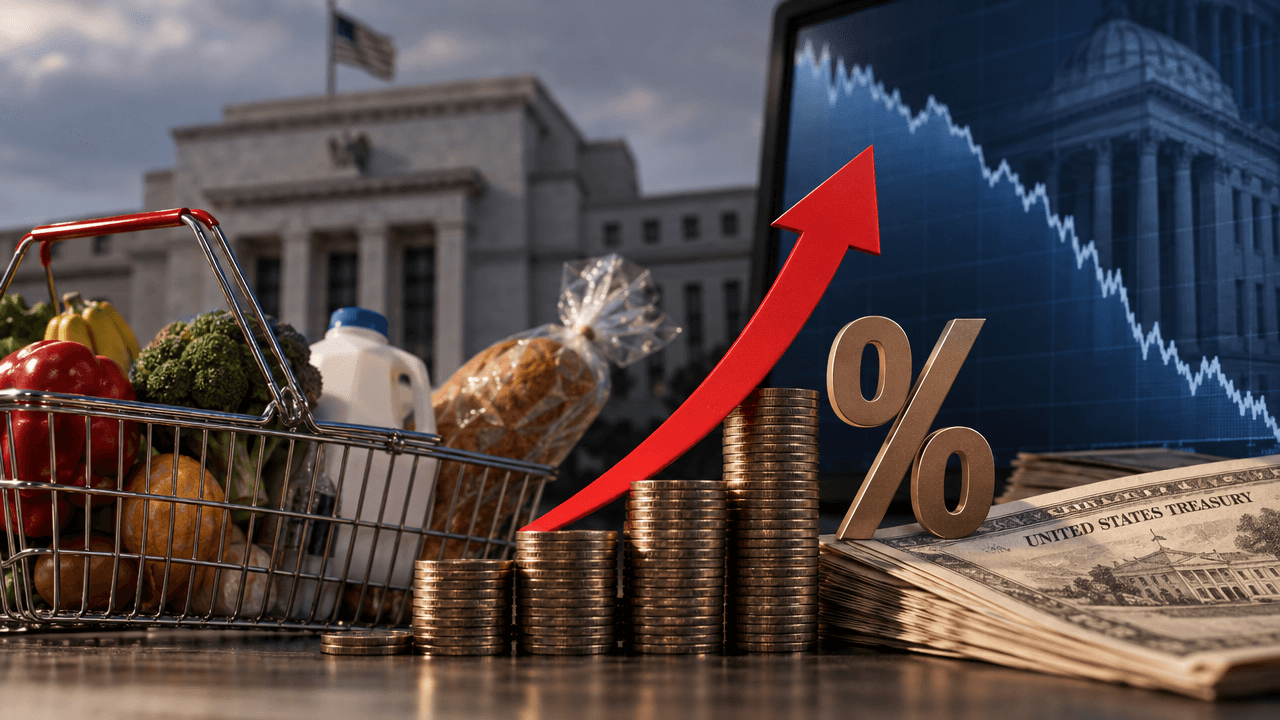
Inflation is proving harder to dislodge than policymakers and investors hoped. October’s U.S. Personal Consumption Expenditures price index rose 3.8% from a year earlier, nearly twice the Federal Reserve’s 2% target. Core PCE, which excludes food and energy, increased 3.3%, above economists’ 3.2% forecast. [1][2]
The report strengthened expectations that the Federal Reserve will need to keep monetary policy restrictive, with markets continuing to price in a possible 25-basis-point rate increase at the Fed’s December meeting. The data also raised questions about whether further tightening could be required in early 2027 if inflation remains persistent. [4][5]
Why The Pce Report Matters
The PCE price index is closely watched because it captures changes in consumer spending across a broad range of goods and services. It also accounts for shifts in consumer behavior, such as switching from expensive products to cheaper alternatives. For these reasons, the Fed generally gives PCE inflation more weight than the Consumer Price Index when assessing price stability.
The headline increase to 3.8% was significant, but the core reading may be more important for monetary policy. Food and energy prices can move sharply because of supply disruptions, weather, geopolitical developments, and commodity-market volatility. Core PCE attempts to identify the underlying inflation trend.
At 3.3%, core inflation remains well above the Fed’s target. The monthly core increase was 0.3%, matching expectations, but the annual rate accelerated from 3.1% in September. That suggests price pressures are not simply a temporary result of volatile energy or food costs. [3][11]
Why Rate-hike Expectations Strengthened
Interest rates influence inflation with a delay. When the Fed raises borrowing costs, mortgages, business loans, credit cards, and financing for investment generally become more expensive. Higher rates can reduce demand and help bring price growth back toward the central bank’s target.
The latest PCE figures give policymakers another reason to remain cautious about cutting rates. If inflation is still running above target, an early pivot toward easier policy could risk reigniting demand and slowing progress against inflation.
Markets were already expecting a December rate increase, so the report did not necessarily create an entirely new outlook. Instead, it reinforced the existing view that the Fed may need to deliver another hike and maintain restrictive policy for longer. Investors are now likely to focus on whether future data show improvement or additional acceleration.
For traders, the distinction between “one more hike” and “a longer period of high rates” is crucial. A single increase may already be reflected in asset prices. The more market-moving question is whether inflation forces the Fed to consider additional increases in January, March, or later in 2027.
The Treasury Yield Paradox
Normally, hotter inflation and stronger rate-hike expectations would be expected to push Treasury yields higher, particularly at the short end of the yield curve. Short-term yields are highly sensitive to expectations for the federal funds rate.
However, Treasury yields fell after the data. The two-year yield, which often tracks expectations for near-term Fed policy, declined during the session, while longer-term yields also moved lower. [4]
This apparent contradiction reflects the fact that markets respond to more than one force at a time. Investors were also seeking safety amid weakness in risk assets, including technology stocks. Strong demand for Treasuries can push bond prices higher and yields lower, even when inflation data point toward tighter policy. A flight to safety can temporarily overpower the inflation signal.
The move also shows why traders should avoid interpreting one market reaction in isolation. Falling yields do not automatically mean investors believe inflation is under control. In this case, they may reflect defensive positioning, changing growth expectations, or concern that tighter policy could weaken the economy.
What Traders Should Watch Next
The next phase of the market reaction will depend on whether incoming data confirms or challenges the October PCE report. Traders should monitor employment figures, wage growth, consumer spending, producer prices, and future inflation readings.
A particularly important signal will be whether core inflation begins to decline consistently. One elevated reading can be noisy, but several months of firm core inflation would make it harder for the Fed to justify a rapid shift toward lower rates.
Market participants should also watch the yield curve. Rising short-term yields alongside stable or falling long-term yields can indicate expectations for tighter policy in the near term but weaker economic growth later. Conversely, broad-based increases in yields may signal that investors are pricing a more persistent inflation problem.
For SimFi traders, this environment is an opportunity to practice scenario-based risk management. Before entering a position, consider how an asset might respond to three outcomes: inflation moving higher, inflation cooling, or inflation remaining stubbornly elevated. A hot inflation report may support the dollar and pressure rate-sensitive equities, while a softer report could produce the opposite reaction. But safe-haven flows, positioning, and economic-growth concerns can alter those typical relationships.
Conclusion
October’s PCE report delivered a clear message: U.S. inflation remains too high for the Federal Reserve to relax easily. Headline PCE reached 3.8%, while core PCE rose to 3.3%, strengthening expectations for another rate hike and keeping the prospect of restrictive policy alive. [7]
Yet the decline in Treasury yields demonstrated that markets are rarely driven by a single statistic. Inflation expectations, Fed policy, economic-growth concerns, and demand for safety can all influence prices at the same time.
The most important lesson for traders is to follow both the data and the market’s interpretation of that data. Understanding the difference between a policy signal and a broader risk-off reaction can help traders build more disciplined strategies in a changing interest-rate environment.