
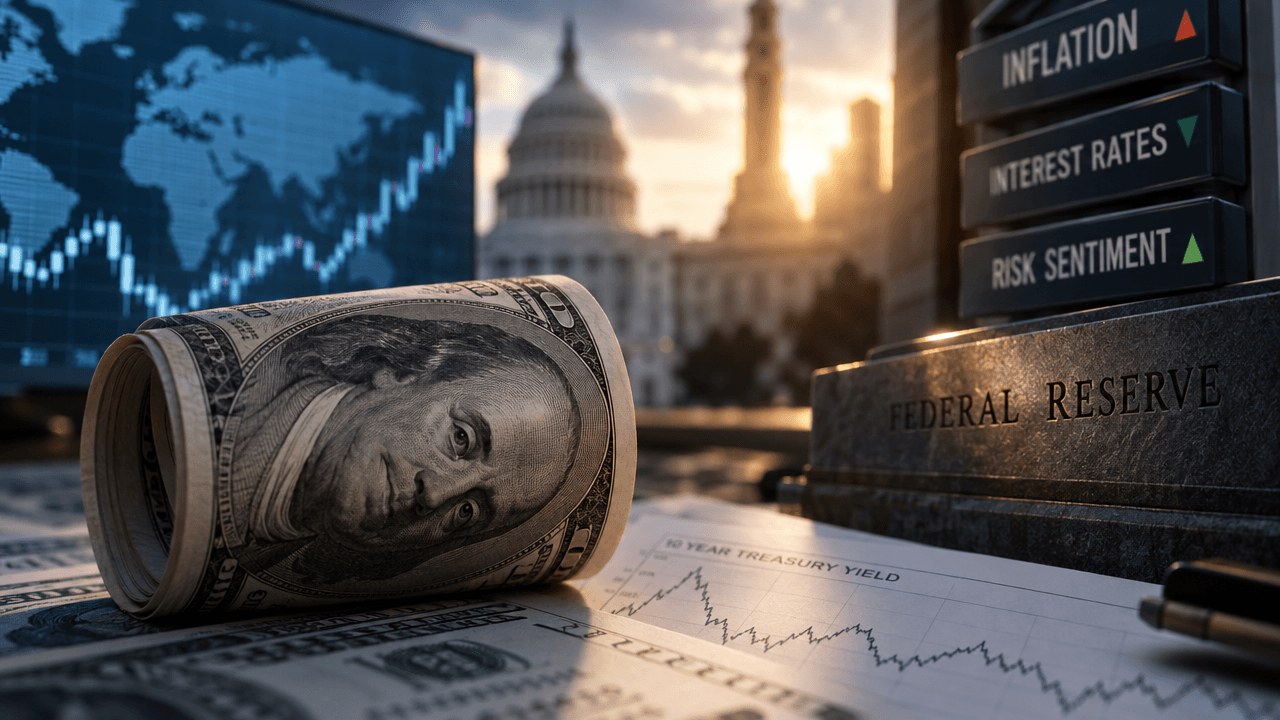
The U.S. dollar’s latest rally has paused, but the broader message from currency markets remains one of resilience. The U.S. Dollar Index slipped about 0.1% to 101.86 after climbing 0.6% in the previous session and reaching its highest level since April 2025. The modest decline shows that traders are taking profits, not necessarily abandoning the view that U.S. interest rates, Treasury yields, and inflation risks could continue supporting the greenback. [8]
Why The Dollar Rallyed
The dollar’s recent strength has been driven by a combination of monetary-policy expectations and rising bond yields. When Treasury yields increase, U.S. assets can become more attractive to international investors because they offer greater potential income. That can increase demand for dollars, particularly when markets believe the Federal Reserve will keep policy restrictive for longer.
The yield surge has been especially important. The 10-year Treasury yield recently approached 5.3%, while the 30-year yield moved near 5.64%, levels not seen since 2002. Higher long-term yields reflect concerns about persistent inflation, increased government borrowing, and the possibility that interest rates will remain elevated for an extended period. [5]
Energy prices have added to those concerns. Higher oil prices can lift headline inflation and make it more difficult for central banks to ease policy. For the Federal Reserve, that creates a challenging balance: economic growth may require caution, but renewed inflation pressure could justify holding rates higher or raising them further.
The dollar has therefore benefited from a changing interest-rate narrative. Earlier expectations of rapid policy easing have given way to speculation that the Federal Reserve may need to maintain a restrictive stance well into next year.
A Small Pullback, Not A Trend Reversal
The decline to 101.86 should be viewed in context. A one-day move of 0.1% is relatively small after a 0.6% advance, especially when the index has recently reached an 18-month high. Currency markets frequently retrace after a sharp move as traders lock in profits and reassess whether current prices already reflect the most optimistic expectations.
The dollar also faces natural resistance when it becomes expensive relative to other major currencies. A stronger greenback can reduce the value of overseas earnings for U.S. companies, make American exports less competitive, and increase the cost of dollar-denominated debt for emerging markets.
The euro and other major currencies can also rebound when local political or economic uncertainty begins to ease. In one recent pullback, the dollar weakened as the euro recovered and pressure in the U.S. Treasury market moderated. [3]
For traders, the key question is not whether the dollar fell slightly on one session. It is whether the index can remain above important support areas while Treasury yields stay elevated. A shallow pullback followed by renewed buying would reinforce the existing bullish trend. A deeper decline accompanied by falling yields would suggest that market expectations are shifting more substantially.
The Federal Reserve Remains The Main Driver
Federal Reserve expectations continue to shape every major move in the dollar. Markets have reduced the probability of an immediate rate increase, while still assigning meaningful odds to another hike later in the year. Recent pricing indicated roughly a 20% chance of an October increase, compared with a significantly higher probability of a December move. [2]
That distinction is important. Traders can expect the Fed to leave rates unchanged at its next meeting while still believing that additional tightening could occur later. A pause does not automatically signal that policymakers have finished raising rates. It may simply give officials more time to evaluate inflation, employment, consumer spending, and energy prices.
Recent Fed communication has reinforced that uncertainty. Governor Christopher Waller said further increases may be necessary to bring inflation back to the 2% target, although he also indicated that rate hikes do not need to occur at consecutive meetings. [4]
This leaves the dollar highly sensitive to incoming data. A hotter-than-expected inflation report or stronger employment figure could push Treasury yields higher and revive expectations for additional tightening. Softer data could have the opposite effect by encouraging traders to price fewer rate increases.
What Traders Should Watch Next
The most important market signals are the Dollar Index, Treasury yields, and economic data viewed together. Looking at the currency alone can lead to misleading conclusions. For example, a dollar decline may be temporary if yields continue rising. Conversely, a dollar rally may lose momentum if bond yields fall and traders begin anticipating easier Federal Reserve policy.
Traders should also monitor the relationship between the dollar and risk sentiment. The greenback often attracts demand during periods of market stress because it is widely used in global trade and finance. However, a strong dollar can create pressure elsewhere by tightening financial conditions for companies and governments that borrow in dollars.
For SimFi traders, the current environment offers a useful lesson in confirmation. A bullish dollar setup is stronger when the index is rising alongside Treasury yields and hawkish Fed expectations. A bearish setup becomes more credible when the index breaks support while yields decline and economic data weakens.
Risk management remains essential. Instead of reacting to a single headline, traders can define entry levels, stop-loss points, and maximum position size before taking a trade. Tracking scheduled inflation, employment, and Federal Reserve events can also help reduce the risk of entering during unpredictable volatility.
The dollar’s slip to 101.86 is best interpreted as a pause after a powerful rally rather than proof that the trend has ended. The next phase will depend on whether inflation remains persistent, Treasury yields stay high, and Federal Reserve officials continue signaling that policy may need to remain restrictive. For now, the greenback remains supported, but its advance is likely to become increasingly dependent on fresh economic evidence rather than momentum alone.