
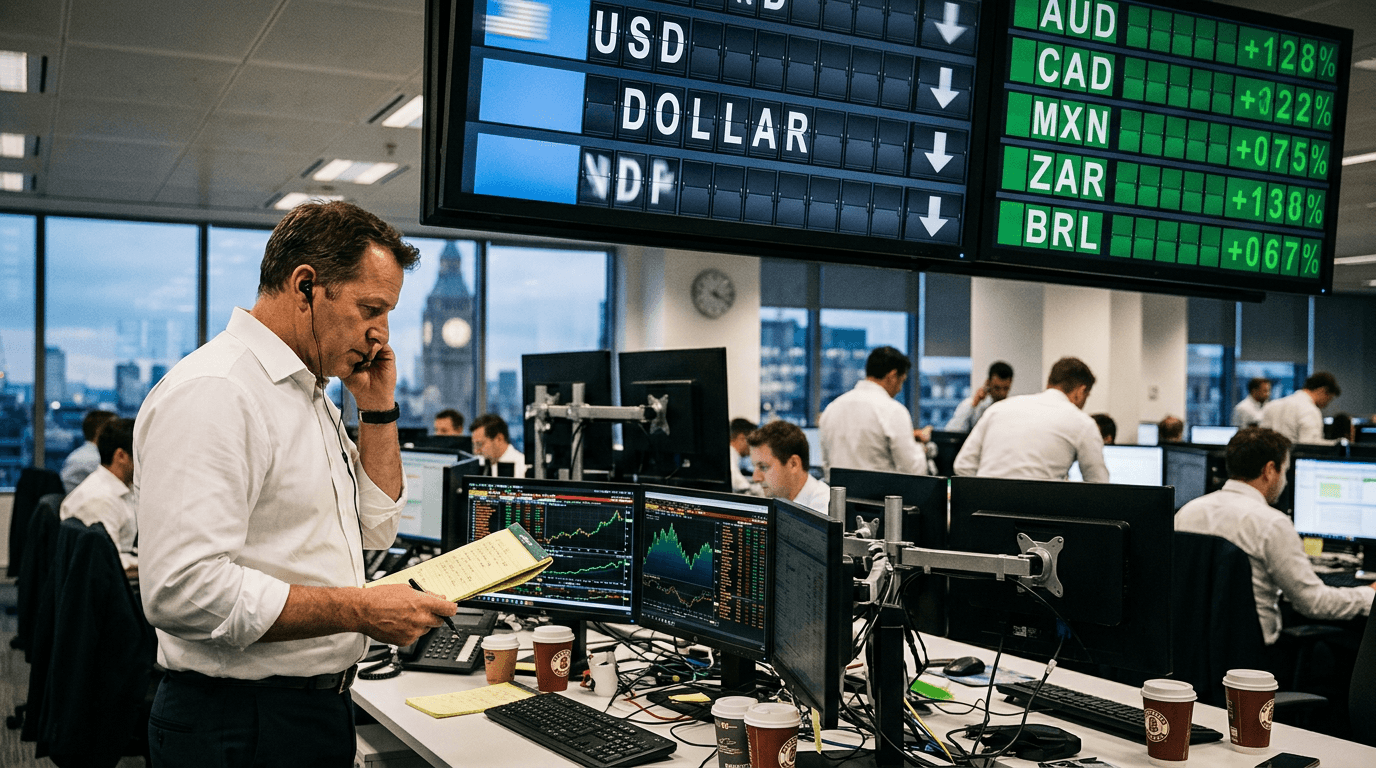
The latest pullback in the U.S. dollar is a textbook example of how quickly currency trends can shift when central bank communication softens, even against a backdrop of geopolitical tension.[1][3] After climbing on safe‑haven flows linked to Middle East risks and elevated oil prices, the greenback slipped as Federal Reserve minutes and recent commentary signaled a more cautious stance on future rate hikes.[1][4][11] For traders, the move underscores that it is the direction of expectations on Fed policy—rather than absolute levels—that drives the dollar’s momentum.[3][10]
Market Reaction: Dollar Gives Back Safe-haven Gains
Earlier in the week, the dollar had benefited from classic safe‑haven demand as investors sought shelter during escalating tensions between the U.S. and Iran and volatility in energy markets.[1][2][11][15] The dollar index touched recent highs as markets priced in the twin supports of geopolitical risk and lingering odds of further Fed tightening.[2][5][20]
Once the Fed minutes hit, however, the narrative changed. The dollar index eased, surrendering part of its safe‑haven premium and drifting lower from those peaks as traders reassessed how much additional tightening was realistically on the table.[1][4][10][14] Two‑year U.S. Treasury yields dipped in tandem, a clear signal that markets were trimming expectations for near‑term rate hikes.[6][12]
This kind of move is common around central bank releases: safe‑haven flows can push the dollar higher in the days before key events, only to unwind quickly if policy signals disappoint hawkish expectations.[3][6][10] For simulated FX traders, it’s a reminder not to chase late‑stage safe‑haven rallies without considering the policy calendar.
What The Fed Minutes Really Said
The Fed minutes did not announce a dramatic pivot, but the tone was less hawkish than feared—and that distinction was enough to move markets.[1][3][10][14] Officials reaffirmed their focus on bringing inflation back toward the 2% target, yet the discussion revealed increasing concern about the risks of keeping rates too high for too long.[3][7]
Several policymakers kept the door open to additional hikes if inflation remains sticky, but the overarching message emphasized data dependence and flexibility rather than a pre‑committed path of further tightening.[3][10][13] In previous months, investors worried the Fed might signal a willingness to “re‑accelerate” rate increases; the minutes instead suggested a central bank that is cautious, incremental, and not in a rush.[3][12]
Markets read this as a mild dovish surprise. Strategists highlighted that, compared with elevated expectations after recent statements, the minutes reflected more internal hesitation about future hikes.[1][3][10] As a result, the implied probability of additional tightening in coming meetings compressed, taking some of the shine off the dollar’s rate‑differential advantage.[3][8]
For traders, the takeaway is clear: it is not just the decision (hold vs. hike) that matters, but the tone of the discussion around future moves. Minutes can reveal the nuances behind a rate statement and trigger repricing even when policy settings are unchanged.[3][6][12]
Winners: High-beta And Commodity Currencies
As the dollar stepped back from its highs, high‑beta and commodity‑linked currencies found room to rally.[3][6][10] The euro and pound, which had been under pressure from the stronger dollar, caught a bid as the greenback softened, reversing part of their recent losses.[3][10] Emerging‑market currencies also saw some relief, with a less aggressive Fed path easing concerns about capital outflows and funding costs.[3][6]
Commodity currencies were among the notable beneficiaries. The New Zealand dollar, for instance, had already been supported by a domestic rate hike, and a softer dollar provided additional tailwind.[1] Similar dynamics often play out in the Australian dollar and Canadian dollar, where a weaker U.S. currency can amplify the effect of steady or firm commodity prices.[3][6]
High‑beta currencies—those that typically move more with global risk appetite—tend to outperform when the dollar’s safe‑haven bid fades and U.S. yields drift lower.[3][6][10] In the current environment, the combination of tempered Fed hawkishness and still‑elevated but stabilizing geopolitical risk has produced a more balanced FX landscape, rather than an outright flight to safety.
Trading Takeaways For Simulated Fx Traders
For traders using SimFi platforms, this episode offers several practical lessons in reading macro‑driven FX moves:
First, always map the interaction between geopolitics and monetary policy. Safe‑haven flows can push the dollar higher, but if a major Fed release is pending, you should consider scenarios where policy language undermines that strength.[1][2][3][11] Scenario analysis—running “hawkish,” “neutral,” and “dovish” paths for the minutes—can help you anticipate how the dollar and cross‑currents in other FX pairs might react.[3][8][10]
Second, focus on expectations rather than headlines. The Fed did not signal rate cuts, but because markets went in braced for a more hawkish tone, anything softer translated into dollar weakness.[1][3][10][14] In simulated trading, practice measuring whether the Fed’s message is more or less hawkish than priced in by watching moves in short‑dated yields and Fed funds futures around the release.[6][8][12]
Third, think in terms of relative opportunities. When the dollar retreats, it doesn’t move in isolation; it reshapes the entire FX spectrum.[3][6] Simulated strategies might include: - Rotating from defensive USD‑long positions into selective high‑beta crosses. - Testing mean‑reversion setups in pairs that had stretched on the prior safe‑haven move. - Exploring carry trades in currencies supported by domestic tightening, now cushioned by a softer dollar backdrop.[1][3][6]
Finally, use events like Fed minutes to refine risk management. Volatility around central bank communication can be sharp but short‑lived.[3][6][9] Practicing position sizing, staggered entry, and clear exit rules in simulated environments helps you avoid overreacting to the first headline and instead trade the fuller story revealed as markets digest the details.
LOOKING AHEAD: WHAT COULD REIGNITE THE DOLLAR?
The current pullback in the dollar is more of a sentiment adjustment than a definitive trend reversal, and future data will determine whether the move extends or fades.[3][6][13] A series of stronger‑than‑expected inflation prints or labor data could quickly revive expectations of further tightening and restore the greenback’s yield advantage.[8][10]
Conversely, if incoming data reinforce the Fed’s cautious tone—showing moderating inflation and softer growth—the market may lean harder into a “higher for longer but not higher still” narrative, keeping the dollar on the back foot.[3][7][13] In that scenario, risk‑sensitive and commodity currencies could continue to benefit, as long as geopolitical risks do not intensify to the point of triggering another wave of safe‑haven demand.[1][2][11][15]
For now, traders should treat this episode as a live case study in how nuanced changes in central‑bank language can ripple through FX, rates, and broader risk assets.[3][6][13] In simulated trading, the goal is not to predict every twist but to build frameworks that help you respond consistently: watch expectations, track yield moves, and understand which currencies gain or lose when the dollar’s safe‑haven and rate‑premium stories shift.