
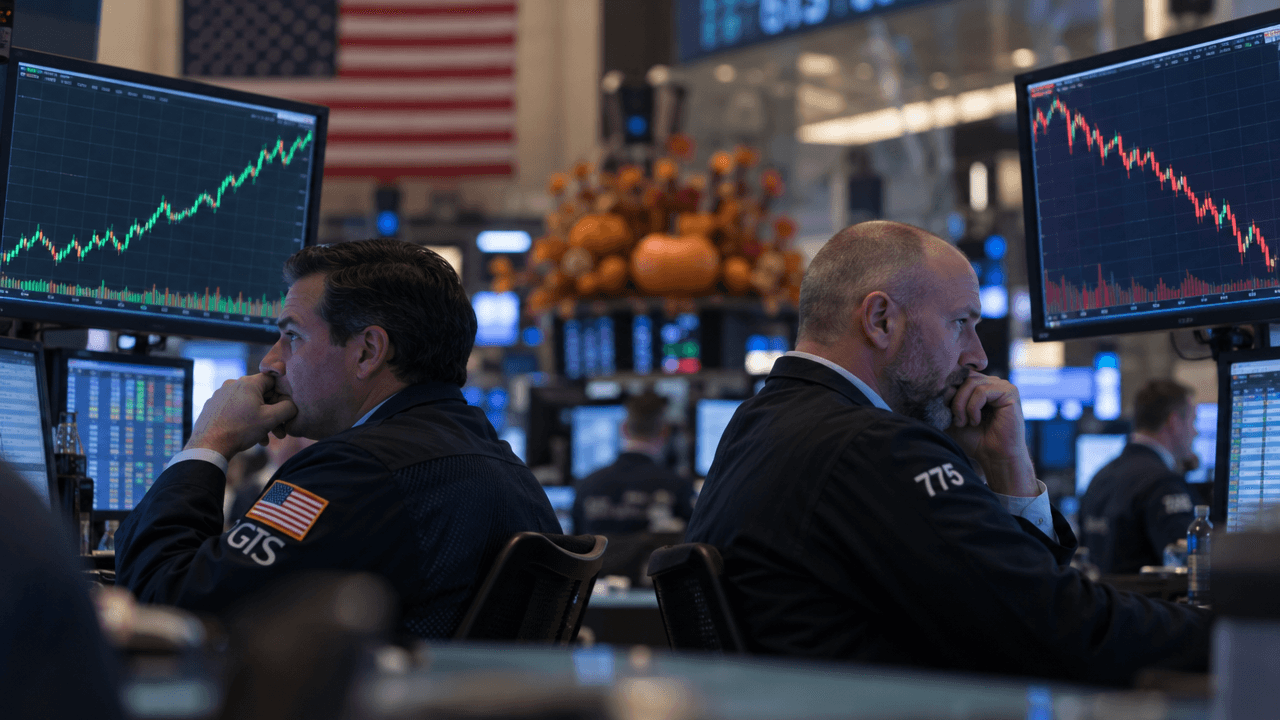
U.S. equity futures are sending a divided signal into the Thanksgiving holiday. Dow futures climbed more than 160 points, while Nasdaq-100 futures dropped more than 270 points, highlighting a sharp rotation away from technology and high-growth shares. The divergence reflects growing investor concern over elevated valuations, possible new tariffs, inflation and the path of interest rates. [7]
With U.S. stock markets closed for Thanksgiving and scheduled to reopen for a shortened session on Friday, trading conditions are unusually thin. Lower participation can magnify price movements because fewer orders are available to absorb buying or selling pressure. As a result, futures may appear to deliver a strong market signal even when the move is driven partly by temporary positioning and limited liquidity.
The Market Signal Behind The Divergence
The contrast between Dow and Nasdaq-100 futures is important because the indexes represent different parts of the equity market. The Nasdaq-100 has heavy exposure to large technology and communication companies, many of which have benefited from enthusiasm surrounding artificial intelligence, cloud computing and semiconductor demand.
The Dow, by comparison, has greater exposure to mature companies in industrial, financial, healthcare and consumer-related sectors. When Dow futures rise while Nasdaq futures fall, investors may be reducing exposure to expensive growth stocks and moving toward companies perceived as more reasonably valued or economically defensive.
This does not necessarily mean that investors have abandoned equities altogether. It may instead indicate a change in preference. Market participants can remain constructive on the broader economy while questioning whether technology stocks have advanced too far, too quickly.
Why Technology Is Under Pressure
Technology shares have been especially sensitive to valuation concerns. Many growth companies are valued on the basis of earnings expected years into the future. When interest rates rise or remain elevated, those future earnings become less valuable in today’s calculations.
Recent market volatility has also revived questions about whether the enormous investment required for artificial intelligence infrastructure will generate returns quickly enough to justify current prices. Reports of slowing enthusiasm around the AI trade contributed to a technology sell-off, while investors reassessed the relationship between capital spending, revenue growth and profitability. [3]
This process can create exaggerated moves. When a popular sector begins to decline, investors who used leverage or crowded into the same trades may sell at the same time. The resulting decline can then encourage additional risk reduction, even if the long-term business outlook has not changed materially.
Tariffs And Interest Rates Add Uncertainty
Trade policy is another source of pressure. Reports indicated that the U.S. administration was considering new or expanded tariffs affecting major trading partners, including China, the European Union, Japan and India. [3] Tariffs can raise costs for companies that rely on imported goods, disrupt supply chains and potentially increase consumer prices.
For investors, the key issue is how tariffs interact with inflation and monetary policy. If higher import costs contribute to persistent inflation, the Federal Reserve may have less flexibility to lower interest rates. Higher rates can weigh on highly valued growth stocks while supporting the relative appeal of companies with stronger current cash flows.
The market is therefore responding to several questions at once: Will tariffs be implemented? How large will their economic effect be? Will inflation remain elevated? And will the Federal Reserve keep rates higher for longer? Until those questions become clearer, traders may favor companies with stable earnings and strong balance sheets.
What Holiday-thinned Trading Means For Simfi Participants
For SimFi traders, the holiday period offers a useful lesson in market structure. Thin liquidity does not automatically make a market directionally bearish or bullish, but it can increase slippage, widen spreads and produce fast reversals.
A futures move of several hundred points may look decisive, yet the underlying cash market is closed. Futures can react to overseas markets, headlines and repositioning, but they do not provide a complete picture of regular-session demand. Traders should avoid treating every premarket movement as confirmation of a lasting trend.
Risk management becomes especially important. Position sizes should reflect the possibility of sharp gaps, and stop-loss levels should be placed with market volatility in mind rather than positioned so tightly that ordinary fluctuations trigger an exit. Traders may also consider waiting for regular-session volume to return before interpreting the move as a confirmed rotation.
A practical checklist includes monitoring Treasury yields, inflation expectations, tariff announcements, volatility indexes and the performance of semiconductors and other AI-related stocks. Comparing the Dow, S&P 500 and Nasdaq-100 can also reveal whether market strength is broadening or concentrated in a small number of companies.
Key Takeaways For Traders
The futures divergence suggests that investors are rotating rather than exiting every part of the stock market. Strength in Dow futures alongside weakness in Nasdaq-100 futures points to concern about technology valuations and the sensitivity of growth stocks to interest rates.
The holiday schedule makes the signal less reliable in the short term. Thin participation can intensify both gains and losses, so traders should place greater emphasis on confirmation from volume and price action after the market reopens.
The broader risk is that tariffs could keep inflation elevated, limiting the potential for rate cuts and increasing pressure on expensive growth shares. The potential opportunity is that industrial, financial and defensive companies may attract capital if investors continue to seek valuation support and steadier cash flows.
Conclusion
The split between rising Dow futures and falling Nasdaq-100 futures captures the market’s current tension: confidence in selected areas of the economy exists alongside skepticism toward expensive technology stocks. Valuations, tariffs and interest rates are combining to make sector selection more important than simply following the direction of the major indexes.
For SimFi traders, the best response is not to chase a dramatic holiday-session move. Use the divergence as a prompt to examine market breadth, manage leverage carefully and wait for liquidity to normalize. In uncertain markets, disciplined execution and a clear risk plan can matter more than predicting the next headline.