
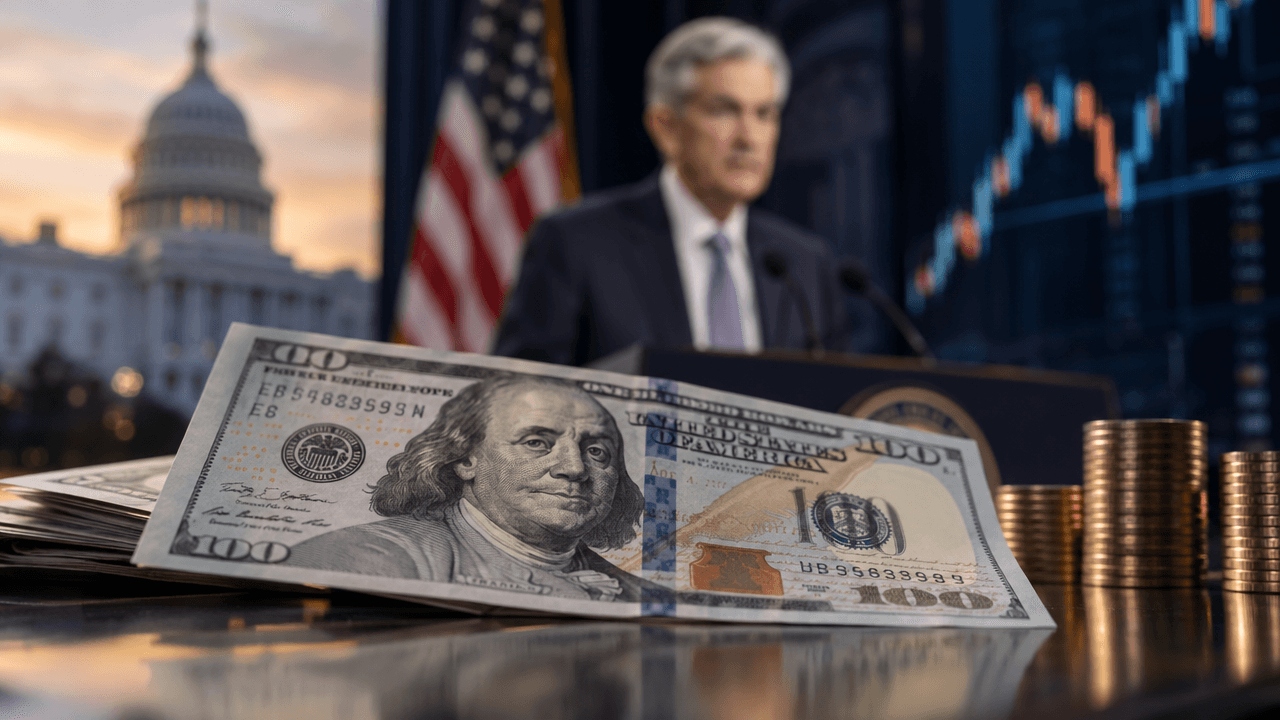
The U.S. dollar enters a potentially volatile stretch as Federal Reserve communication converges with a series of economic releases that could reshape interest-rate expectations. Fed officials, including Chicago Fed President Austan Goolsbee, are scheduled to speak while traders assess consumer inflation expectations, wholesale inventories and other indicators ahead of the next Consumer Price Index report. Goolsbee’s November 9 appearance and a further scheduled event on November 12 give markets several opportunities to reassess the Fed’s policy outlook. [1][3]
For foreign-exchange traders, the risk is not limited to whether the data are strong or weak. The larger question is how the information changes expectations for future interest rates, particularly when markets are already positioning for the CPI release. Even modest differences between forecasts and actual results can produce sharp moves in the dollar, Treasury yields and major currency pairs.
Why Fed Communication Matters
Central-bank communication influences markets because currencies are priced partly on the expected relative return from holding one country’s assets. If investors believe the Federal Reserve will keep rates higher for longer, U.S. yields may become more attractive, supporting the dollar. If officials signal greater concern about slowing growth or show willingness to ease policy, the dollar may weaken as traders reduce rate expectations.
Goolsbee’s comments will be closely evaluated for references to inflation persistence, labor-market conditions, consumer demand and the appropriate pace of policy adjustment. A single speech may not change the Fed’s official stance, but specific wording can affect short-term futures pricing.
Traders should focus on the direction of the message rather than one isolated phrase. Comments emphasizing upside inflation risks may be interpreted as hawkish. Remarks highlighting weakening employment, softer spending or declining price pressure may be viewed as dovish. The market reaction can also depend on how Goolsbee’s views compare with those of other Fed officials.
Why Inflation Expectations Are Important
Consumer inflation expectations are a forward-looking measure of how households believe prices will develop. They matter because expectations can influence wage negotiations, purchasing decisions and business pricing. If expectations rise persistently, policymakers may worry that inflation is becoming embedded in the economy.
The New York Fed’s Survey of Consumer Expectations is scheduled during this week’s data flow, alongside wholesale trade information. [12] A stronger-than-anticipated inflation-expectations reading could support the dollar if traders conclude that the Fed will need to maintain a restrictive stance. A lower reading could have the opposite effect, especially if it reinforces expectations of easing.
However, expectations data can be volatile and should not be treated as a guaranteed predictor of CPI. Professional traders typically compare the result with recent trends, market forecasts and other survey measures. They also watch whether short-term expectations and longer-term expectations are moving in the same direction.
What Wholesale Inventories Can Signal
Wholesale inventories are less influential than CPI, but they can still provide useful information about economic momentum. Rising inventories may indicate that businesses are preparing for stronger demand, or they may suggest that goods are accumulating because sales are slowing. The surrounding data are therefore essential.
If inventories increase alongside solid demand, markets could interpret the result as evidence of resilient economic activity. That may support higher Treasury yields and the dollar. If inventories rise while sales weaken, traders may instead read the report as a sign of excess supply and slowing growth.
The release is currently expected to show a monthly increase of approximately 0.6 percent, according to one economic calendar. [13] Forecasts are not market outcomes, however. The most important reaction usually comes from the difference between the reported figure and the consensus expectation, as well as any revisions to previous months.
Cpi Remains The Main Event
The week’s biggest potential catalyst is the U.S. CPI report scheduled for November 10 at 8:30 a.m. Eastern Time. [10] Forecasts cited by an economic calendar call for headline CPI to rise 0.5 percent month over month and 4.2 percent year over year, while core CPI is expected at 2.8 percent annually. [13]
A hotter-than-expected report could lift the dollar by pushing traders to price fewer or later rate cuts. The most direct reaction would likely appear in USD/JPY, EUR/USD and Treasury-sensitive pairs. A softer report could weaken the dollar and support currencies whose central banks are perceived as less dovish by comparison.
The report should be assessed in detail rather than judged solely by the headline number. Core inflation, shelter costs, services prices and monthly momentum can all influence the interpretation. A strong headline caused by a narrow category may generate a smaller and less durable reaction than broad-based price acceleration.
Practical Takeaways For Traders
First, reduce the temptation to enter a position immediately before a major release unless the risk is clearly defined. Bid-ask spreads can widen, execution can worsen and stop-loss orders may fill at less favorable prices during rapid moves.
Second, build scenarios before the data arrive. Consider what might happen if CPI is above forecast, near forecast or below forecast. Then identify which currency pairs offer the clearest risk-to-reward setup under each scenario.
Third, watch Treasury yields and interest-rate futures alongside the dollar. A currency move supported by changing yield expectations may have more follow-through than a move driven by temporary positioning.
Finally, distinguish volatility from confirmation. The first reaction can reverse when traders read the full report, hear additional Fed commentary or adjust positions after the initial surprise.
Conclusion
Fed communication and U.S. economic releases are creating a concentrated period of near-term FX risk. Goolsbee’s remarks, inflation-expectations data and wholesale inventories may influence market positioning, but CPI remains the central test of the dollar’s direction. The strongest approach is to monitor the interaction between the data, Fed guidance and interest-rate pricing rather than relying on any single headline.
For SimFi traders, this environment is an opportunity to practice disciplined preparation: define scenarios, size positions conservatively and treat capital protection as part of the strategy. The goal is not to predict every tick. It is to respond logically when expectations change.