
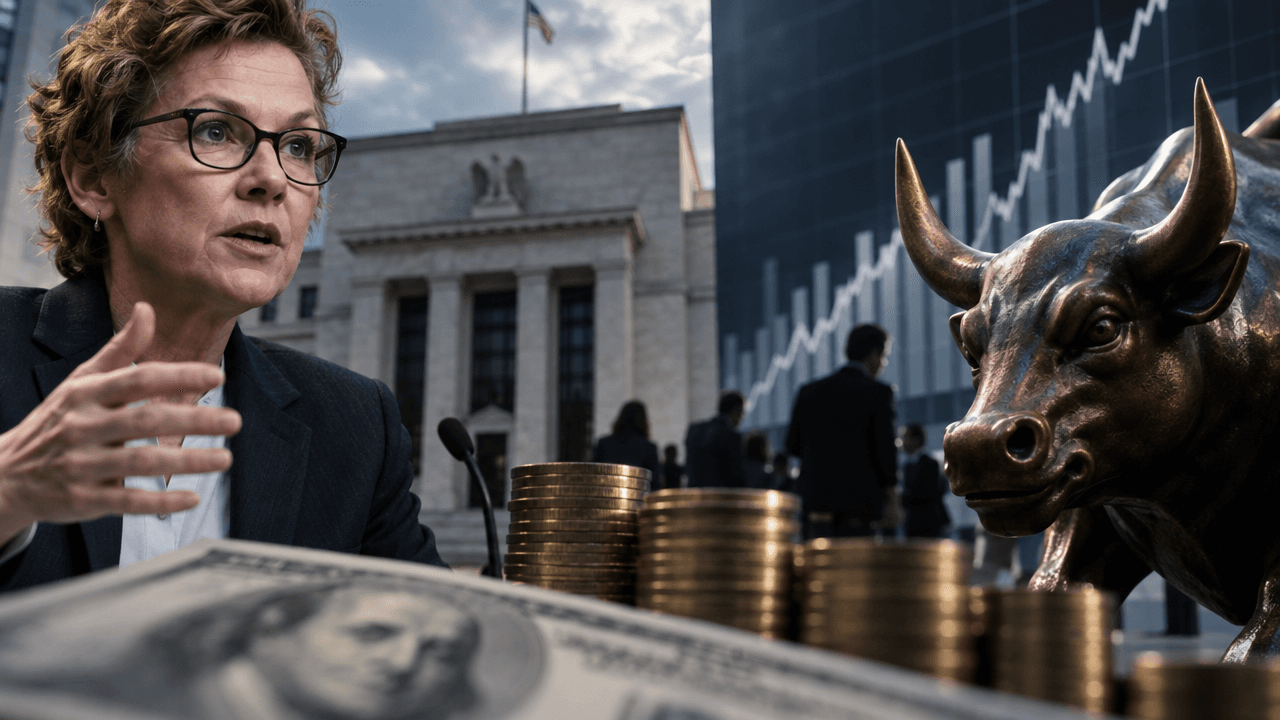
The Federal Reserve may not be finished raising interest rates. San Francisco Fed President Mary Daly said additional tightening will likely be necessary to bring inflation back under control, reinforcing the hawkish message delivered by a stronger-than-expected U.S. jobs report. However, she emphasized that the timing and size of any future increases will depend on incoming economic data. [1]
For traders, Daly’s comments matter because they connect three key market forces: persistent inflation, resilient employment, and expectations for the Fed’s next policy decision. Together, they have strengthened the case for higher U.S. rates and supported the dollar.
WHY DALY’S COMMENTS MATTER
Daly said, “My expectation is we’re going to have to tighten policy further,” while adding that policymakers still need to determine exactly when and how much rates should rise. [3] This is a hawkish signal, but not an unconditional commitment to a specific move.
The distinction is important. A central bank can communicate that more tightening is likely without promising a rate hike at its next meeting. The Fed is attempting to keep its options open while assessing inflation, employment, consumer spending, financial conditions, and economic growth.
Daly’s remarks suggest that policymakers believe current interest rates may not yet be restrictive enough. If inflation remains elevated, holding rates steady for too long could allow price pressures to become more persistent. Additional hikes would increase borrowing costs and reduce demand, potentially slowing the economy and easing inflation.
At the same time, higher rates create risks. They can weigh on housing, business investment, consumer credit, equity valuations, and interest-sensitive sectors. That is why Daly stressed that the policy path remains dependent on the data.
The Jobs Report Strengthens The Case For Tightening
The backdrop to Daly’s comments was a robust labor-market report. U.S. nonfarm payrolls increased by 165,000 in October, while the unemployment rate declined to 4.1%. [6] The figures indicated that the economy continues to generate jobs despite restrictive monetary policy and heightened uncertainty in financial markets.
A strong labor market gives the Fed more room to focus on inflation. When employment and household income remain relatively healthy, policymakers may be less concerned that another rate increase will immediately trigger a deep recession.
The report also influenced market expectations. Traders raised the implied probability of a quarter-percentage-point rate increase at the Fed’s December 8–9 meeting to approximately 80%, up from about 67% the previous day. [14] That shift shows how quickly interest-rate expectations can change when economic data contradicts expectations of an imminent slowdown.
Still, a strong payrolls report does not guarantee a rate hike. The Fed will also examine wage growth, inflation readings, job vacancies, consumer demand, and financial conditions. Daly noted that the labor market was good news for workers, but she also indicated that wage growth was not booming and that real wages were declining. [5]
Inflation Remains The Central Problem
The Fed’s challenge is that inflation has cooled from its peak but remains above the central bank’s long-term objective. Consumer prices rose 3.7% year over year in September, according to reports cited after Daly’s interview. [6] That is significantly higher than the Fed’s 2% target.
Daly described Americans as being on a “treadmill of high inflation,” reflecting the burden created by prices that remain elevated even when the pace of increases moderates. Consumers may experience slower inflation, but they still face higher costs for housing, food, services, transportation, and other essentials than they did several years ago.
For the Fed, the concern is not only the current inflation rate but also the possibility that businesses and households begin to expect high inflation to persist. Those expectations can influence wage negotiations, pricing decisions, and long-term contracts, making inflation harder to eliminate.
Further rate increases could help restrain demand and reinforce the Fed’s credibility. However, policymakers must avoid tightening so aggressively that they cause unnecessary damage to employment and economic growth.
What This Means For Markets
The immediate market reaction has been broadly dollar-positive. The U.S. dollar index rose 0.77% to 102.26 after the stronger payrolls report, while the euro declined against the dollar. [10] Higher expected U.S. interest rates can attract capital toward dollar-denominated assets because investors seek improved yields.
Treasury yields may also remain sensitive to incoming inflation and employment data. If markets anticipate more hikes, short-term yields generally rise as traders price a higher policy rate. Longer-term yields can be more complicated because they also reflect expectations for future growth and inflation.
Equities face a mixed environment. Banks and some value-oriented sectors may benefit from higher rates, while growth stocks often face pressure because their future earnings are discounted at a higher rate. Technology shares can be particularly sensitive when rising yields reduce the present value of expected long-term profits.
In foreign exchange markets, traders should watch the contrast between the Fed and other central banks. If U.S. rates rise while overseas policymakers remain cautious, the dollar may receive additional support. But if global growth deteriorates sharply, safe-haven demand could create more complex and volatile currency movements.
Practical Takeaways For Traders
First, treat Daly’s comments as guidance rather than a firm policy promise. The Fed has not committed to a specific increase, and the next inflation and employment reports could change expectations.
Second, monitor the relationship between payroll growth, wage growth, and inflation. Strong employment combined with persistent inflation would support a more hawkish outlook. A weaker labor market alongside falling inflation would make the Fed more likely to pause.
Third, avoid relying on a single market signal. The dollar, Treasury yields, equities, and commodities may respond differently depending on whether traders emphasize higher rates or recession risk.
Finally, manage exposure carefully around major economic releases. Rate-sensitive markets can move rapidly when probabilities for a Fed decision change by only a few percentage points.
Conclusion
Mary Daly’s message is clear: the Fed remains prepared to raise rates further if inflation does not move convincingly toward 2%. The strong payrolls report has made that possibility more credible, while the dollar has benefited from renewed expectations for tighter U.S. monetary policy.
Yet uncertainty remains. The next phase of the Fed’s policy cycle will depend on whether inflation cools, whether employment remains resilient, and whether financial conditions tighten enough without causing a major economic slowdown. For traders, the most important lesson is to follow the data behind the policy narrative rather than assuming that one Fed comment determines the entire market outlook.