
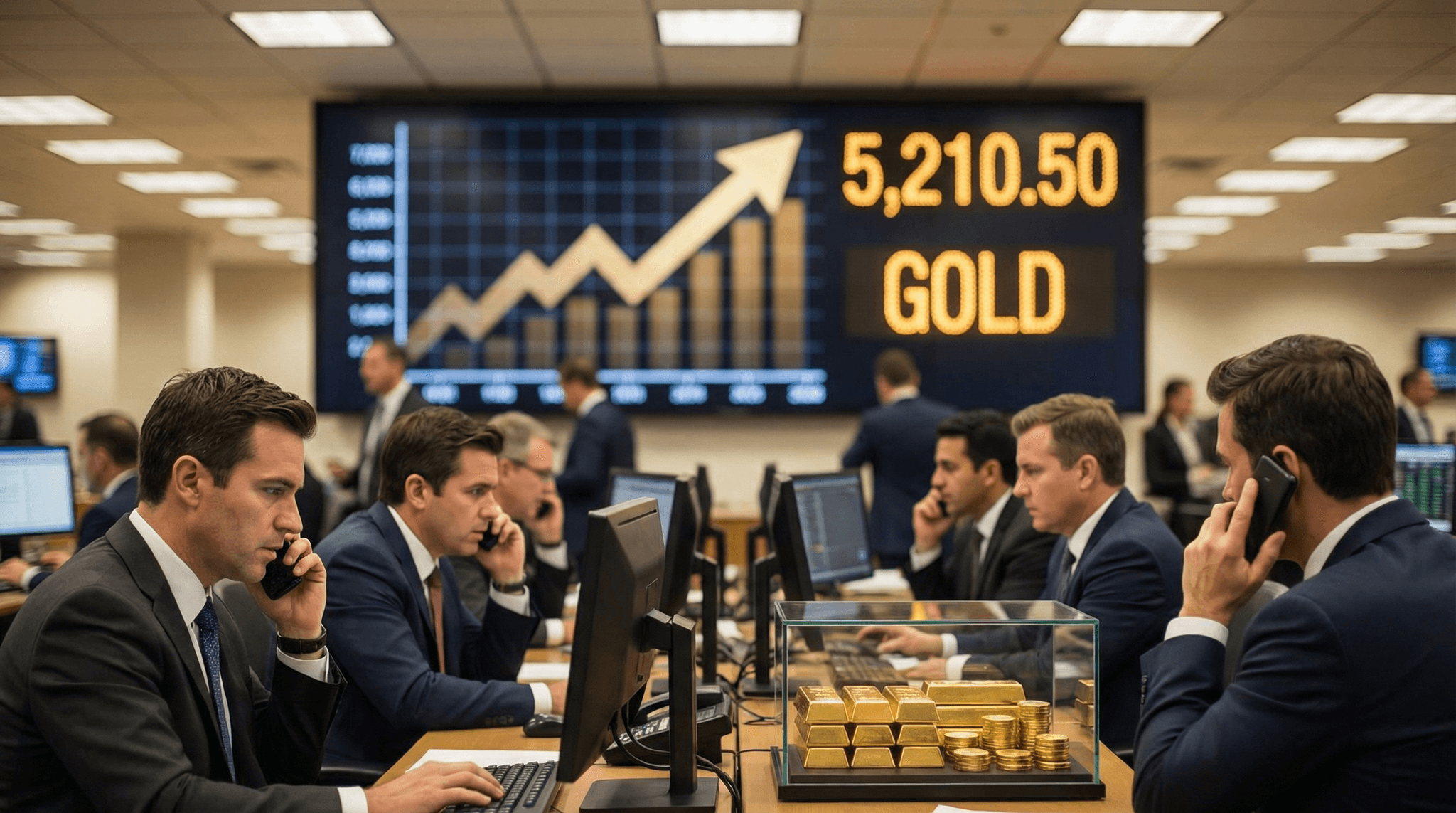
The precious metals market reached a historic milestone on January 28, 2026, as gold surged past $5,200 per ounce for the first time ever, reaching as high as $5,265 in intraday trading. This remarkable surge reflects a confluence of macroeconomic pressures and geopolitical uncertainties that continue to reshape investment sentiment globally. At the heart of this rally lies a weakening U.S. dollar, which has declined to near four-year lows, making gold increasingly attractive to international investors and domestic traders seeking protection against currency depreciation.
The Dollar's Decline Fuels Gold's Ascent
The inverse relationship between the U.S. dollar and gold prices has rarely been more apparent than in recent trading sessions. As the dollar weakened sharply throughout January, gold responded with a powerful rally, climbing more than 20 percent year-to-date. This dynamic reflects fundamental economic principles: when the dollar weakens, commodities priced in dollars become cheaper for foreign buyers, stimulating demand. Currency weakness also signals broader concerns about economic stability, prompting investors to rotate capital toward assets viewed as hedges against currency erosion and inflation.
The dollar's deterioration stems from several converging factors. Consumer confidence data released this week plunged to its lowest level in more than eleven years, raising concerns about slowing economic growth and persistent inflation pressures. These economic headwinds have prompted market participants to reassess Federal Reserve policy expectations, with traders increasingly pricing in lower interest rates than previously anticipated. Additionally, political uncertainty surrounding the Federal Reserve's leadership transition has added another layer of volatility to currency markets, further weighing on the dollar's performance.
Safe-haven Demand In An Uncertain World
Beyond dollar dynamics, geopolitical tensions and macroeconomic uncertainty continue to drive safe-haven demand for precious metals. Gold's traditional role as a portfolio insurance tool has never been more valuable to institutional and retail investors alike. With global tensions elevated and policy uncertainty clouding economic outlooks across multiple countries, investors are reallocating capital toward assets perceived as resistant to systemic shocks.
This safe-haven demand extends beyond gold itself. Silver prices have surged nearly 60 percent year-to-date, climbing toward record highs above $115 per ounce. Platinum and palladium have similarly experienced significant gains, indicating that broad-based demand for precious metals reflects genuine concerns about macroeconomic stability rather than isolated gold-specific factors. The strength across the entire precious metals complex underscores how extensively geopolitical and economic uncertainties are influencing institutional investment allocations.
Expert Forecasts Point Higher
Investment banks and major market participants are increasingly optimistic about gold's trajectory. Deutsche Bank recently projected that gold could reach $6,000 per ounce by year-end 2026, citing robust central bank purchases and a structural shift away from dollar-denominated assets. Other major institutions including Societe Generale and UBS have similarly elevated their price targets, suggesting that the recent breakout above $5,200 may be just the beginning of a sustained bull market in precious metals.
Central bank demand remains a crucial pillar supporting these forecasts. As monetary policy uncertainty persists globally and confidence in fiat currencies declines, central banks continue accumulating gold reserves at robust rates. This institutional buying provides a structural bid beneath prices and suggests that the current rally has institutional support that could sustain higher valuations through 2026 and beyond.
Technical Framework And Resistance Levels
From a technical perspective, gold's breakout above $5,200 represents a significant milestone, though traders should monitor key resistance and support levels for directional guidance. Initial resistance sits near $5,111, with subsequent levels in the $5,200-$5,300 range proving psychologically significant given the recent all-time high. Should prices encounter selling pressure, support levels exist between $4,500 and $4,550, providing potential entry points for long-term investors seeking to establish or add to positions.
The recent surge in trading volumes accompanying these price moves suggests that momentum could persist, though profit-taking remains a natural concern after such rapid appreciation. Investors should remain alert to potential corrections while maintaining conviction in gold's longer-term uptrend given the structural factors supporting prices.
Trading Implications And Action Items
For traders and investors, the current environment presents both opportunities and risks. Long-term investors should consider gold's fundamental appeal as currency and geopolitical hedge intact, with multiple catalysts supporting further appreciation. Traders should remain disciplined about position sizing given elevated volatility and should monitor technical levels closely for potential reversals.
The convergence of dollar weakness, geopolitical tensions, policy uncertainty, and central bank demand creates a powerful backdrop for continued precious metals strength. However, investors should remain cognizant that any resolution of international tensions or renewed dollar strength could trigger reversals. Success in this market requires balancing bullish conviction with prudent risk management and technical discipline.