
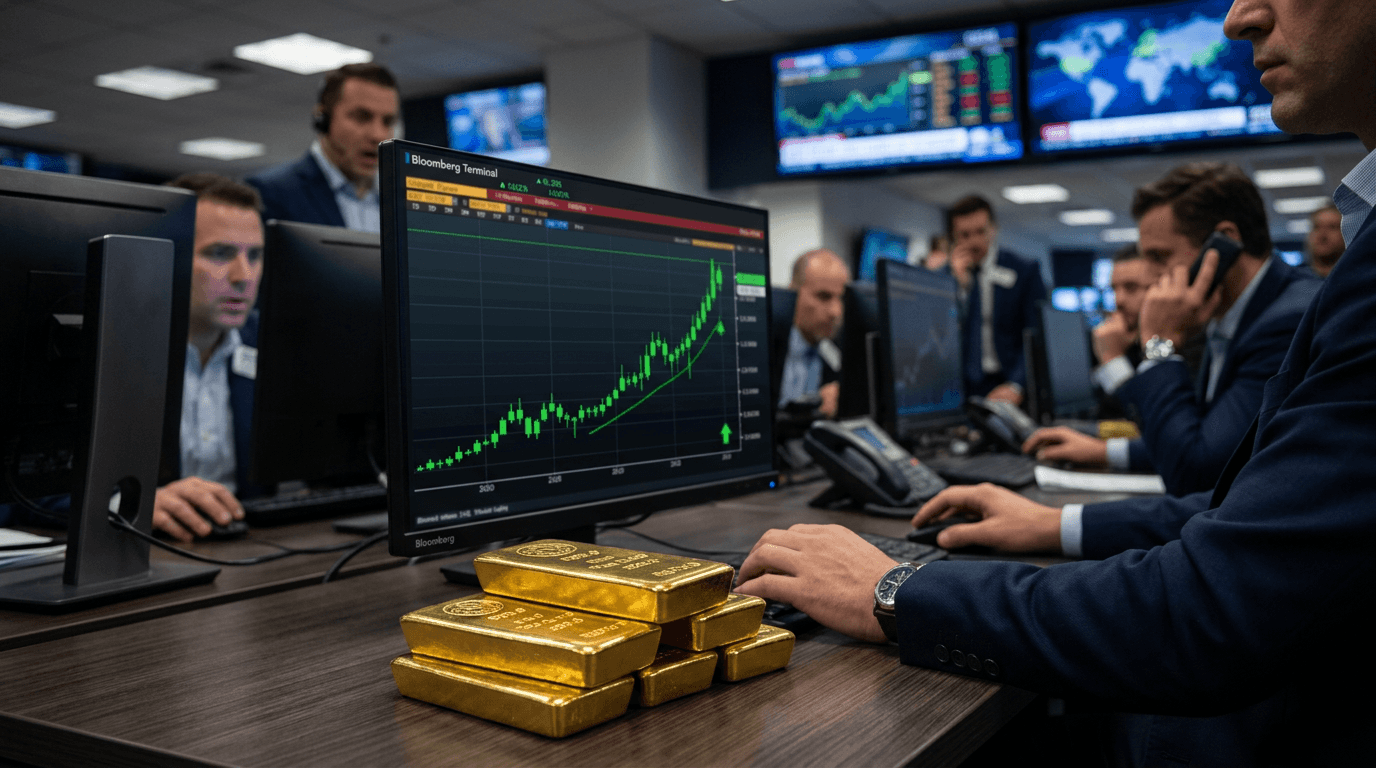
Gold prices have surged to remarkable levels as geopolitical tensions in the Middle East intensify, with spot gold recently trading near $5,279 per ounce amid heightened uncertainty. This dramatic price movement reflects a classic flight-to-safety dynamic, where investors seek refuge in traditional havens during periods of global instability. The current rally, while striking in its magnitude, tells a broader story about how geopolitical conflicts reshape financial markets and create profound opportunities—or risks—for investors navigating uncertain times.[1][2]
The catalyst for gold's explosive move came on February 28, 2026, when coordinated strikes by the United States and Israel against Iranian targets triggered an immediate panic buying wave across precious metals markets. In a matter of hours, spot gold catapulted from approximately $5,100 per ounce to over $5,300, representing one of the most dramatic single-session rallies in modern market history.[1] The intensity of this move underscores a fundamental principle that seasoned market participants understand well: when geopolitical risk spikes, investors don't hesitate to rotate capital toward assets that have preserved wealth through centuries of conflict. Gold's status as the ultimate safe-haven asset means it benefits from two simultaneous flows—money fleeing riskier assets and fresh capital entering the precious metals complex seeking protection.
Understanding The Safe-haven Dynamic
Gold's surge above $5,279 reflects far more than technical trading patterns or momentum investors chasing returns. The price movement represents genuine fear and uncertainty permeating global markets as investors confront the reality of direct military conflict involving the world's largest economy and a major oil-producing nation. Historically, gold has proven resilient during wars, averaging gains of 0.30% in the first week of conflicts and substantial 8.98% gains over twelve-month periods.[1] The current environment exhibits several conditions that historically favor precious metals: geopolitical uncertainty, inflation concerns, currency debasement fears, and questions about the trajectory of global economic growth.
What makes the current situation particularly compelling is that gold's rally didn't begin with the recent military escalation. The precious metal had already gained approximately 22% year-to-date before the February 28 strikes, buoyed by persistent inflation concerns, central bank buying, and underlying geopolitical tensions.[1] This pre-existing bullish setup meant the market was primed for explosive gains when the conflict triggered full-blown safe-haven demand. In other words, gold's climb to $5,279 represents the culmination of months of building demand, suddenly accelerated by a dramatic geopolitical catalyst.
Price Levels And Technical Considerations
Analysts point to critical price levels that will determine gold's trajectory in coming weeks. Current support levels cluster around $5,220–$5,180 per ounce, providing a technical floor if profit-taking emerges or risk sentiment temporarily improves.[2] On the upside, immediate resistance levels exist near $5,350–$5,500, representing the territory analysts believe gold will test if geopolitical tensions persist or intensify. These price targets aren't arbitrary—they reflect both technical analysis patterns and the broader historical relationship between conflict severity and precious metals valuations.
What's particularly significant about these levels is how they've attracted institutional attention. Major financial institutions including J.P. Morgan have revised their gold forecasts sharply upward, with some projecting prices could reach $6,300 per ounce by year-end 2026 if central bank and investor demand remains robust.[2] Other analysts have floated even more ambitious targets of $8,000 or higher should conflict escalate beyond current boundaries or trigger broader Middle East instability.[1] While these targets may seem extreme, they're grounded in historical analysis and reflect the asymmetry of risks in the current environment—the potential downside scenarios would likely trigger unprecedented safe-haven demand.
Analyst Forecasts And Market Expectations
The consensus among major research houses has shifted notably bullish. Beyond J.P. Morgan's $6,300 forecast, Bank of America has reiterated projections that gold could approach $6,000 by year-end.[2] These forecasts rest on several assumptions: continued central bank and investor demand for safe-haven assets, potential supply disruptions from the Middle East affecting broader economic conditions, and the possibility that geopolitical tensions could remain elevated for extended periods.
Importantly, analysts acknowledge that gold's path to these higher targets depends critically on how the conflict evolves. If military action remains limited and diplomatic solutions emerge, gold may consolidate current gains but struggle to push substantially higher. However, if the conflict expands, drawing additional nations or disrupting critical energy supplies, the safe-haven stampede could drive prices to levels previously considered unimaginable. The asymmetry of outcomes clearly favors gold bulls.
Key Takeaways For Investors
The current environment presents both opportunities and challenges for investors. Understanding why geopolitical conflicts drive gold prices—and how to position portfolios accordingly—remains essential. For those holding gold positions, the current environment validates strategic allocations to precious metals as insurance against tail-risk scenarios. For those considering entry points, current levels near $5,279 offer reasonable entry prices given the elevated geopolitical backdrop and the potential for further upside if tensions escalate.
The broader lesson is that gold's role as a crisis asset remains as relevant in 2026 as it has been throughout history. Market participants must monitor geopolitical developments closely while remaining cognizant of support and resistance levels that will influence the trajectory toward—or away from—analyst price targets.