
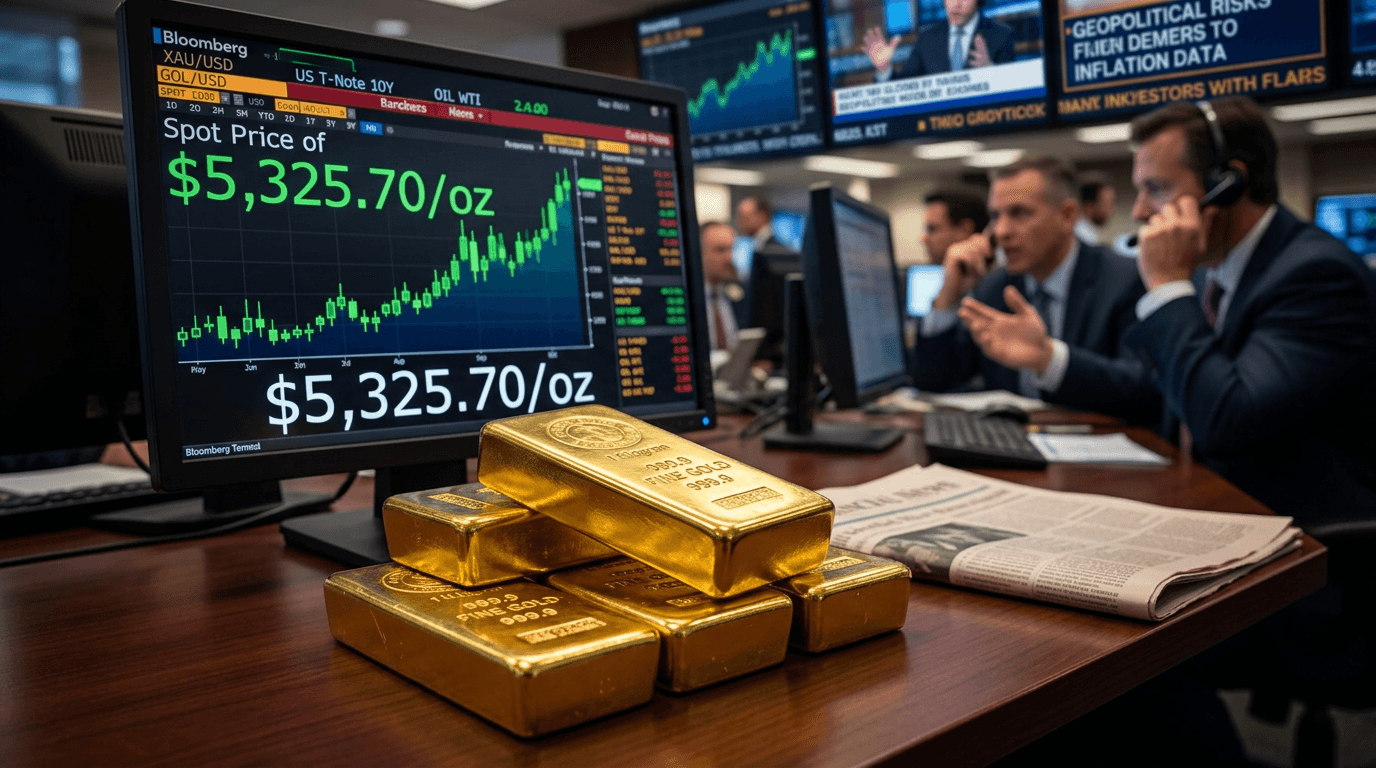
Gold prices have surged to historic levels as a combination of geopolitical turmoil and hotter-than-expected inflation data converge to create a perfect storm for precious metals. With XAU/USD advancing decisively toward record highs and spot gold breaking through the $5,300 per ounce barrier, the yellow metal is experiencing a safe-haven rally that reflects genuine concerns about both near-term conflict escalation and longer-term currency debasement. The convergence of Middle East tensions and surprisingly strong US inflation prints has created a compelling narrative for gold bulls, transforming what was already a strong year for precious metals into an exceptional one.
The Dual Drivers: Geopolitical Crisis Meets Hot Inflation
The immediate catalyst for gold's historic surge came on February 28, 2026, when coordinated US and Israeli military strikes on Iranian targets triggered panic buying across precious metals markets. Spot gold catapulted from approximately $5,100 per ounce to over $5,300 in a matter of hours, representing a single-session gain exceeding $200 that exemplifies the power of safe-haven demand during acute geopolitical shocks. This wasn't merely a technical breakout—it was a flight to safety as investors confronted the reality of direct military conflict involving the world's largest economy and a major oil-producing nation.
Yet the geopolitical story alone doesn't fully explain gold's strength. Running parallel to Middle East tensions is the inflation narrative. Recent US Producer Price Index data came in hotter than expected at 0.5% month-over-month versus the consensus forecast of 0.3%, signaling that price pressures remain embedded in the economy despite previous Federal Reserve rate decisions. This inflation surprise matters enormously for gold because it challenges the conventional wisdom that the Fed has tamed price growth. When investors fear inflation is not being controlled, they turn to gold as a hedge against currency debasement—the asset that has preserved purchasing power through centuries of monetary instability.
The combination of these two factors creates a particularly bullish environment for precious metals. Geopolitical risk lifts gold as a short-term safe haven, while inflation concerns provide the foundational support for longer-term price appreciation. Traders aren't just betting on days of heightened tensions to pass; they're repositioning portfolios around the structural concern that inflation remains sticky and that geopolitical instability could worsen the economic backdrop.
The Technical Picture: Breaking Through Resistance
From a technical perspective, gold has accomplished something remarkable. XAU/USD has closed at session peaks above the 50 percent Fibonacci retracement level, signaling strong momentum and conviction among buyers. This isn't passive buying triggered by headlines—it's aggressive accumulation by sophisticated market participants recognizing that gold is establishing a new foundation at elevated levels.
The move above $5,300 represents a clean break of previous resistance, with analysts now targeting $5,500 to $6,000 per ounce if hostilities intensify further. Some bold forecasts even suggest potential for $8,000 to $8,500 gold if the conflict spreads beyond the immediate region or triggers broader Middle East instability. Silver has participated enthusiastically in the rally, surging past $93 per ounce and posting gains of nearly 8 percent alongside gold's breakout. The broad-based strength across the precious metals complex indicates that this is not a narrow speculative bet but rather a fundamental re-pricing of geopolitical and inflation risk across the market.
What makes the current technical setup particularly compelling is that gold was already in a bull market before the latest escalation. The precious metal had gained approximately 22 percent year-to-date, driven by central bank buying, currency debasement fears, and ongoing geopolitical tensions. This pre-existing bullish setup meant that gold was primed for explosive gains when the conflict triggered a safe-haven stampede. The market wasn't starting from oversold conditions requiring a pullback—it was already strong and then received a powerful catalyst to accelerate higher.
Implications For Traders And Portfolio Strategy
For traders navigating these turbulent markets, the key insight is recognizing that gold is fulfilling its historic role as the ultimate safe-haven asset while simultaneously benefiting from structural inflation concerns. This dual support system suggests that any pullback in gold prices could represent a buying opportunity rather than a reversal of the broader uptrend. History shows that gold averages 0.30 percent gains in the first week of conflicts and 8.98 percent over 12 months, providing statistical support for maintained exposure to precious metals.
The current environment also highlights why diversification into gold matters. When geopolitical shocks cause equities to decline and traditional bonds struggle due to inflation concerns, gold tends to move in the opposite direction—precisely when a portfolio needs defensive characteristics most. With central banks globally buying gold at record levels and emerging markets seeking to diversify reserves away from dollar-denominated assets, institutional demand for gold is supporting prices at elevated levels.
What To Watch Moving Forward
The path forward for gold depends on several key variables. Escalation or de-escalation of Middle East tensions will obviously influence short-term price direction, as will any significant developments in US-Iran nuclear negotiations. Equally important will be upcoming inflation data releases and Federal Reserve communications about future rate policy. A near-term diplomatic solution could ease immediate pressure on gold, but if tensions escalate further, prices could reach previously unimaginable levels. For now, gold bulls have the technical setup, the fundamental backdrop, and the historical precedent all working in their favor.