
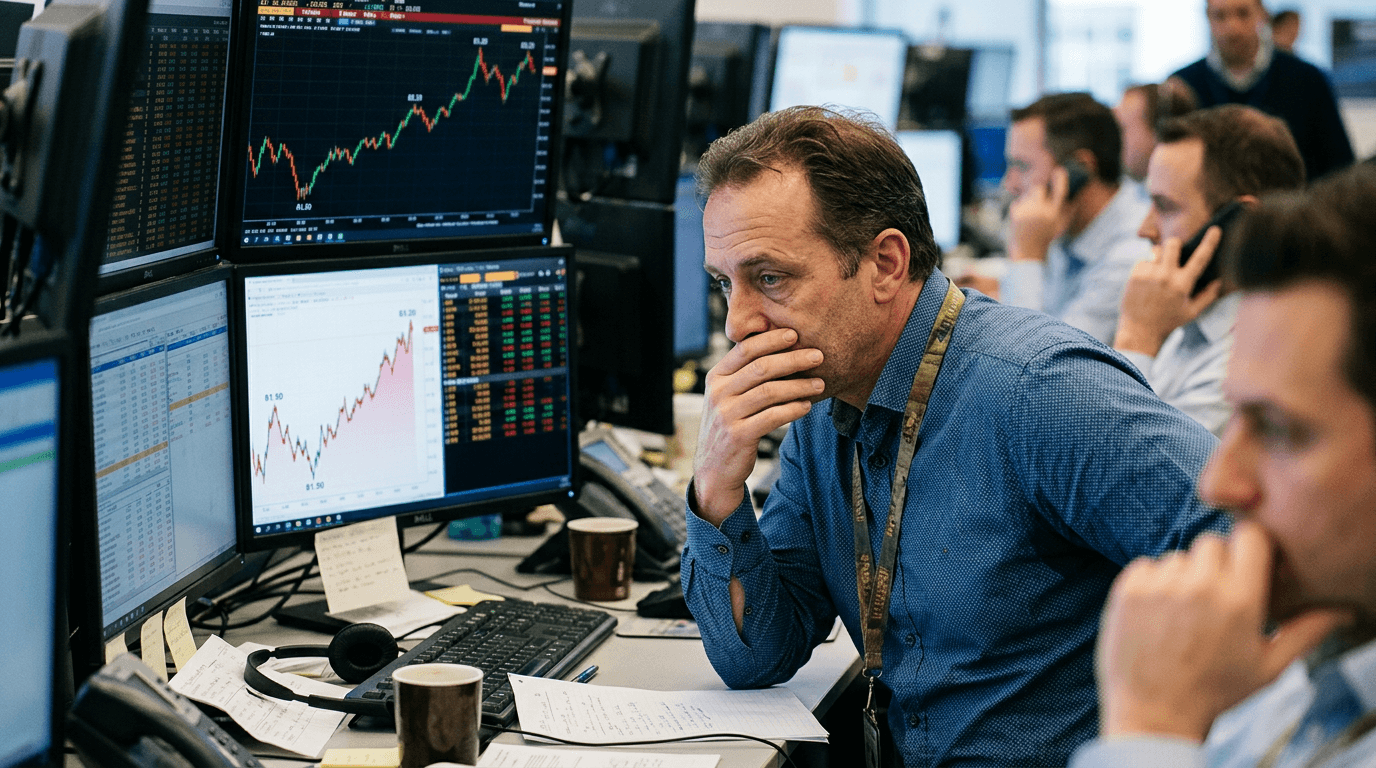
Safe-haven assets are back in the spotlight as Middle East tensions rattle global markets, driving oil sharply higher, lifting gold, and putting renewed pressure on equities. Conflict-driven supply fears have pushed key crude benchmarks into the roughly $81–86 range, while gold has recovered recent losses as investors rotate out of risk assets and into traditional hedges.[1][4][5] At the same time, equity index futures, crude futures, and FX risk proxies are all repricing around a higher-inflation, higher-for-longer rates narrative.[1]
WHAT’S DRIVING THE MOVE: GEOPOLITICS, OIL, AND RISK SENTIMENT
When conflict flares in the Middle East, markets immediately focus on the region’s role as a critical energy hub. The latest escalation has raised concerns about supply routes, pushing crude prices higher on fears of disruptions to flows through key chokepoints.[4][5] With benchmarks jumping toward the low-to-mid $80s, traders are no longer just pricing a headline shock; they are reassessing the broader inflation and policy outlook.[1][5]
This has created a classic “risk-off” mix: equities are under pressure, volatility is elevated, and demand for safe havens such as gold has strengthened.[1][3][4] Capital is moving out of high-beta equities and speculative plays and into assets perceived as resilient in crises, including gold and, to a lesser extent, defensive FX and high-quality bonds.[1][3] For index futures traders, this shows up as gap risk around news headlines, sharp intraday reversals, and a greater sensitivity to developments in energy markets and the geopolitical tape.
Why Oil Shocks Matter For Inflation And Central Bank Expectations
An oil spike is not just an energy story; it is an inflation story. Higher crude prices raise production and transportation costs across the economy, feeding into headline inflation and, if persistent, into inflation expectations.[1][5] Markets are now starting to factor in the possibility that elevated energy prices could slow the disinflation process, complicating the path for central banks that had been gearing up for rate cuts.[1][2][5]
For the Federal Reserve in particular, a conflict-driven oil shock tightens the policy trade-off. If inflation risks re-accelerate, the Fed has less room to ease aggressively, and traders tend to mark down expectations for the number and size of rate cuts.[1][2] That repricing is already visible in rate futures and has knock-on effects for growth-sensitive sectors of the equity market, especially long-duration assets like tech and other high-valuation names.
In this environment, equity index futures can be hit from both sides: weaker risk appetite due to geopolitical uncertainty and higher discount rates due to reduced expectations for monetary easing. FX risk proxies—such as pro-cyclical currencies and some emerging market FX—often weaken under this combination, while more defensive currencies and gold attract inflows.[1][3]
GOLD’S DUAL ROLE: SAFE HAVEN AND INFLATION HEDGE
Gold’s latest rebound illustrates its two key roles in portfolios: as a crisis hedge and as protection against inflation.[1][3][4] First, as a safe haven, gold tends to benefit when investors de-risk and seek assets that have historically held value during geopolitical shocks and financial stress.[1][3][4] The renewed tensions and equity volatility have reactivated this channel, helping the metal reclaim ground after a period of profit-taking.[1]
Second, gold responds to the inflation narrative. If higher oil keeps headline inflation sticky or reignites inflation fears, gold becomes more attractive as a way to preserve purchasing power in real terms.[1][5] With energy prices elevated and the prospect of slower disinflation, this inflation-hedging demand is now overlapping with pure safe-haven flows.[1][5]
However, the upside is not unconstrained. Higher-for-longer policy rates and a firm yield backdrop can limit gold’s gains by raising the opportunity cost of holding a non-yielding asset.[1][2] Safe-haven and inflation-hedging flows are pushing gold higher, but the prospect of fewer or later Fed cuts is acting as a counterweight.[1][2] The result is a market that can swing sharply on headlines, with volatility clustered around key resistance and support zones.
How Traders Can Navigate Gold, Oil, Equities, And Fx
For active traders—whether in live markets or SimFi environments—the current backdrop is fertile but demanding. Trend-following strategies in gold may perform well as long as risk is sized for headline-driven volatility, with breakouts above recent resistance levels offering potential entries.[1] At the same time, as the macro tug-of-war between yields and safe-haven demand evolves, gold may repeatedly revert within ranges once the initial risk-off spike stabilizes, creating opportunities for mean-reversion setups.[1][2]
In crude futures, the key is to differentiate between a short-lived geopolitical spike and a sustained risk premium. An oversupplied market can see price surges fade if the conflict does not materially disrupt physical flows, but a prolonged escalation around critical shipping routes can keep oil elevated and volatility high.[5] Scenario analysis—mapping price paths for escalation, de-escalation, or stalemate—can help traders frame directional and options strategies in crude and related energy plays.[1][5]
For equity index futures, the combination of higher oil and reduced Fed-cut expectations tends to favor more defensive stances: lower leverage, tighter stops, and attention to intraday volatility around geopolitical and macro headlines.[1][4] Some traders may look to pair trades—short cyclical indices or sectors against long defensive assets such as gold—aiming to benefit from relative rather than outright moves.[1]
FX traders can monitor traditional risk proxies. High-beta currencies and some emerging market FX often underperform during episodes of geopolitical stress and oil spikes, while perceived safe havens and commodity exporters with stronger fiscal positions can behave differently depending on whether the growth or inflation channel dominates.[1][3] Cross-asset views—such as trading gold versus FX or gold versus oil—can offer relative-value opportunities when one hedge lags the others.[1]
Risk Management And The Bigger Picture
Geopolitical shocks around the Middle East can be dramatic but are not new for markets, and history shows that risk assets often recover once the immediate uncertainty clears.[4][5] The challenge is distinguishing between noise and regime change: a temporary risk premium versus a structural shift in inflation and policy. For traders, that means avoiding overreaction to single headlines while respecting the potential for gap risk and volatility clusters.
Robust risk management is essential. That includes right-sizing positions for increased volatility, using clear invalidation levels, stress-testing portfolios against further oil spikes, and building scenario plans that cover both escalation and rapid de-escalation.[1][5] For longer-term investors, gold’s renewed strength is a reminder of its role as portfolio insurance when geopolitical stress and elevated energy prices collide with an uncertain rate outlook.[1][4]
For those trading in simulated environments, this is an ideal moment to test strategies that integrate cross-asset relationships: gold versus oil, equities versus energy, and FX versus commodities. By practicing how different instruments respond across scenarios, traders can build playbooks that are ready for real-world deployment when the next bout of geopolitical risk hits. The current episode underscores a recurring theme in markets: when tensions rise and oil spikes, safe-haven flows and inflation expectations quickly reshape the landscape across gold, stocks, and currencies.