
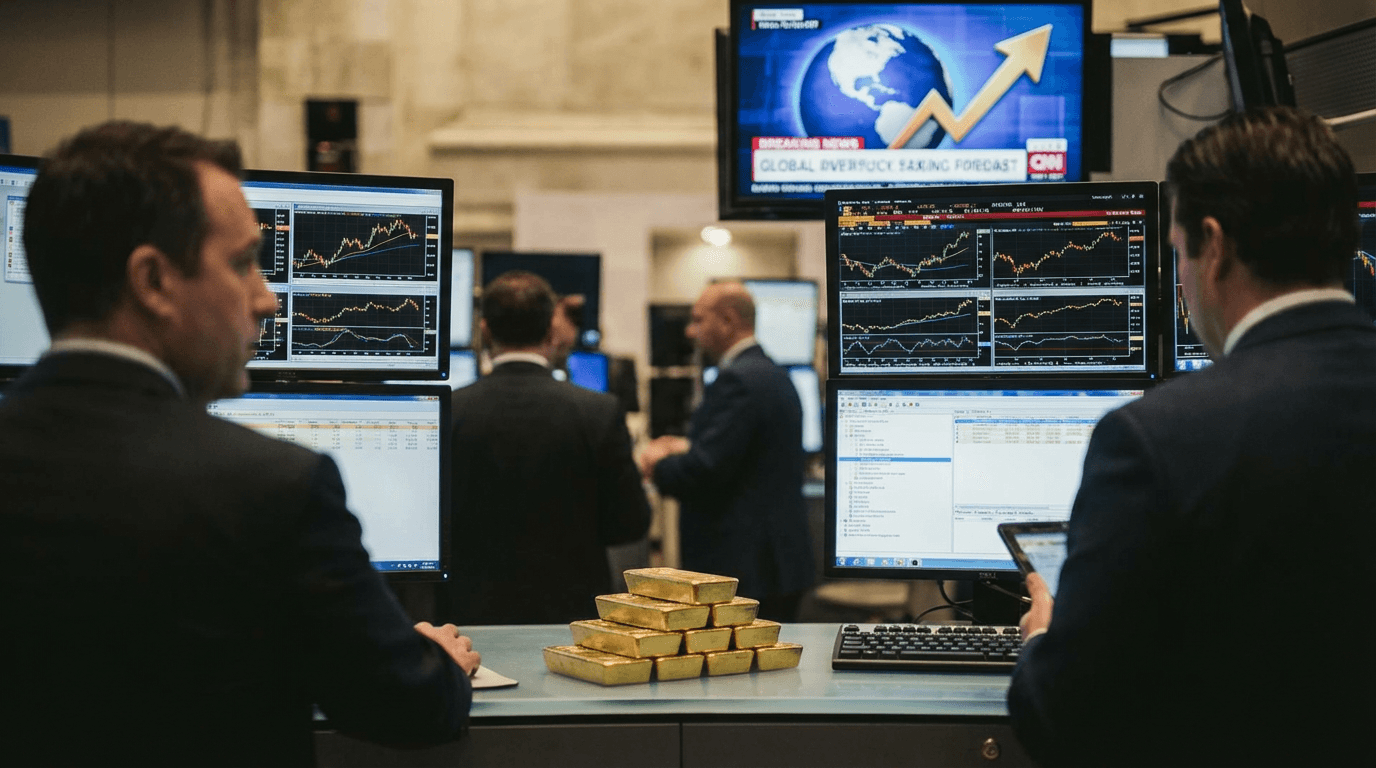
Gold's resilience at the $5,185 price level represents more than just a statistical data point—it reflects the complex interplay of global tensions, monetary policy, and investor sentiment reshaping commodity markets in 2026. As geopolitical uncertainties continue to dominate financial headlines, safe-haven assets like gold have become essential portfolio components for traders seeking stability amid volatility. Understanding what drives these price levels and what forecasts suggest for the coming months can help both novice and seasoned traders navigate this dynamic market environment.
The past week has seen gold prices stabilize in a relatively tight trading range around $5,185 per ounce, a level that underscores investor confidence in gold's protective qualities. This stability comes despite—or perhaps because of—escalating tensions in the Middle East, evolving trade relationships, and unprecedented monetary policy adjustments across major economies. For traders on simulated finance platforms, recognizing these price-supporting factors provides valuable insight into how real-world geopolitical events translate into market movements and trading opportunities.
Geopolitical Tensions As The Primary Price Driver
The primary catalyst supporting gold's current price floor is the elevated geopolitical risk landscape. Rising tensions between the United States and Iran have prompted significant military buildups, with the U.S. military positioning forces at levels comparable to those deployed before recent regime changes in Latin America.[2] These developments create genuine uncertainty about global stability, prompting both institutional and retail investors to hedge their portfolios with precious metals.
What makes this dynamic particularly important for traders is understanding how geopolitical events translate into safe-haven demand. When investors fear instability, they traditionally move capital into assets that retain value regardless of broader market conditions. Gold, with its non-correlated nature to stocks and bonds, serves this function effectively. The tariff tensions between major trading partners further amplify this dynamic, as supply chain disruptions and trade uncertainties drive additional demand for tangible assets that cannot be devalued through policy decisions.
The Central Bank Buying Phenomenon
Beyond geopolitical factors, structural demand from central banks continues to provide substantial support for gold prices. In 2025, total gold demand exceeded 5,000 metric tons for the first time, driven significantly by continued central bank accumulation.[2] While forecasts suggest 2026 central bank purchases may moderate to approximately 755 tonnes—down from the 1,000+ tonnes purchased in each of the past three years—this level still substantially exceeds pre-2022 averages of 400-500 tonnes annually.[4]
This sustained institutional buying creates a price floor that supports gold even when speculative trading activity quiets. For traders, recognizing central bank demand patterns helps contextualize why gold prices remain supported despite occasional profit-taking in other asset classes. The mechanical nature of this buying—central banks purchasing gold to reach specific allocation percentages regardless of price levels—provides reliable demand that differentiates gold from more sentiment-driven commodities.
Expert Forecasts And Price Targets
Major financial institutions have issued bullish forecasts that significantly exceed current trading levels. JPMorgan recently raised its long-term gold price forecast to $4,500 per ounce while maintaining a 2026 year-end target of $6,300 per ounce.[1] UBS similarly projects gold reaching $6,200 per ounce in the coming months based on multiple structural tailwinds.[2] These forecasts from major investment banks suggest current levels represent relative value for long-term accumulation.
The gap between current prices around $5,185 and year-end 2026 targets of $6,300 represents approximately 21% upside potential, assuming forecasts prove accurate. However, traders should note that these paths are unlikely to be linear. Price volatility will likely continue as markets digest geopolitical developments and economic data releases. The consensus view among major institutions suggests risk remains skewed toward higher prices, particularly if geopolitical tensions escalate further or if the Federal Reserve continues its easing cycle.
Monetary Policy Support And Dollar Dynamics
The Federal Reserve's continued easing bias provides additional support for gold prices. Lower interest rates reduce the opportunity cost of holding non-yielding bullion, making gold more attractive compared to fixed-income alternatives.[2] Additionally, a weaker U.S. dollar—expected to persist as the Fed prioritizes economic stimulus—makes dollar-denominated gold cheaper for international buyers, expanding demand across emerging markets.
This monetary backdrop differs substantially from the 2022-2023 period when rising interest rates pressured gold prices. The current environment of declining real interest rates combined with persistent inflation concerns creates an ideal scenario for precious metals. Traders should monitor Federal Reserve communications for any signals of policy shifts that might alter this supportive backdrop.
Key Takeaways For Traders
Gold's current stability at $5,185 reflects a balance between immediate geopolitical concerns and longer-term structural demand factors. Major financial institutions see significant upside potential, with year-end 2026 forecasts suggesting 20%+ gains. Central bank demand remains elevated despite higher price levels, providing institutional support beneath spot prices. The combination of geopolitical tensions, accommodative monetary policy, and structural diversification demand creates multiple price-supporting factors unlikely to dissipate quickly.
For traders on simulated finance platforms, gold represents a compelling study in how global macro factors influence individual asset prices. Understanding these drivers helps develop the analytical skills essential for navigating real-world markets where similar dynamics operate continuously.