
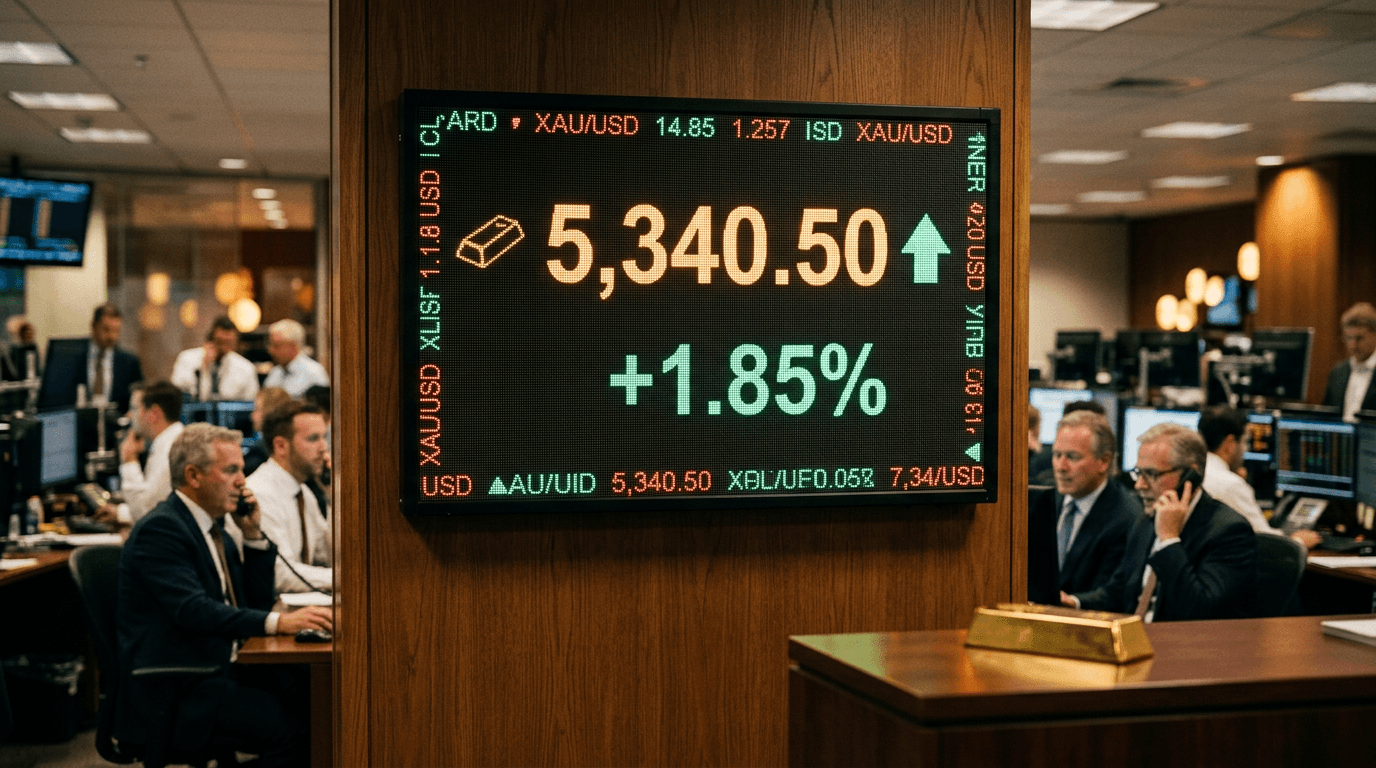
Gold prices have surged to extraordinary levels as geopolitical tensions spike and investors flee toward safe-haven assets. With spot gold trading near $5,279 and demonstrating convincing upward momentum, the precious metal is displaying the classic characteristics of a risk-off rally driven by genuine uncertainty in global markets. This surge represents far more than a technical breakout—it reflects a fundamental shift in investor sentiment as geopolitical events reshape portfolio positioning worldwide.
The Anatomy Of Safe-haven Demand
Gold's role as the ultimate safe-haven asset has been proven repeatedly throughout financial history. When markets face uncertainty, whether from military conflict, economic collapse, or systemic financial stress, capital flows toward assets that preserve wealth rather than generate returns. Gold satisfies this demand perfectly because it holds intrinsic value independent of any government's ability to pay or any company's operational performance. During periods of elevated geopolitical risk, gold typically experiences an immediate demand surge as both institutional and retail investors seek to protect their assets from the worst-case scenarios unfolding in real-time.
The current rally demonstrates this dynamic with textbook precision. Investors confronting the reality of direct military conflict involving major global powers have concluded that traditional diversification strategies may prove insufficient. Gold's lack of correlation with equity and bond markets becomes invaluable precisely when those markets face synchronized stress. The precious metal's ability to maintain purchasing power across currency debasement cycles adds another layer of appeal during periods when central banks face pressure to monetize government spending or support destabilized financial systems.
Geopolitical Catalyst Accelerates Rally
Recent military escalation between the United States, Israel, and Iran triggered the most dramatic single-session surge in gold prices in recent memory. Coordinated strikes on Iranian targets on February 28, 2026, sent spot gold catapulting from approximately $5,100 per ounce to over $5,300 in a matter of hours. This $200 move in a single session exemplifies how genuine geopolitical shocks can override technical patterns and fundamental valuations instantaneously.
The ripple effects extended far beyond Western markets. Indian gold markets saw domestic prices jump over 3,100 rupees per 10 grams in a single day, demonstrating the global nature of safe-haven demand when major-power conflicts emerge. Silver participated enthusiastically as well, jumping nearly 8% alongside gold's historic breakout. This synchronized precious metals surge indicated that market participants globally were reaching identical conclusions about portfolio risk management amid heightened geopolitical uncertainty.
The conflict also triggered currency volatility that amplified gold's appeal through an additional mechanism. When military action threatens major economies, resulting uncertainty typically weakens risk currencies while driving capital toward stores of value. Gold benefits doubly from this dynamic—not only does safe-haven demand increase directly, but any weakness in the dollar makes gold cheaper for international buyers in their home currencies, creating additional demand pressure. This currency-hedge characteristic becomes particularly powerful during conflicts involving the United States, the issuer of the world's reserve currency.
Technical Picture Supports Further Advances
The technical setup for gold suggests that current momentum has genuine room to run if geopolitical uncertainty persists. Buyers have demonstrated willingness to defend pullbacks near current levels, indicating strong conviction among market participants. Technical analysis suggests potential targets ranging from $5,420 to $5,500 if uncertainty remains elevated and buyers continue defending support levels. Some analysts have even outlined more aggressive upside targets reaching $5,500 to $6,000 if military tensions escalate further.
These technical targets align with structural demand factors that have been supporting gold prices throughout 2026. Year-to-date gains of approximately 22 percent reflect not merely speculative positioning but fundamental shifts in how investors allocate capital. Central bank buying remains robust, with official sector accumulation continuing at elevated rates. Exchange-traded fund inflows have been consistent, indicating sustained retail and institutional demand for inflation protection and portfolio diversification. This combination of technical momentum, safe-haven flows, and structural demand creates a favorable environment for continued upside exploration.
Strategic Implications For Investors
The current environment presents investors with a critical decision point regarding portfolio construction. Gold's historic rally has transformed it from a niche alternative investment into a mainstream portfolio component. The precious metal now represents approximately 2.8 percent of total assets under management across equities, fixed income, and alternatives globally. This mainstream adoption suggests that additional investors remain available to participate in further advances if geopolitical tensions persist or intensify.
However, investors should recognize that the sustainability of gold's rally depends fundamentally on the trajectory of geopolitical conflict. If military action remains limited and diplomatic solutions emerge, gold may consolidate current gains but struggle to push substantially higher. The asymmetry of potential outcomes heavily favors gold bulls, as worst-case scenarios would likely trigger unprecedented safe-haven demand, while best-case scenarios of de-escalation would primarily cause consolidation rather than major reversals.
For investors navigating current uncertainty, understanding gold's mechanics as a safe-haven asset has become essential knowledge. The precious metal's role as a geopolitical hedge, currency diversifier, and inflation protection remains as relevant today as throughout history.