
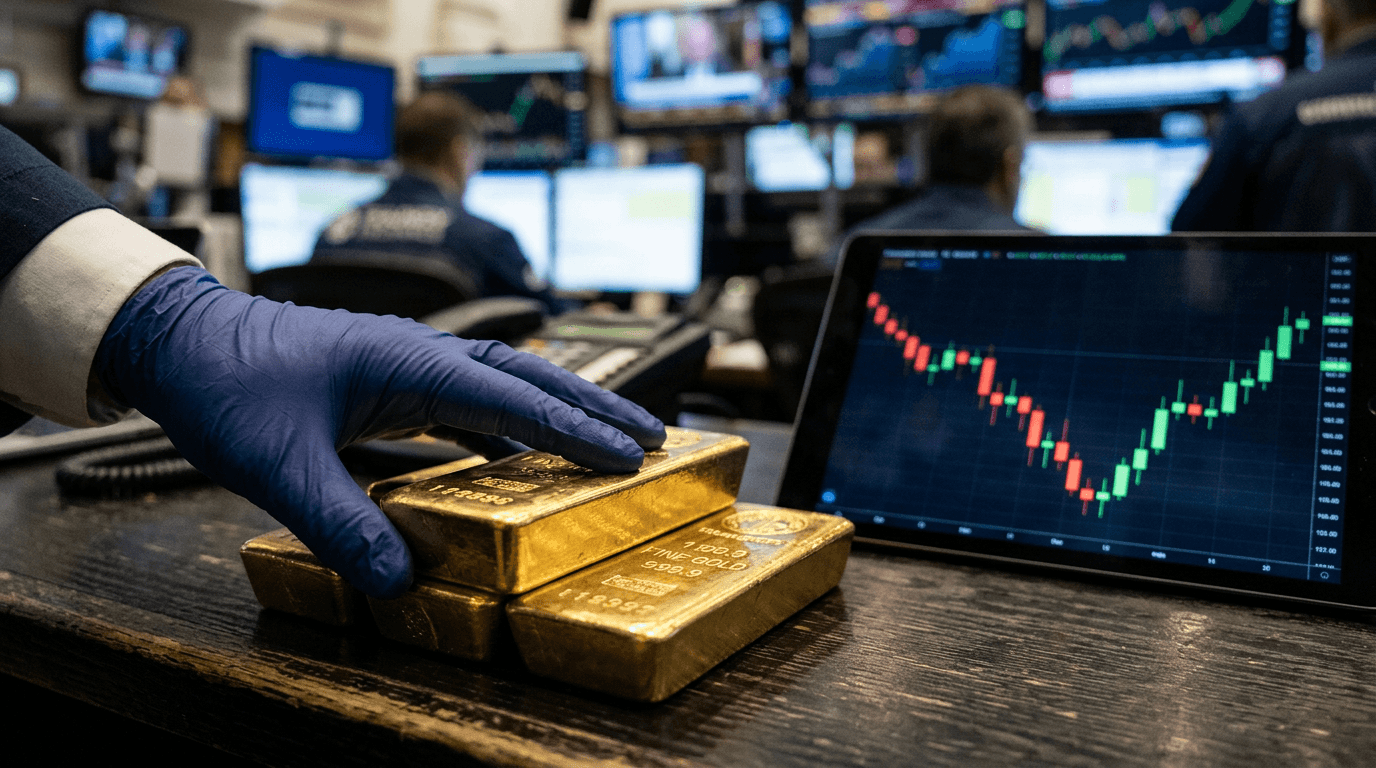
Gold's Modest Rebound: Unraveling the Complex Dynamics Behind Precious Metal Prices
In recent trading sessions, gold prices have seen a modest recovery, pulling back from three-month lows as investors reassess their strategies amid escalating tensions in the Middle East and soaring oil prices. However, this rebound conceals a more intricate reality: despite geopolitical factors that typically boost precious metals, gold is on track for its first weekly decline in five weeks. This trend underscores the formidable headwinds posed by rising interest rates, a robust US dollar, and diminishing prospects for Federal Reserve rate cuts.
A Dramatic Rally and a Swift Reversal
Gold's trajectory this year has been nothing short of dramatic. The precious metal reached an unprecedented high of $5,602 at the close of January 2026, continuing its remarkable 60% surge from 2025. Yet, this was followed by a sharp and rapid correction. Since early March, gold has plunged nearly 25%, hitting lows near $4,100 before recovering to trade between $4,500 and $4,650.
Silver's journey has been even more volatile, reaching a record $121 per ounce on January 29 before plummeting approximately 50% to lows around $61, eventually rebounding to the $70 to $71 range. This significant pullback from near-record highs starkly contrasts with the momentum that propelled precious metals higher in 2025, a year when central banks amassed 863 tonnes of gold reserves and investors sought refuge from economic uncertainty.
Why Geopolitics Haven't Saved Gold
At first glance, the weakness in precious metals seems counterintuitive. The intensifying conflict involving Iran has heightened concerns over energy security, shipping routes, and global stability. Oil prices have surged, with Brent crude nearing $115 per barrel and WTI surpassing $100, while disruptions in the Strait of Hormuz persist. Traditionally, such a backdrop would lead investors to flock to gold as a safe-haven asset.
Yet, macroeconomic forces have overshadowed geopolitical risk premiums. The interplay of rising oil prices, higher bond yields, and a stronger US dollar has dampened gold's traditional allure. Investors are increasingly focused on the inflationary implications of elevated oil prices rather than the defensive attributes of precious metals, fundamentally altering market reactions to geopolitical developments.
The Inflation-Interest Rate Conundrum
The primary factor behind gold's current weakness is the surge in real interest rates. Recent developments in the Middle East have driven oil prices higher, sparking concerns that inflation could remain elevated longer than anticipated. Consequently, markets have revised their expectations for Federal Reserve rate cuts, with a growing consensus that interest rates may stay higher for longer.
This scenario presents a formidable obstacle for gold, which generates no yield. As interest rates rise, investors find bonds, Treasury bills, and cash equivalents more attractive, making non-yielding assets like gold less appealing. This shift in relative valuations has been a key driver of recent selling pressure, overshadowing the traditional safe-haven appeal that typically emerges during geopolitical stress.
Additionally, a stronger US dollar exacerbates this problem. Since gold is globally priced in US dollars, a stronger dollar makes the metal more expensive for buyers using other currencies, reducing demand and applying further downward pressure on prices. As a result, some investors have opted to hold cash or dollar-denominated assets instead of gold.
Central Bank Support Shows Signs of Fatigue
Another pivotal shift has occurred in the official sector. Central banks were instrumental in gold's rally in 2025, but analysts now caution that this structural support may be waning. For instance, the Turkish central bank reportedly reduced its gold reserves by around 53 tonnes through outright sales and gold-backed currency swaps, indicating that official institutions may use gold as a liquid asset during financial stress rather than continue accumulating it.
If more central banks slow purchases or begin selling, one of the strongest structural drivers of gold demand could weaken just as speculative positioning is already being reduced, potentially prolonging the near-term weakness.
Tentative Stabilization and Future Outlook
Recent trading sessions have offered some respite for precious metals. Gold has recovered to trade between $4,568 and $4,652 per ounce, while silver has climbed back to around $71 after rebounding from three-month lows. This stabilization has been supported by bargain buying, a slightly softer US dollar, and less hawkish remarks from Federal Reserve Chair Jerome Powell, who suggested that interest rates are appropriately positioned and that inflation remains reasonably well-anchored.
Looking ahead, precious metals face genuine uncertainty. The market is caught between two competing narratives: the inflationary scenario where war drives oil higher and keeps rates elevated, and the defensive narrative where prolonged conflict threatens growth and revives safe-haven demand. How gold and silver trade in the coming weeks will largely depend on which fear dominates market sentiment and whether geopolitical tensions ease or continue to escalate.
Gold Recovers as Safe-Haven Demand Resurfaces Amid Oil-Driven Inflation Concerns
Gold rebounds from three-month lows as geopolitical tensions support prices, but faces headwinds from rising rates and a strong dollar. The first weekly decline in five weeks reflects conflicting market narratives.
NEWS IMPACT SCORE: 6