
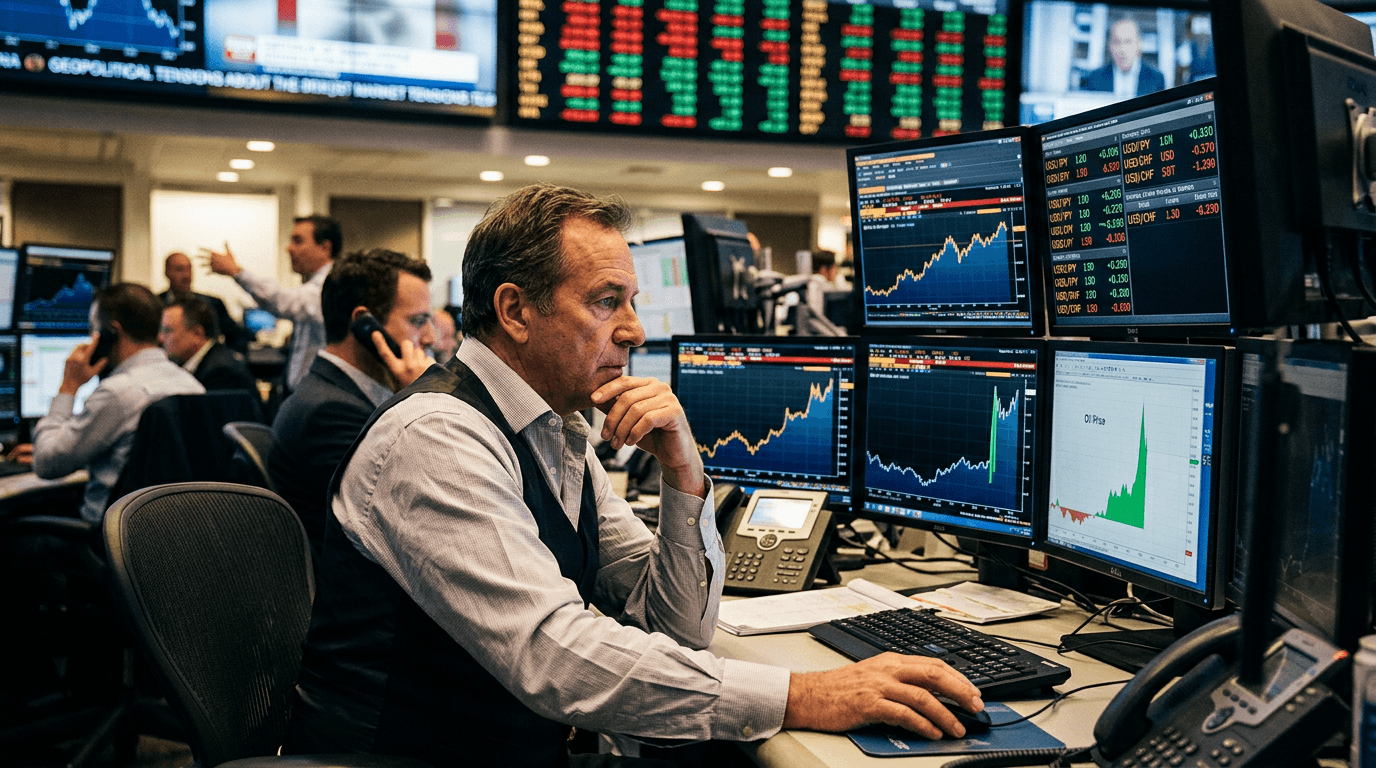
Gold is back in the spotlight as investors seek shelter from a fresh wave of geopolitical risk. A sharp spike in crude oil, tied to escalating conflict involving Iran, has rattled equities and high‑beta currencies, reviving the classic “flight to safety” into gold, the yen, the Swiss franc and other defensive assets.[1][4] After an initial wobble, bullion prices have recovered prior losses as safe‑haven demand reasserts itself.[4][9]
Safe-haven Flows Return As Oil Spikes
When geopolitical headlines turn darker, the market playbook is remarkably consistent: oil jumps, risk assets sell off, and capital rotates into perceived safe havens like gold and reserve currencies.[1][6] The latest tensions surrounding Iran have pushed crude sharply higher, with some analysts projecting the potential for oil to move toward the $110–$120 per barrel zone if disruptions deepen.[1][6] Higher oil prices immediately raise concerns about growth, inflation, and corporate margins, feeding a broader risk‑off mood in global markets.[6][8]
Gold’s reaction has been more nuanced but ultimately supportive. After a modest pullback, spot prices have rebounded as investors refocus on bullion’s role as a store of value during conflict and energy shocks.[4][9] In recent years, each major flare‑up—from the Russia‑Ukraine war to repeated Middle East escalations—has tended to push gold to new highs or establish higher floors, even when there are interim corrections driven by interest‑rate expectations or dollar strength.[2][5] Analysts now describe gold as being in a structural bull market, underpinned not just by retail fear but by persistent central bank buying and geopolitical hedging.[2]
In the current episode, the key takeaway is that the “safe‑haven bid” in gold remains very much alive. Even when rate expectations or a stronger dollar temporarily weigh on prices, recurring geopolitical shocks keep drawing sidelined capital back into bullion.[2][5]
Why Geopolitical Shocks Link Oil, Gold And Risk Assets
Energy chokepoints and conflict zones sit at the heart of the global financial system. When tensions rise in the Middle East or near major shipping lanes, oil markets are often the first to react.[6][7] Supply disruptions or even the threat of them can trigger significant price spikes as traders reprice future availability and risk premia.[6][8]
Those oil shocks spill over into broader assets through three main channels:
1) Growth and earnings: Higher energy costs compress profit margins, particularly in energy‑intensive sectors like airlines, transportation, and manufacturing. Equities in those areas usually underperform, pulling indices lower when the move is sharp enough.[6][8]
2) Inflation expectations: Rising oil often pushes up headline inflation and inflation expectations, which can complicate central bank policy. If markets think policymakers will respond with tighter or less accommodative policy, that can pressure both stocks and “long duration” assets.[6][8][9]
3) Risk sentiment: War risk, sanctions, and disrupted trade routes increase uncertainty and tail‑risk scenarios. Investors demand a higher risk premium for holding cyclical or high‑beta assets, rotating into perceived safe havens.[1][2][6]
Gold sits at the intersection of all three. It is not a claim on corporate cash flows, so it is less sensitive to earnings downgrades. It is widely viewed as an inflation hedge over the long term. And it is one of the few assets with no counterparty risk, which is especially attractive when concerns about sanctions, cyberattacks, or financial plumbing emerge.[2][6]
This is why, during the latest Iran‑related flare‑up, both oil and gold have moved higher while equities and risk‑sensitive currencies have come under pressure.[1][4][7] The market is effectively paying up for energy security and financial insurance at the same time.
Currencies, Equities And Volatility: Who Feels The Pain
The impact of a safe‑haven rotation is especially visible in foreign exchange. As geopolitical tensions and oil shocks intensify, traditional risk‑on currencies—such as those of commodity exporters or emerging markets—often weaken against the US dollar, yen, and Swiss franc.[1][7][8] High‑beta FX pairs can see outsized moves as investors cut carry trades and reduce exposure to markets perceived as more vulnerable to capital outflows or external financing costs.
Equity markets, particularly in sectors tied to global trade, consumer discretionary spending, and cyclical growth, typically struggle in this environment.[6][8] Defensive sectors like utilities, consumer staples, and some healthcare names may hold up better, but the overall tone is one of de‑risking rather than rotation within risk assets.
Volatility tends to spike across asset classes. Implied volatility in equity indices rises as investors hedge downside risk, while options activity in oil and gold increases as traders price in wider potential trading ranges.[6][7] For short‑term traders, this environment can be rich with opportunity but also unforgiving; position sizing, stop‑loss discipline, and scenario planning become critical.
For longer‑term investors, the signal is clearer: geopolitical risk is now a persistent, not transitory, feature of the macro backdrop. The repeated pattern of “crisis → oil spike → gold bid → risk selloff” suggests that portfolios which completely ignore safe‑haven assets may be structurally exposed to these recurring shocks.[2]
WHAT THIS MEANS FOR GOLD’S BIGGER PICTURE
Even beyond the latest headline, gold’s broader story has been one of steady institutionalization and strategic accumulation. Since 2022, central banks—especially in emerging markets—have been buying bullion at a robust pace, in part as a hedge against sanctions risk and long‑term currency debasement.[2] That demand adds a powerful underlying bid independent of short‑term speculative flows.
At the same time, recurring episodes of conflict in Europe, the Middle East, and key shipping routes have created what many analysts call a “geopolitical risk premium” embedded in gold prices.[2][7] Each new crisis may cause temporary overreactions and pullbacks, but the longer‑term pattern has been a series of higher lows and, periodically, new highs.[2][5][9]
From a technical perspective, analysts are closely watching major psychological levels—around the $5,000 per ounce area in current pricing—as important support zones that define whether the uptrend remains intact.[5] While prices can and do slip when markets refocus on interest‑rate expectations or a stronger dollar, dips toward these levels have repeatedly attracted fresh buying interest as long as geopolitical uncertainty remains elevated.[2][5]
Practical Takeaways For Traders And Investors
For traders and investors navigating this environment—whether in live markets or simulated finance (SimFi) platforms—the current episode offers several practical lessons:
- Expect cross‑asset linkages. When you see a sharp oil spike driven by geopolitical risk, immediately think about second‑order effects in gold, FX, equities, and volatility.[1][6][7]
- Respect the safe‑haven trade, but don’t chase parabolic moves. History shows that gold often experiences an initial spike on panic buying, a consolidation phase as central banks signal policy, and then a more durable move as the geopolitical risk premium embeds.[2] Averaging in on pullbacks rather than buying at peak fear can be a more robust strategy.
- Size gold as a strategic allocation, not just a tactical trade. Many allocation frameworks suggest 5–10% in gold for conservative investors, and up to 10–20% for those particularly focused on geopolitical and sanctions risk, adjusted for personal risk tolerance and overall macro views.[2]
- Use simulations to stress‑test your approach. SimFi environments allow traders to practice how their strategies perform during sudden oil spikes, gold surges, and equity drawdowns—without the emotional pressure of real capital at risk. That can help refine risk management rules before applying them in live markets.
Conclusion
The renewed safe‑haven bid in gold, following an oil spike tied to escalating conflict involving Iran, reinforces a simple but powerful message: geopolitics and energy markets remain central drivers of modern portfolios.[1][4][6] As long as the world is in a phase of elevated geopolitical tension and fragile energy security, episodes of risk‑off rotation into gold, defensive currencies, and volatility hedges are likely to recur.
For traders and investors willing to study these patterns and integrate them into disciplined strategies, these episodes are not just threats—they are opportunities to build more resilient portfolios and to use tools like simulated trading to prepare for the next shock before it hits the screen.