
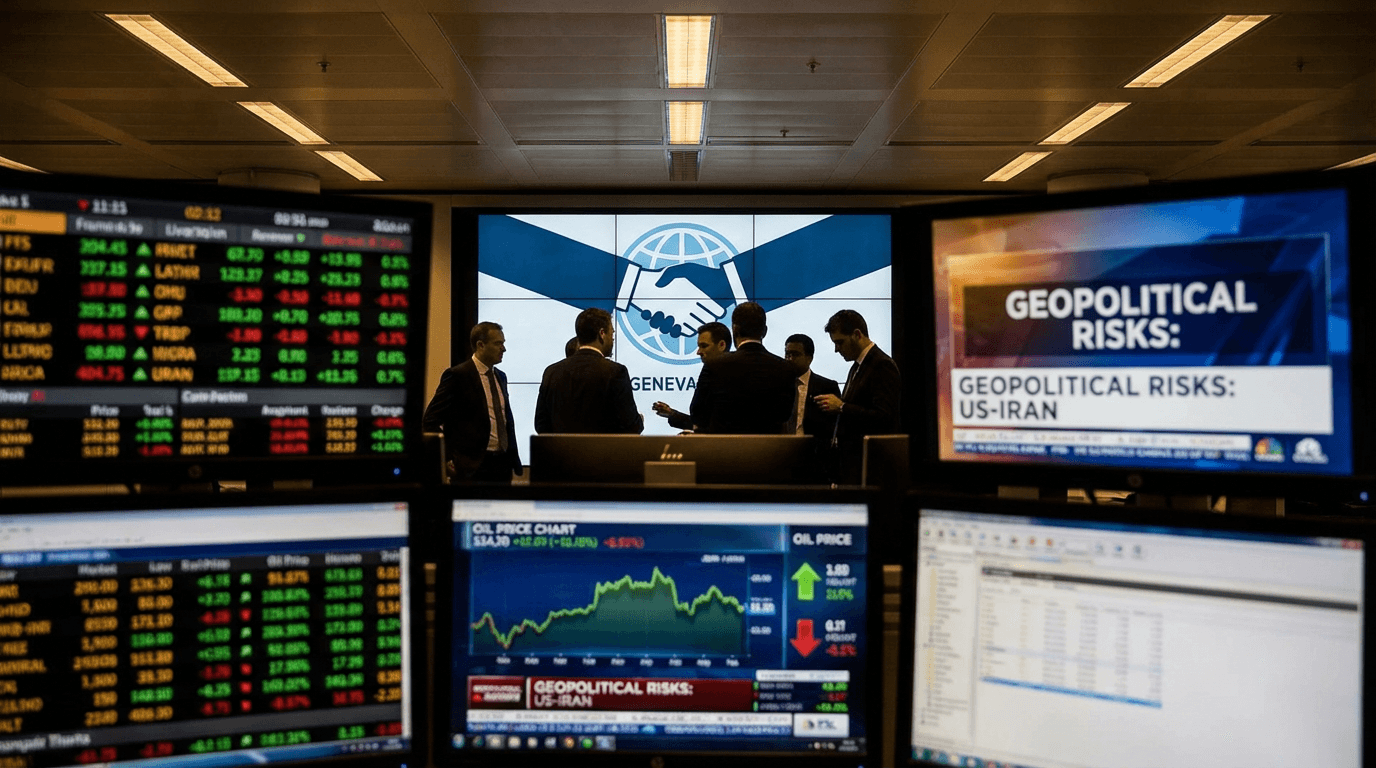
Geopolitical tensions between the United States and Iran have long been a significant driver of oil market movements, and the resumption of nuclear negotiations in Geneva is once again testing trader nerves and reshaping crude price dynamics. As carrier strike groups deploy to the region and diplomatic talks inch forward, the energy markets are experiencing the kind of cautious volatility that characterizes periods of high geopolitical uncertainty. Understanding the relationship between these political developments and oil price movements is essential for traders navigating today's SimFi environment, where real-world events translate directly into trading opportunities and risks.
Reading The Oil Market's Current Signal
The oil market's recent movement tells a nuanced story of traders weighing multiple scenarios simultaneously. WTI crude dipped 0.08% to $65.58 while Brent edged 0.41% higher to $71.06, reflecting a market caught between competing forces. The modest nature of these movements suggests that traders are currently pricing in a low probability of immediate conflict, with market expectations showing minimal risk of escalation until at least mid-March. This cautious optimism, however, masks significant underlying uncertainty. The divergence between WTI and Brent prices also indicates regional supply concerns, with Brent's relative strength suggesting traders are more worried about potential disruptions to Middle Eastern crude exports than broader global supply impacts.
The Military Buildup And Diplomatic Backdrop
Behind these price movements lies a rapidly escalating military posture in the region. The United States has positioned carrier strike groups in both the Mediterranean and the Persian Gulf, while F-22 stealth fighters have been deployed to Israeli soil. According to naval warfare experts, this force deployment represents a clear messaging strategy, though its ultimate purpose remains deliberately ambiguous to observers and analysts alike. The signal could represent deterrence designed to pressure Iranian negotiators, preparation for military action, or both simultaneously. Meanwhile, Geneva talks are set to commence with fundamental disagreements apparent from the outset. Iranian negotiators have historically focused on extracting concessions without offering substantive compromises of their own, according to defense analysts monitoring the situation, while the U.S. has shown diminishing patience for extended negotiations that yield little tangible progress.
Why These Talks Matter For Oil Prices
Iran represents a critical node in global oil supply chains. The nation produces approximately 3.2 million barrels per day under current conditions, and disruption to this supply would immediately ripple through global energy markets. Any military conflict scenario would threaten shipping through the Strait of Hormuz, through which approximately one-third of all seaborne traded oil passes. From a trader's perspective, the Geneva talks represent a binary outcome: either negotiators reach a deal that eases sanctions and increases Iranian oil supply to global markets, or talks collapse and raise the specter of military strikes that would dramatically constrain supply. The current modest oil price movements suggest markets are betting on continued diplomatic engagement for the immediate term, but this equilibrium is fragile and subject to rapid disruption based on negotiation headlines.
Key Sticking Points That Could Trigger Volatility
Understanding the substantive barriers to agreement is crucial for anticipating future market moves. The central issues dividing negotiators include Iran's nuclear enrichment program, ballistic missile development, alleged support for proxy terror networks, and human rights concerns related to the regime's treatment of its own citizens. Experts familiar with past negotiations note that Iran's previous pattern has been to make rhetorical commitments while circumventing actual implementation. The 2015 nuclear deal, for instance, allowed Iran to continue developing ballistic missile delivery systems and provided a window for restarting nuclear development programs. If current talks fail to address these fundamental concerns comprehensively, negotiations could collapse rapidly, with significant implications for oil prices. Traders should monitor official statements from both sides closely, as any indication of walking back core demands could trigger sharp upward moves in crude prices as risk premiums increase.
What Traders Should Watch
The coming weeks present several critical inflection points for oil market watchers. First, focus on the outcomes of the Geneva talks themselves and any statements regarding progress or obstacles. Second, monitor military movements and any changes to the force posture in the region. Third, watch for proxies and regional tensions that could indicate whether either side is preparing for non-diplomatic resolution. The market has effectively set March 15th as a mental barrier, with low probability of major escalation priced in before that date. This suggests that any significant developments between now and mid-March that raise conflict probability could trigger rapid repricing in crude markets.
The intersection of geopolitics and energy markets remains one of the most dynamic and consequential relationships in global finance. As Geneva talks progress, oil traders must remain vigilant and informed about both the diplomatic progress and the military signaling occurring simultaneously, recognizing that these negotiations will continue shaping crude prices for weeks to come.