
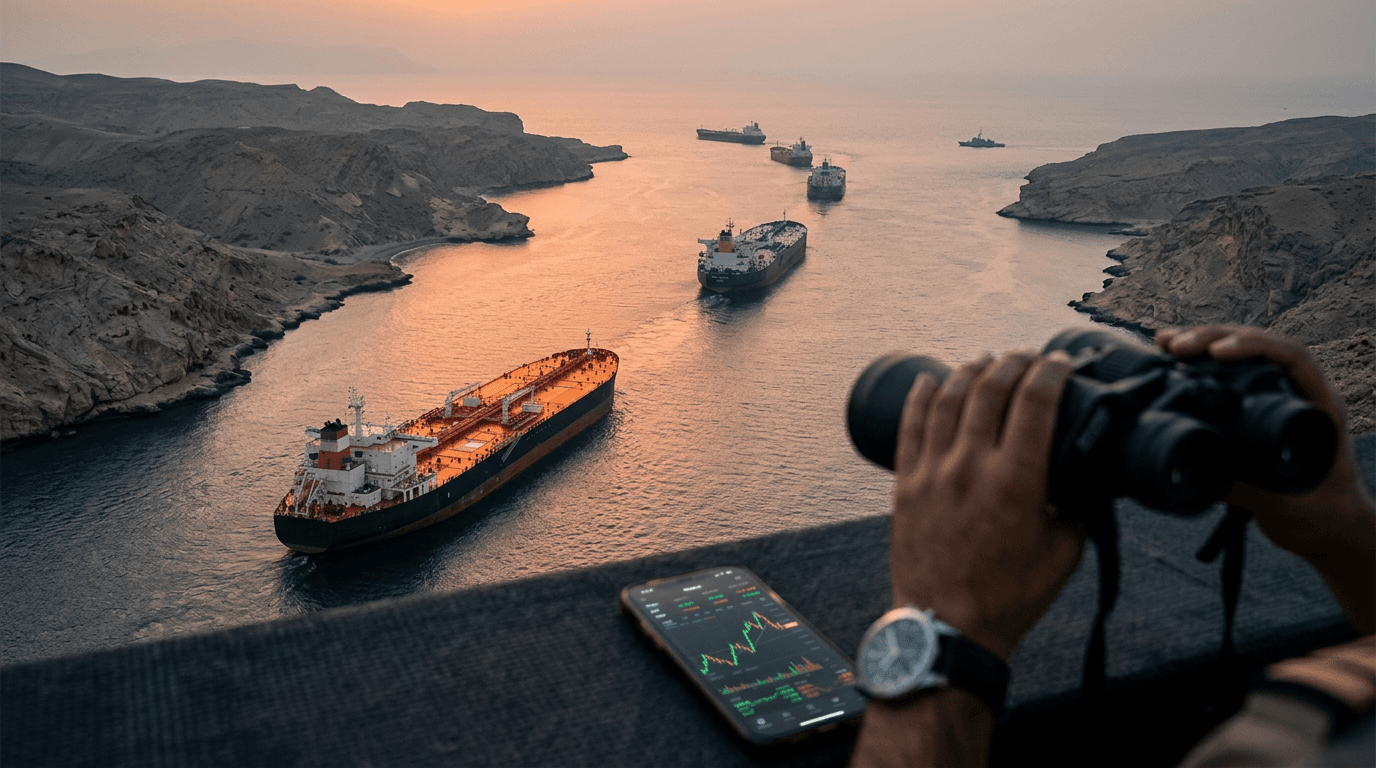
The Strait of Hormuz, the world's most critical energy chokepoint, has descended into crisis as Iran's threats to block commercial shipping have triggered a cascade of disruptions across global oil markets and supply chains. Following escalated military tensions between Iran, the United States, and Israel, the Islamic Revolutionary Guard Corps broadcast warnings to vessels in the Persian Gulf, declaring that "no ship is allowed to pass the Strait of Hormuz."[1] While Tehran has not formally declared a complete blockade, the threat alone has sparked a de facto closure that is reshaping energy markets and forcing businesses worldwide to reassess their shipping strategies.
The Stakes: Why The Strait Matters To Everyone
The significance of this crisis cannot be overstated. Approximately 20% of the world's oil supply passes through this narrow channel wedged between Iran and Oman.[1] For perspective, that translates to roughly one-fifth of global crude oil consumption flowing through a passage just 34 miles wide at its narrowest point. Financial analysts estimate that even a single day of complete blockade could cause global oil prices to double from current levels around $66 per barrel to more than $120.[1] Such a shock would ripple through every economy on Earth, affecting everything from gasoline prices at the pump to manufacturing costs and airline tickets.
The economic vulnerability is acute because there are no viable alternatives for rerouting most of this traffic in the short term. While some shipping has historically moved around the Cape of Good Hope when circumstances required, that route adds weeks and substantial costs to transit times. The Strait of Hormuz remains the only practical passage for the vast majority of Middle Eastern oil exports that fuel global energy markets.
Immediate Market Response And Shipping Chaos
Major shipping carriers have already responded to this crisis with decisive action. Container shipping giants including MSC, CMA CGM, and Hapag-Lloyd have halted all vessel transits through the Strait of Hormuz and ordered their ships to seek safe shelter.[3] This coordinated retreat reflects the severity of the security threat. According to vessel tracking data, approximately 170 containerships totaling 450,000 TEU are now stuck inside the Gulf, unable to transit safely.[3] Meanwhile, roughly 750 commercial vessels were transiting through the strait as of the onset of the crisis, with no new vessels entering but some continuing toward the Indian Ocean.[1]
Insurance markets have responded with dramatic price increases. Insurers have warned clients that war risk insurance rates for ships transiting the Gulf could spike by as much as 50% in the coming days.[1] This additional cost burden will be passed along supply chains, ultimately affecting consumers and businesses dependent on imported goods and energy.
The Geopolitical Backdrop
This crisis emerged from a rapidly escalating confrontation. The U.S. and Israel launched a campaign of airstrikes across Iranian nuclear and military infrastructure, to which Iran retaliated with attacks on assets across the Middle East, including strikes on Israel, Qatar, the UAE, Kuwait, Bahrain, Jordan, Saudi Arabia, Iraq, and Oman.[2] The situation escalated further when an oil tanker was struck off the coast of Oman on March 1, marking a dangerous shift in targeting from military installations to vital energy infrastructure.[2]
Notably, the United Kingdom Maritime Trade Operations confirmed "significant military activity" in the region, including an incident just two nautical miles north of Oman's Kumzar at the heart of the strait.[2] The U.S. Navy informed commercial companies that it cannot guarantee the safety of vessels anywhere in the Persian Gulf.[1] This statement underscores the genuine security concerns facing shipping operators.
What Happens Next: Scenarios And Implications
Under international maritime law, Iran and Oman control the waters on either side of the shipping lanes, but the strait is considered an international passage guaranteeing free commercial traffic.[2] However, Iran's warnings, while not yet constituting a formal legal blockade, represent a credible threat that shipping companies cannot ignore. Even without a complete closure, Iran could employ alternative tactics including signal jamming, vessel detention, warning shots, or deployment of sea mines—all of which would further disrupt traffic while raising insurance and freight costs substantially.[2]
There is also speculation that Chinese-owned vessels may receive exemptions from Iran's de facto blockade, mirroring the informal immunity they have historically enjoyed from Houthi attacks in the Red Sea.[3] Meanwhile, Houthi forces in Yemen have reportedly decided to resume attacks on commercial shipping, creating a potential second front for maritime disruption.[3]
What This Means For Traders And Energy Markets
For traders and investors, this crisis represents both immediate risk and opportunity. The tightening of global oil supply through one of the world's most important chokepoints will continue supporting crude oil prices at elevated levels. Energy stocks, particularly those of integrated oil companies with exposure to Middle Eastern production, may experience volatility as markets price in supply disruption scenarios. Shipping and logistics companies face margin pressure from elevated insurance costs, while renewable energy stocks may benefit from heightened focus on energy security and diversification away from Middle Eastern oil.
The current situation remains fluid and dangerous. While Iran has not formally closed the strait, the combination of military threats, shipping company responses, and insurance market shifts has created a de facto closure that is already disrupting global energy flows. Businesses dependent on consistent oil supplies or just-in-time inventory practices should prepare contingency plans and monitor developments closely in the coming days.