
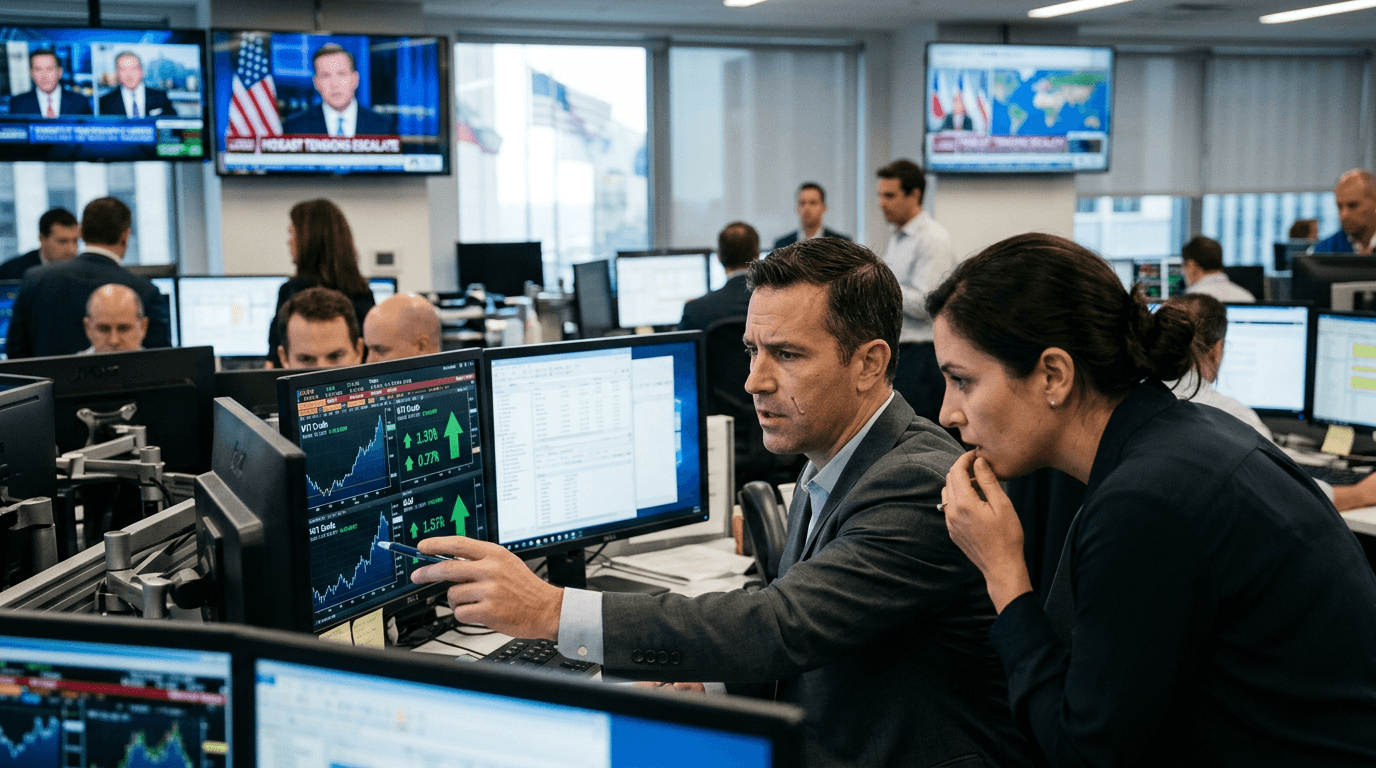
Escalating tensions between the United States and Iran have turned the Middle East into a renewed geopolitical flashpoint, with oil prices surging, safe havens drawing heavy inflows, and currency and futures markets experiencing abrupt swings[2][4]. For traders and SimFi participants, these moves underscore how quickly geopolitical risk can reprice assets across the entire macro landscape[2].
Geopolitical Backdrop: Iran, The Gulf, And Shipping Lanes
The latest flare‑up has featured multiple rounds of strikes targeting Iranian military infrastructure and critical transport routes feeding into the Strait of Hormuz, the key chokepoint for Gulf oil exports[6][12][13]. Reports highlight U.S. actions against bridges and facilities linked to Iranian naval bases as part of efforts to constrain Tehran’s capacity to threaten commercial shipping[13]. At the same time, Iran has signaled willingness to pressure other routes, including asking aligned groups to be ready to disrupt Red Sea export flows, raising the specter of broader energy shipping bottlenecks[12].
These developments come on top of a fragile ceasefire and a series of tit‑for‑tat attacks that have already slowed the full reopening of the Strait of Hormuz, reinforcing the perception that Middle East energy supply routes are subject to sudden, binary risk events[7][12]. For markets, that reality translates into an embedded geopolitical risk premium across crude, refined products, and even LNG, as traders price not just current disruptions but the probability of further escalation[2].
Oil Market Repricing And The New Risk Premium
Oil has responded forcefully to the latest round of hostilities, with Brent crude recently jumping more than 3% in a single session and pushing above $90 per barrel, its highest level in weeks[6]. That move capped a roughly 16% weekly rally, the strongest since the spring, as traders scrambled to reassess supply risk and rebuild inventories[6]. Earlier episodes in the conflict saw comparable spikes, including a more than 7% surge in U.S. crude and over 6% in Brent after coordinated strikes against Iranian targets raised fears of wider war and major supply disruption[4].
Forward curves now reflect expectations that elevated prices may persist, with crude futures indicating levels significantly above pre‑war prices over coming months and into year‑end[10]. Analysts have flagged scenarios in which Brent could approach $100 per barrel if security conditions deteriorate further and warned that a severe disruption could push spot prices well beyond that threshold[9]. Even on days when prices pull back amid broader macro worries, the underlying conflict has helped keep a floor under the market by delaying the normalization of shipping and production[7][9].
Beyond headline prices, the key dynamic for traders is the re‑emergence of a durable risk premium tied not purely to supply and demand, but to route security, insurance costs, and the threat that any single event could temporarily choke off flows[2]. This geopolitical overlay makes oil more “event‑driven,” increasing intraday volatility and amplifying the importance of news flow and positioning data for futures traders.
SAFE HAVENS, FX, AND CROSS‑ASSET VOLATILITY
The Iran risk has not only bid up crude; it has also reinvigorated traditional safe‑haven trades as investors seek shelter from potential downside in risk assets[2][4]. Demand for the U.S. dollar has strengthened, supported by its dual role as a reserve currency and a perceived hedge against geopolitical shocks[2]. Gold and other defensive assets have also benefited, while equity index futures have come under pressure during episodes of intense headline risk, with stock futures sliding as war concerns intensified earlier in the year[4].
In foreign exchange, high‑beta EM currencies—such as the South African rand—have struggled as risk‑off positioning grows and carry trades are unwound[2]. These currencies tend to be hit hardest when volatility rises and global investors rotate toward safer, more liquid assets, translating geopolitical news directly into FX swings. At the same time, global bond yields have climbed to multi‑week highs as markets price in the inflationary implications of higher oil and the prospect that central banks may face renewed energy‑driven price pressures[2][10].
For futures markets, the combination of rising crude, stronger safe havens, and higher yields creates a complex cross‑asset environment. Volatility futures, equity index derivatives, and rates futures all react to shifting expectations about growth, inflation, and policy, leading to correlated moves that can either amplify or hedge energy exposure depending on how portfolios are structured[2][10].
What This Means For Traders And Simfi Participants
For traders operating in a SimFi environment, the current episode is a textbook case study in cross‑asset contagion from a single geopolitical theme. A localized shock—rising Iran risk—has cascaded from physical energy markets into FX, rates, equity futures, and volatility instruments, all within a short window[2][6].
Simulated markets offer a valuable space to explore how different strategies behave under such conditions without the capital risk of live trading. Participants can model scenarios where oil gaps higher on fresh headlines, the dollar strengthens, and EM FX sells off, then examine how positions in index futures or bond futures might mitigate or amplify portfolio risk. They can also test the sensitivity of strategies to intraday news shocks, comparing systematic approaches (like trend‑following on crude) to discretionary macro trades based on geopolitical analysis.
Another lesson is the importance of understanding correlation regimes. In periods of calm, relationships between assets—such as oil and equities or EM FX and rates—may follow relatively stable patterns. Under geopolitical stress, those correlations can flip rapidly, with energy price spikes dragging down equities via growth and inflation concerns, while safe havens and higher yields reshape the risk‑reward profile across the curve[2][10]. Practicing in a SimFi setting helps traders build intuition for these regime shifts.
Practical Takeaways For Navigating Geopolitical Risk
1. Treat oil as a geopolitical as well as macro asset: price moves are increasingly driven by headlines on the Gulf, Hormuz, and sanctions, not just inventory data and economic releases[6][12].
2. Watch cross‑asset confirmation: strong rallies in crude accompanied by dollar strength, EM FX weakness, and rising yields signal a broad risk‑off, inflationary environment rather than an isolated commodity move[2][4][10].
3. Use simulated scenarios to stress‑test positions: build plays where crude gaps higher, safe havens outperform, and risk assets retrace, then evaluate P&L impacts across FX, equity futures, and rates within a controlled environment[2][6].
4. Focus on position sizing and volatility: geopolitical risk can produce outsized intraday swings; sizing trades conservatively and incorporating volatility‑based stops or options structures can help manage tail risk in both live and simulated portfolios[2].
5. Stay data‑driven: track not only price action but also term structures, implied volatility, and positioning indicators to distinguish between short‑lived headline spikes and more persistent risk premia[2][10].
Conclusion
Middle East tensions and heightened Iran risk have once again reminded markets that geopolitics can reprice assets faster than traditional macro drivers, lifting oil, supporting safe havens, and unsettling FX and futures in a matter of days[2][6]. For traders and SimFi participants, this environment is challenging but also rich with learning opportunities: it rewards those who understand cross‑asset linkages, manage risk dynamically, and remain disciplined in the face of event‑driven volatility. By using simulated markets to rehearse responses to geopolitical shocks, traders can build robust frameworks that stand up better when the next real‑world headline hits screens.