
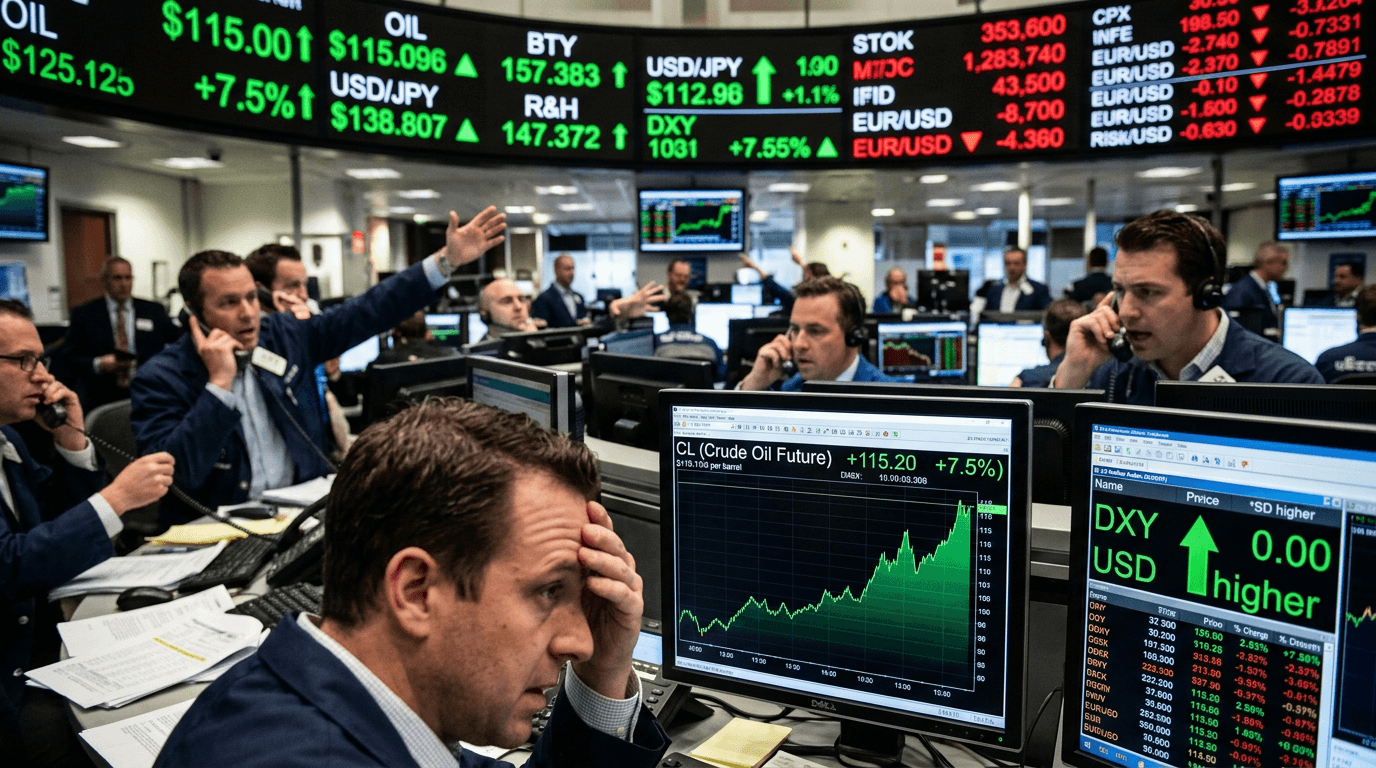
The assassination of Iran's Supreme Leader Ali Khamenei on February 28, 2026, represents one of the most significant geopolitical events of the decade, with immediate and far-reaching implications for global financial markets. As traders and investors digest this unprecedented development, the market response has been swift and predictable: traditional safe-haven assets like the US dollar are rallying while oil prices surge on elevated geopolitical risk premiums. For those navigating SimFi trading platforms or real-world markets, understanding the mechanics of this event and its ripple effects across asset classes is essential for positioning trades effectively.
Understanding The Operation And Its Significance
The killing of Khamenei was executed as part of a joint US-Israeli military and intelligence operation that lasted weeks, culminating in a precision strike on his Tehran compound during daylight hours on Saturday morning. According to intelligence reports, the operation involved years of sophisticated surveillance conducted by Israeli agencies including Mossad and Unit 8200, which reportedly compromised Tehran's traffic camera systems to monitor Khamenei's movements and security protocols. The strike employed 30 bombs and Blue Sparrow air-launched ballistic missiles, making it one of the most ambitious attacks on Iranian targets in decades. The Iranian government confirmed Khamenei's death on March 1, along with reports that his daughter, son-in-law, grandchild, and daughter-in-law were also killed in the strikes. His wife subsequently died from her injuries on March 2.
The operational sophistication here is noteworthy: US cyber operations disrupted Iranian communications networks during the strike window, effectively "blinding" Iran's defensive capabilities. A confirmed human intelligence source provided additional confirmation of Khamenei's presence at the compound, giving decision-makers the certainty needed to proceed with the operation. This wasn't a spontaneous military action but rather the culmination of years of intelligence gathering and strategic planning.
Safe-haven Usd Strength And Currency Market Dynamics
The immediate market response has favored the US dollar, as investors retreat from riskier assets in periods of elevated geopolitical uncertainty. The mechanism is straightforward: geopolitical crises typically trigger safe-haven flows into US Treasury securities and the dollar itself, as the US remains the world's largest and most liquid economy with relatively insulated markets. According to the market context provided, the relationship between oil price movements and USD strength is quantifiable: approximately 0.5-1% USD upside can be expected per 10% rise in crude oil prices.
This dynamic plays out across currency pairs. EUR/USD has been particularly pressured, as the European economy is far more dependent on Middle Eastern energy supplies than the United States, and the prospect of extended supply disruptions creates asymmetric risk for euro-denominated assets. Traders monitoring currency markets should expect continued volatility in EUR/USD and other risk-sensitive pairs until clarity emerges regarding Iran's political succession and potential military responses.
The Oil Market Shock And Energy Economics
Crude oil prices have surged on the news, reflecting legitimate concerns about potential supply disruptions in one of the world's most strategically important regions. Iran is one of OPEC's major producers, and political instability could disrupt production for months or longer. The assassination creates an immediate succession crisis: with no clear successor designated, Iran's government faces internal power struggles that could paralyze decision-making on economic policy and energy exports.
The oil rally serves a dual purpose in the broader market context. First, it validates the safe-haven bid in the dollar, as the energy cost connection creates a transmission mechanism linking geopolitical risk to currency valuations. Second, higher oil prices increase inflationary pressures in global economies heavily dependent on energy imports, which can impact central bank policy expectations and interest rate forecasts. For SimFi traders, this creates opportunities in energy sector volatility plays and macro hedging strategies.
Broader Geopolitical Risk And Market Implications
The assassination marks the culmination of escalating tensions between Iran and Israel-US allied forces. A previous assassination attempt during the Twelve-Day War in June 2025 was reportedly vetoed by then-President Trump, but the current political environment appears to have shifted significantly. The operation also occurs against the backdrop of January 2026 nationwide protests in Iran that resulted in thousands of deaths, mass discontent with the regime, and Khamenei's apparent consideration of a "Plan B" evacuation to Moscow.
For market participants, the key risk is the unknowable: How will Iran's next government respond? Will there be retaliation that escalates regional conflicts? Could this trigger a broader proxy war through Iranian allies like Hezbollah or other militias? These questions create sustained demand for risk-premium protection, supporting both dollar strength and elevated oil volatility.
Actionable Takeaways For Traders
The current environment presents several trading considerations. First, expect sustained volatility in currency markets, particularly risk-sensitive pairs that benefit from safe-haven flows. Second, oil market volatility likely remains elevated until Iran's political situation stabilizes, creating opportunities for energy-focused trading strategies. Third, the intersection of geopolitical risk and monetary policy—higher energy costs feeding inflation—suggests potential opportunities in inflation-hedging strategies and interest rate positioning.
This event exemplifies how geopolitical shocks transmit through global financial markets in predictable ways, and traders who understand these transmission mechanisms can position accordingly.