
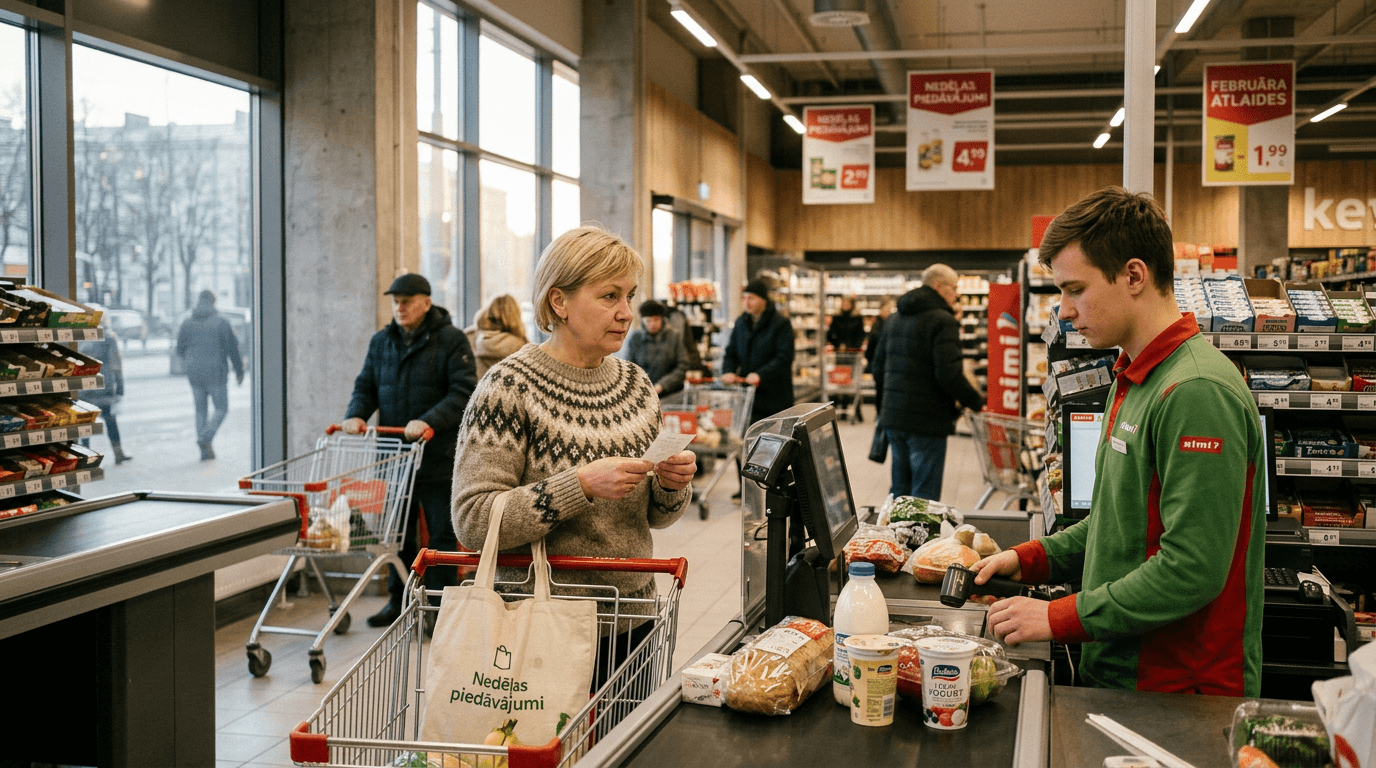
Latvia Retail Sales Slow to 4.3%—A Bellwether for Eurozone Economies
As February 2026 unfurled, Latvia's retail sector signaled a shift. Consumer spending growth, which had been robust, eased to 4.3% year-on-year—a notable slowdown from January's 6.4% surge as reported by the Central Statistical Bureau. This moderation reflects a broader narrative of stabilizing consumer confidence and spending patterns across the Eurozone, hinting at a more sustainable pace after the fervent momentum of late 2025.
A Crucial Inflection Point
This deceleration in retail sales growth marks a pivotal moment for policymakers and market observers gauging the health of Latvia's economy. While a 4.3% annual growth rate stands respectable against historical measures, the 1.1% month-on-month contraction raises questions about underlying consumer demand. Latvia, often seen as a bellwether for Baltic economic health, provides critical insights for traders monitoring Eurozone economic indicators.
Tracing the Retail Trajectory
Latvia's retail sector began its recovery in mid-2025. Calendar-adjusted data shows an upward trend in sales since June 2025, with August marking the sharpest annual increase since March 2022 at 4.3%. January 2026's 6.4% growth represented a peak in this cycle. Yet February's moderation suggests this peak might have passed, settling growth into a normalized range of 4-5% annually. Such patterns align with typical consumer spending cycles, where post-holiday and promotional periods see softer demand.
Category-Specific Insights
The moderation wasn't uniform across retail categories, revealing nuanced consumer priorities. Non-food products, excluding automotive fuels, saw growth ease to 6.7% from January's 9.7%. This category had driven 2025's recovery, indicating growing consumer caution towards discretionary purchases. Meanwhile, food, beverages, and tobacco remained flat in February, following a 1.7% decline in the prior month. Such stagnation in essentials often signals belt-tightening due to economic uncertainty or reduced purchasing power. Automotive fuel sales too cooled, growing 6.2% compared to January's 12.4%, suggesting decreased consumer mobility.
These performances highlight selective spending, with retailers in non-essential categories potentially facing challenges as consumers prioritize essentials.
Regional Economic Implications
Latvia's retail moderation has broader implications. As a Baltic economy integrated with Eurozone markets, Latvia's consumer trends often mirror wider regional conditions. This deceleration might signal weakening consumer confidence in Eastern Europe, possibly prompting central banks to reassess monetary policies. Latvia's consumer confidence index fell to -10.1 in February 2026, often a precursor to softer spending. Traders should watch if March and April data confirm this trend or indicate stable consumer behavior.
Implications for Market Participants
For SimFi traders tracking economic indicators, Latvia's retail sales data is a leading light for Eurozone economic momentum. The decline from 6.4% to 4.3% year-on-year, coupled with negative monthly performance, suggests economic growth may be moderating more than headlines reveal. This insight could shape trading decisions on Eurozone equities, currency pairs, and fixed income markets. The data underscores the importance of category-level analysis, especially for investors in consumer discretionary stocks needing to adjust outlooks, while essential goods may appear more defensive. The dip in automotive fuel sales could also impact energy prices and transportation equities.
Looking Forward
Latvian retail growth is projected to maintain moderate levels, with Trading Economics forecasting around 2.5% growth by the end of the first quarter and longer-term averages near 4.3% for 2026. This suggests a normalization rather than alarming deterioration. Yet, ongoing scrutiny of consumer confidence and specific trends remains crucial for accurate economic forecasting.
February's retail sales data offers a crucial reminder for traders: apparent strength can conceal underlying consumer fragility. While 4.3% annual growth is positive, the deceleration trajectory and negative monthly performance necessitate vigilance to ascertain if this marks a sustainable equilibrium or heralds a deeper slowdown in Latvian consumer spending.
News Impact Score: 5