
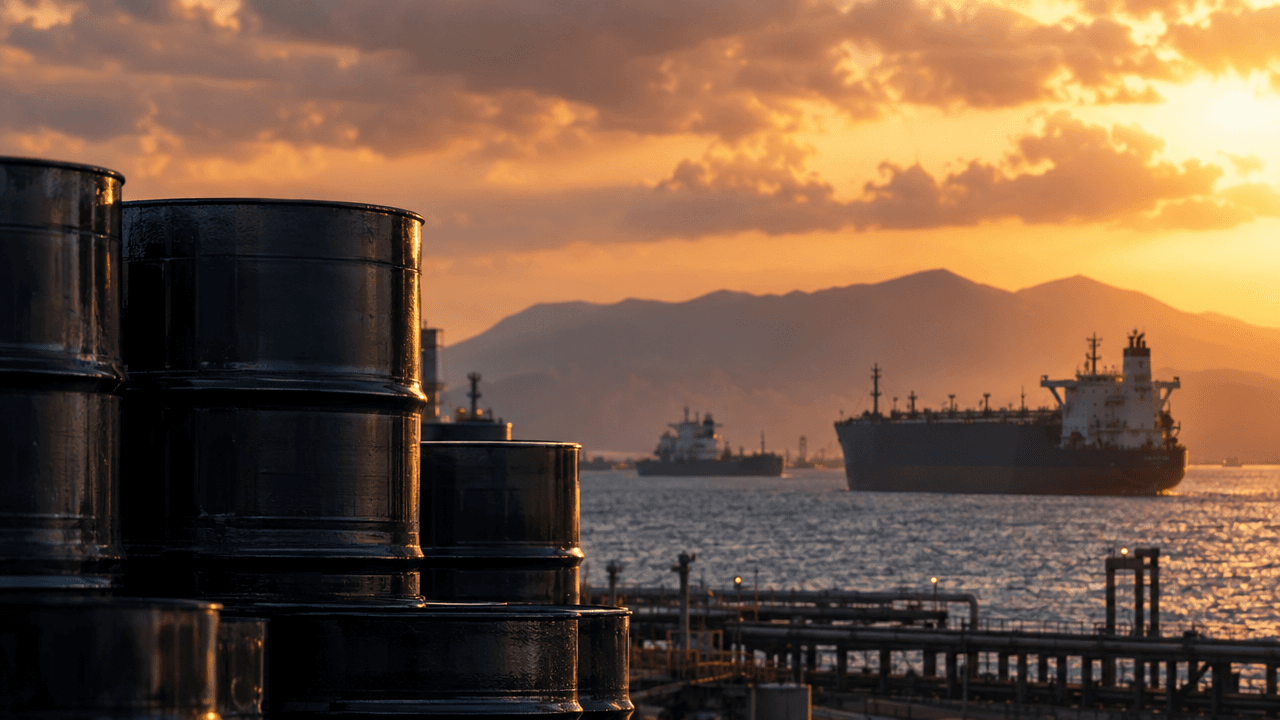
Oil remains anchored above the psychologically important $90-a-barrel level as traders balance hopes for a diplomatic breakthrough between the United States and Iran against the possibility of renewed conflict and disruption across the Middle East. Brent crude briefly slipped below $90 on expectations of de-escalation, but prices recovered as negotiations remained uncertain and attacks on shipping increased supply concerns. Brent futures settled at $92.76 on November 11, highlighting how quickly geopolitical developments can change the market’s direction. [3][9]
The immediate issue for energy markets is not simply how much oil is being produced today. It is whether future supplies can move safely through critical transportation routes, particularly the Strait of Hormuz. The waterway is one of the world’s most important energy corridors, and any prolonged disruption could tighten global supply, raise shipping costs, and create another wave of volatility across commodities and financial markets.
The Geopolitical Risk Premium
Oil prices include more than the cost of extracting and transporting crude. They also reflect a geopolitical risk premium: the additional amount traders are willing to pay because conflict could reduce future supply or interrupt deliveries.
That premium has recently moved sharply in both directions. Hopes that Washington and Tehran could restart negotiations encouraged traders to remove some of the risk premium from crude. Brent fell below $90 for the first time since August as markets anticipated the possibility of easing tensions and the return of additional Gulf supplies. [2]
However, the market has not received a confirmed agreement. Negotiations remain preliminary, while disagreements involving sanctions, Iran’s nuclear program, military activity, and shipping through the Strait of Hormuz continue to complicate diplomacy. Reuters reported that the political situation still leaves significant obstacles between the two sides, despite signals that further military escalation could be avoided while talks continue. [1][4]
This creates a fragile market balance. A credible agreement could push oil substantially lower by improving supply expectations and reducing transportation risks. A breakdown in negotiations, by contrast, could quickly send prices higher as traders rebuild protection against disruption.
Shipping Risks Keep Traders Alert
Physical supply is only one part of the energy equation. Crude must also reach refineries, and refined products must reach consumers. Tanker attacks, insurance costs, naval restrictions, and delays can make energy more expensive even when production remains stable.
Recent reports of attacks on tankers in the Strait of Hormuz helped push oil higher after its temporary decline. Iranian officials also pushed back against expectations of an immediate diplomatic breakthrough, adding to uncertainty about whether shipping conditions would normalize. [3]
For traders, this means headlines can have an outsized impact. A single announcement about negotiations may move prices lower, while an incident involving a tanker or military asset can reverse that move within hours.
The market response is also influenced by inventories and spare production capacity. If countries hold ample stockpiles and producers can quickly add barrels, a disruption may be absorbed more easily. If inventories are already tight, even a relatively brief interruption can generate a much larger price reaction.
Energy Costs And Central Banks
Higher oil prices matter far beyond the energy sector. When crude rises, gasoline, diesel, jet fuel, heating costs, and transportation expenses tend to come under pressure. Businesses may then pass higher costs to consumers, reinforcing inflation.
This creates a difficult environment for central banks. Policymakers may want to support economic growth through lower interest rates, but persistent energy inflation can delay that decision. If inflation expectations rise, central banks may need to maintain restrictive rates for longer or consider additional increases.
Recent market commentary has connected oil’s geopolitical movements with expectations for U.S. monetary policy. When oil prices declined on hopes of Iran talks, investors viewed the move as a potential relief for inflation and interest rates. When crude recovered, concerns about renewed price pressure returned. [11][13]
Oil is not the only factor influencing inflation, and central banks generally look through temporary commodity shocks. But a prolonged energy increase can affect wages, consumer expectations, and business pricing decisions. The longer prices remain elevated, the harder it becomes to treat the shock as temporary.
What Traders Should Watch
The most important market signals are likely to come from five areas.
First, traders should monitor official statements from Washington and Tehran rather than relying solely on anonymous reports or speculation. A formal agreement, verified ceasefire, or clear framework for negotiations would likely reduce the geopolitical premium.
Second, shipping conditions around the Strait of Hormuz deserve close attention. Any evidence of reopened routes, lower insurance costs, or a sustained decline in tanker attacks could ease prices. Further incidents would have the opposite effect.
Third, inventory data can show whether the physical market is tightening. Rising inventories may limit the impact of geopolitical fears, while falling stocks could amplify price gains.
Fourth, traders should follow production guidance from major oil exporters. Additional barrels from Gulf producers could offset some disruption risk, while supply cuts would make the market more vulnerable.
Finally, inflation reports and central-bank commentary remain crucial. Oil can influence interest-rate expectations even when policymakers do not directly respond to every daily price move.
A Market Defined By Competing Outcomes
Oil’s current strength reflects uncertainty rather than a single, predictable trend. Diplomatic progress could remove much of the risk premium and send prices lower. A stalled agreement or fresh escalation could tighten supply expectations and lift crude well above current levels.
For SimFi traders, the central lesson is risk management. Geopolitical markets can move faster than fundamental data, and the first price reaction is not always the lasting one. Traders should define entry and exit levels before major headlines arrive, control position size, and avoid treating a single negotiation update as confirmation of a durable trend.
With oil still hovering around the $90 level, the market is pricing a delicate compromise: some hope for peace, but not enough confidence to ignore the risk of disruption. Until negotiations produce a durable agreement and shipping conditions normalize, crude is likely to remain highly sensitive to every diplomatic, military, and inflation-related development.