
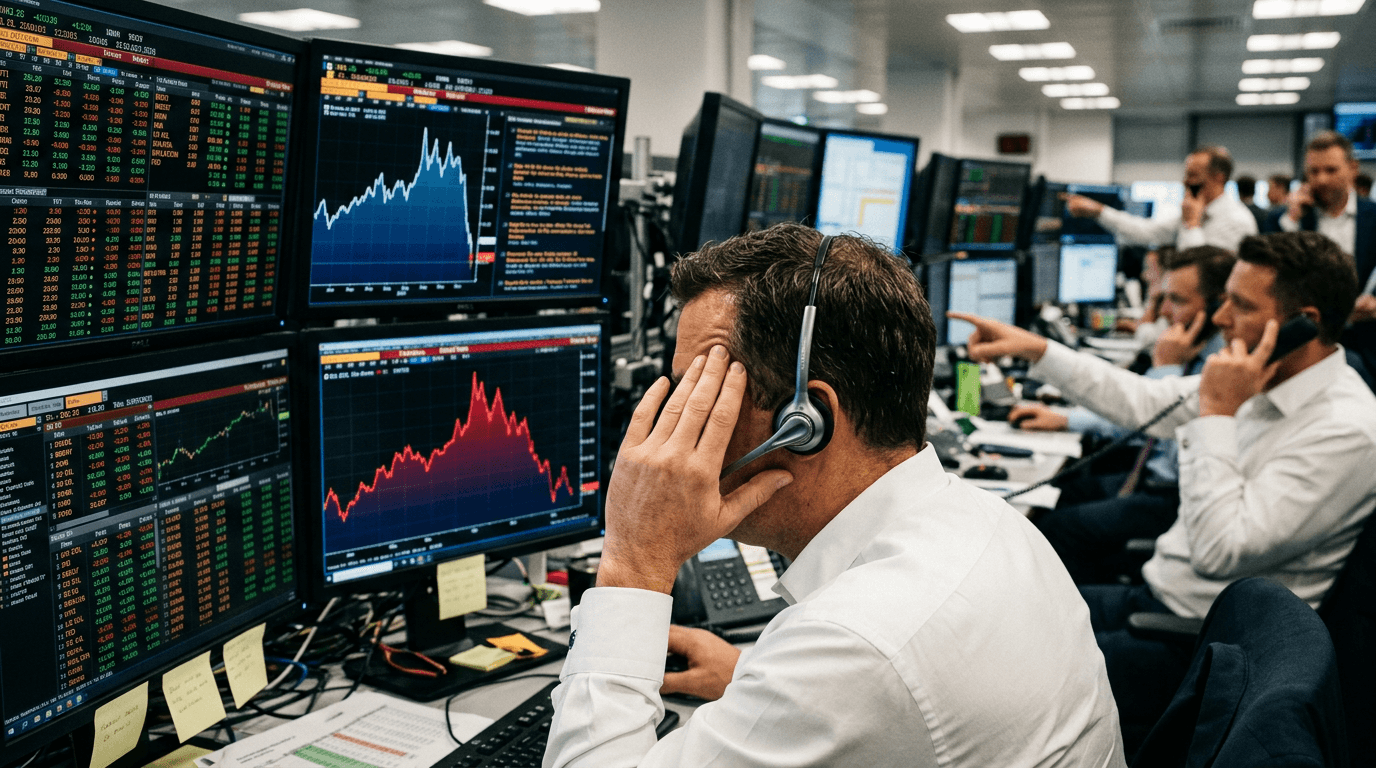
Oil futures have just delivered a masterclass in how quickly sentiment can flip when geopolitics, macro expectations, and trader positioning collide. West Texas Intermediate (WTI) crude spiked as much as 9% to multi‑month highs on escalating U.S.–Iran tensions, briefly dragging Brent toward the mid‑$80s, before a sharp intraday reversal as profit‑taking kicked in and chatter about a possible diplomatic breakthrough started to circulate.[6] At the same time, the move spilled into inflation expectations, interest‑rate bets, and even equity sector performance, reminding traders that crude is not just a commodity—it is a macro asset.
What Just Happened In Oil Markets
The initial leg higher was classic “war premium” repricing. Reports of renewed strikes and intensifying hostilities between the U.S. and Iran triggered worries about supply disruptions in and around the Strait of Hormuz, a chokepoint for global energy flows.[4] In an environment where spare capacity is limited and inventories are not excessively bloated, markets quickly priced in the risk that barrels could be delayed or removed from the market altogether.
As prices ripped higher, short sellers covered, momentum traders piled in, and intraday volatility surged. A 9% move in a major benchmark like WTI in a short window is a strong signal that positioning and liquidity conditions amplified the underlying fundamental story.
Then the narrative shifted. Headlines and social media chatter pointed to a potential framework agreement or ceasefire that could reopen shipping lanes and ease fears of prolonged supply disruption.[2][3][6] Earlier, similar headlines about a tentative deal or truce had sent stocks soaring while crude futures retreated, as investors anticipated a reopening of the Strait of Hormuz and reduced war risk.[1][2][6] Against that backdrop, even the hint of renewed diplomacy was enough for many traders to lock in gains and step aside.
The result: oil futures swung from near‑euphoria on war fears to a more cautious stance as profit‑taking and deal speculation met in the order book.
Why War Risk And Diplomacy Hit Prices So Fast
Crude oil responds quickly to Middle East risks for three key reasons:
First, the region still controls a large share of global exports, and the Strait of Hormuz remains one of the world’s most important shipping lanes. Any threat—real or perceived—to flows through this corridor can justify a higher risk premium in prices.
Second, the current macro backdrop matters. After years of underinvestment in some segments of upstream capacity, markets are more sensitive to disruptions. When spare capacity is not overwhelmingly abundant, traders will react more aggressively to supply threats.
Third, headline risk dominates short‑term order flow. News of a preliminary agreement, ceasefire, or “framework” deal has repeatedly triggered sharp reversals, as seen when reports of a U.S.–Iran framework to end hostilities and reopen the Strait led to a quick pullback in crude.[3][6] A ceasefire against shipping, even if not a full peace agreement, can change the near‑term risk calculus for oil flows.[2] But as research from market strategists has highlighted, such truces are relief, not resolution; volatility remains elevated and short, sharp swings are likely as headlines evolve.[7]
For active traders, it is crucial to distinguish between durable fundamental shifts—like an actual, verifiable reopening of shipping lanes—and transient sentiment swings based on speculation or incomplete information.
Ripple Effects: Inflation, Rates, And Other Assets
This oil spike was not just an energy story; it quickly became a macro story.
Higher crude prices feed into inflation expectations by raising the cost of fuel, transportation, and production for many industries. That, in turn, can influence market pricing of future interest‑rate cuts, as central banks may feel less comfortable easing if inflation risks re‑accelerate.
Markets have seen this play out before. When tensions flare and oil jumps, traders often trim aggressive rate‑cut bets, pushing yields higher on the front end of the curve. Conversely, when news of a tentative U.S.–Iran deal or framework agreement hits, oil has fallen and risk assets such as equities have rallied, as investors anticipate lower energy costs and improved growth prospects.[1][3][6]
The latest swing has also affected cross‑asset performance:
- Commodity‑linked currencies (like those of major energy exporters) tend to benefit from higher oil prices, as terms of trade and fiscal revenues improve.
- Rate‑sensitive tech stocks often come under pressure when higher inflation expectations and fewer expected rate cuts push yields up, raising discount rates on long‑duration growth cash flows.
When you see oil move sharply, it is worth immediately checking bond yields, inflation breakevens, FX pairs tied to commodities, and sector rotation within equities to understand the full picture.
TRADING PLAYBOOK: NAVIGATING HEADLINE‑DRIVEN SWINGS
Episodes like this highlight both the opportunity and the danger in trading news‑driven commodity moves.
Focus on scenario mapping, not headline chasing. Instead of reacting to every alert, define a few core scenarios: escalation with sustained disruption, temporary ceasefire with partial reopening, or comprehensive agreement with full normalization. Assign rough probabilities and think through price implications for each.
Respect volatility and liquidity. A 9% intraday spike is a sign that bid‑ask spreads can widen and slippage can increase. Position size, leverage, and stop placement must reflect the fact that price gaps can bypass tight risk controls.
Differentiate tactical trades from structural views. You might have a long‑term bullish stance on oil due to underinvestment or demand growth, yet still choose to take profits after a sudden war‑driven spike and reload later. Profit‑taking after parabolic moves is as much about risk management as it is about calling a top.
Use both technicals and fundamentals. Technical levels—prior highs, moving averages, volatility bands—can help identify areas where profit‑taking or new flows may emerge. Fundamentals (stock levels, OPEC policy, actual shipping data) help you gauge whether the narrative is supported by evidence.
LESSONS FOR SIMULATED AND REAL‑MONEY TRADERS
For traders using a SimFi platform like E8 Markets, this kind of environment is ideal for learning without the emotional pressure of real capital at risk. You can:
- Practice building a multi‑asset view: when oil spikes, simulate trades not only in crude futures but also in related FX pairs, equity indices, and rates.
- Test different risk‑management rules under stress: wider stops, reduced leverage, or scaling in and out of positions when volatility spikes.
- Rehearse your headline protocol: how you react when news of a ceasefire, framework deal, or renewed strikes hits the tape, and how you adjust if those headlines are later revised.[2][4][6]
- Analyze post‑trade data: which decisions added value, which were emotional, and how your strategy would have performed across different scenarios.
Ultimately, the latest swings in oil futures underscore three enduring lessons: geopolitics can reprice markets faster than fundamentals alone, cross‑asset linkages mean no market moves in isolation, and disciplined risk management is your best edge when war fears and deal speculation collide. Whether you are trading live or in a simulated environment, building a structured playbook for these episodes is not optional—it is essential.