
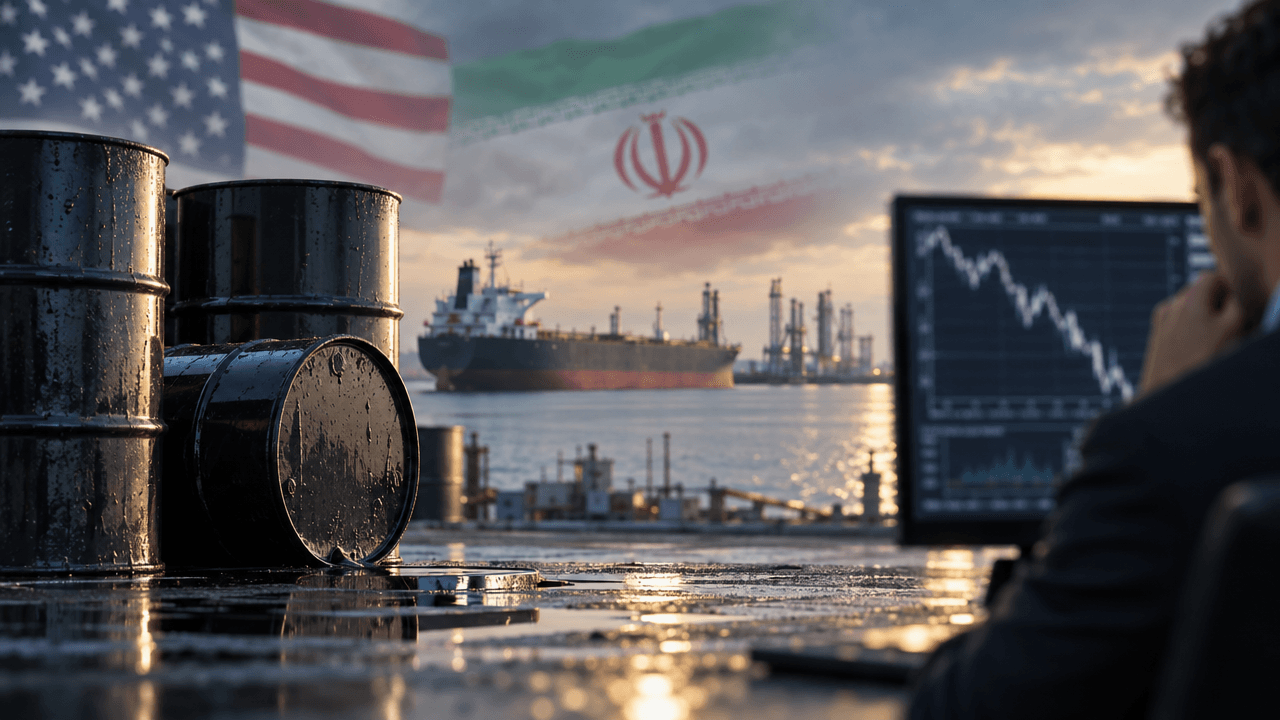
Oil futures are under renewed pressure as signs of recovering Middle East exports reduce fears of an immediate supply shock. Brent crude and West Texas Intermediate fell roughly 3.5% to 4.5% in overnight trading, extending a sharp retreat as traders reassessed the risk premium built into energy markets. Expectations that US-Iran tensions could ease added to the selling, while improving crude flows through the Strait of Hormuz strengthened the outlook for global supply. [5]
The move is important beyond the oil market. Lower crude prices can reduce fuel and transportation costs, ease near-term inflation pressure, and support consumers and energy-intensive businesses. At the same time, the decline creates challenges for oil producers, energy equities, commodity currencies, and traders positioned for a prolonged geopolitical disruption.
Why Oil Prices Fell
Oil prices had been supported by concerns that conflict involving the United States and Iran could disrupt production, exports, or shipping through the Persian Gulf. Because the region is central to global energy trade, even a possible interruption can create a risk premium in futures prices.
That premium began to unwind as exports showed signs of recovery. Market participants also interpreted recent developments as evidence that a wider escalation may be less likely. When traders reduce the probability of a supply interruption, futures prices can fall quickly even if physical oil production has not fully returned to normal.
The size of the decline reflects this shift in expectations. On November 16, Brent settled down $3.40, or 3.6%, at $92.44 a barrel, while WTI dropped $2.84, or 3.2%, to $85.72. [8] The following session remained volatile, with prices continuing to respond to changing assessments of exports, shipping security, and diplomatic risk.
Supply Recovery Meets Surplus Expectations
The market is responding not only to geopolitics but also to a broader supply-and-demand balance. The International Energy Agency said the global oil market could return to surplus in the fourth quarter as Middle East exports recover faster than global demand. [3]
A surplus occurs when available production exceeds consumption. If inventories begin to build, buyers generally have less urgency to secure barrels, weakening prices. The prospect of excess supply can therefore outweigh ongoing security concerns, particularly when traders believe disruptions will be temporary rather than permanent.
However, the recovery is not uniform across the energy complex. Analysts noted that increased Persian Gulf outflows have consisted primarily of unrefined crude, while refined product supplies such as diesel have not improved to the same degree. [5] This distinction matters because refineries, transport companies, and consumers depend on finished fuels, not only on crude feedstock.
For traders, the lesson is clear: headline export volumes should be examined alongside refinery activity, product inventories, tanker rates, and regional shipping conditions.
Inflation And The Broader Economy
Lower oil prices can provide relief to the global economy. Crude is a major input into gasoline, diesel, aviation fuel, chemicals, manufacturing, and logistics. If the decline persists, businesses may face lower operating costs and households may see slower increases in transportation and utility expenses.
That could reduce headline inflation and give central banks more flexibility when setting interest-rate policy. Energy prices are volatile, however, and a single day of selling is not enough to change the broader inflation outlook. A sustained decline would be more meaningful, especially if it feeds through to retail fuel prices and producer costs.
The economic impact also depends on why oil is falling. A decline caused by improving supply is generally supportive for consumers. A decline caused by collapsing demand could signal weaker economic activity. At present, the market is emphasizing supply recovery and reduced geopolitical risk, although softer demand expectations, including concerns about China, remain part of the background. [10]
Who Benefits And Who Faces Pressure
Airlines, transportation companies, manufacturers, and consumer businesses may benefit if lower crude prices translate into cheaper fuel and reduced input costs. Lower energy expenses can improve margins, particularly for companies that cannot easily pass higher costs on to customers.
Oil producers face the opposite effect. Lower benchmark prices reduce revenue per barrel and can pressure profit forecasts, capital spending plans, and high-cost drilling projects. Energy-sector shares may therefore underperform the broader market when crude prices fall sharply.
Commodity-linked currencies and economies that rely heavily on oil exports may also feel pressure. In contrast, major oil-importing nations could benefit from a smaller trade bill. The market reaction will depend on how long the decline lasts and whether investors view it as a temporary correction or the beginning of a deeper downtrend.
Practical Takeaways For Simfi Traders
SimFi traders should avoid treating a dramatic oil move as an automatic buy or sell signal. Start by identifying the catalyst: supply recovery, diplomatic progress, inventory data, demand concerns, or a combination of factors.
Next, monitor confirmation signals. These may include Brent-WTI spreads, crude and refined-product inventories, tanker rates, refinery margins, currency movements, and energy-equity performance. A falling crude price accompanied by stronger transportation stocks may indicate that markets are focusing on cheaper fuel. A decline alongside falling industrial equities may point to broader growth concerns.
Risk management is especially important during geopolitical news. Futures can reverse rapidly when a tanker incident, diplomatic statement, or export disruption changes expectations. Traders should size positions conservatively, define invalidation levels before entering, and account for overnight gaps and elevated volatility.
The current selloff shows how quickly an oil risk premium can disappear when supply fears ease. For now, recovering exports and the prospect of a global surplus are outweighing Middle East security risks. Yet the market remains vulnerable to fresh disruptions. The most durable bearish trend will require evidence that exports are normalizing, inventories are rebuilding, and demand is not accelerating. Until then, oil futures are likely to remain highly sensitive to every development in supply, diplomacy, and shipping.