
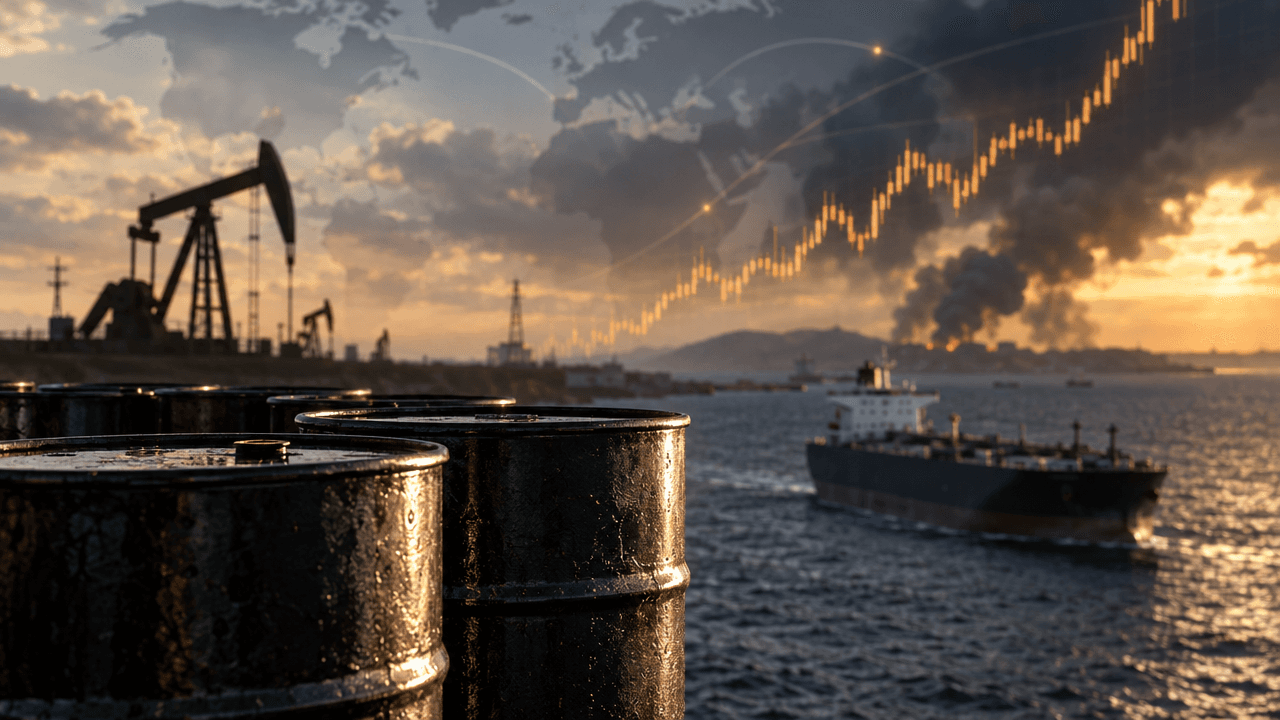
Oil futures are rising as traders reassess the security of global supply. Brent crude gained about 0.7% to $111.54 a barrel, while U.S. crude futures advanced roughly 0.7% to $102.47. The move reflects a market increasingly focused on geopolitical disruptions, shipping risks, and the possibility that producers may struggle to restore normal flows quickly.
The latest advance is more than a routine price fluctuation. Oil has already climbed sharply in recent weeks as attacks affecting energy infrastructure and maritime routes have raised concerns about the reliability of supplies from the Middle East. The International Energy Agency said North Sea Dated crude rose $26.17 per barrel in September, while Brent futures increased 13% from the start of that month to around $107. [2]
Supply Risks Take Center Stage
The primary driver behind the latest rally is the risk that crude production, refining, or transportation could be disrupted. Oil markets do not need an actual shortage to move higher. The possibility of a shortage can be enough to encourage buyers to secure cargoes early, push up freight costs, and create a geopolitical risk premium in futures prices.
Attacks on energy infrastructure in Saudi Arabia and threats to tanker traffic have made traders especially sensitive to developments across the region. The concern extends beyond oil fields themselves. Pipelines, export terminals, ports, refineries, and shipping lanes are all essential links in the energy supply chain. Damage to any one of them can reduce the volume of usable fuel reaching consumers.
Recent market reports have highlighted disruptions involving Saudi facilities, shipping routes, and Russian energy infrastructure. The IEA described the recovery of Middle Eastern oil supply as fragile, warning that further attacks on regional energy infrastructure and tanker traffic could derail recent gains in production. [2]
For traders, the key question is whether these risks remain temporary or become persistent. A short-lived disruption may produce a brief price spike. Prolonged damage to infrastructure or shipping capacity could support elevated prices for months.
Why Shipping And Refining Matter
Crude production is only one part of the oil market. Even when barrels remain underground and technically available, consumers can still face shortages if those barrels cannot be transported or converted into usable products.
Shipping costs have risen as vessels face greater security risks and longer routes. Higher freight rates increase the delivered cost of crude and can make some supplies uneconomical for refiners. They can also create regional price differences, with some markets paying substantially more than others for similar grades of oil.
Refining capacity is another important pressure point. Refineries turn crude into gasoline, diesel, jet fuel, and other products used throughout the economy. If refineries are damaged, forced to operate at reduced capacity, or unable to receive crude shipments, fuel prices may rise even if global crude production remains relatively stable.
The IEA has noted that record tanker rates are increasing delivery costs and weakening refinery margins. Other market analysis has also pointed to constrained refining capacity as a potentially longer-lasting problem than a temporary crude production outage. [2][12]
This distinction matters for consumers and investors. A crude oil rally may not immediately translate into equal increases across all fuels. Diesel, gasoline, and jet fuel can each respond differently depending on regional inventories, refinery outages, and seasonal demand.
Inflation And Central-bank Policy
Higher energy prices could reinforce inflation concerns at a time when investors are already closely watching central-bank policy. Oil affects inflation directly through gasoline, heating, and transportation costs. It also raises business expenses, including freight, manufacturing, agriculture, and construction.
If companies pass those costs on to customers, a temporary energy shock can spread through the broader economy. That creates a difficult policy environment for central banks. Officials may want to support economic growth with lower interest rates, but a renewed increase in energy prices could make inflation more persistent.
The impact depends on how long oil remains elevated. A short-term move higher may have a limited effect on official inflation data. A sustained period above $100 per barrel would be more significant, particularly if it pushes fuel and transportation costs higher across several reporting periods.
Central banks must also distinguish between demand-driven and supply-driven inflation. Higher prices caused by strong economic activity may signal robust demand. Higher prices caused by geopolitical disruptions indicate a supply shock, which monetary policy cannot directly resolve. Raising interest rates may reduce demand, but it cannot repair a damaged pipeline or reopen a blocked shipping route.
What Traders Should Watch Next
Market participants should monitor four developments. First, watch reports on attacks, ceasefire negotiations, and the security of major maritime routes. A reduction in geopolitical tensions could quickly remove part of the risk premium, while new incidents could produce another sharp rally.
Second, follow actual production and export data rather than relying only on headlines. The difference between threatened supply and lost supply will determine whether the market is experiencing fear or a genuine physical shortage.
Third, track inventories and refinery performance. Falling stockpiles, high tanker rates, and reduced refinery availability would indicate that the market is becoming less resilient. Government decisions to release emergency reserves may provide temporary relief, but they do not replace lost production or transportation capacity.
Finally, traders should manage volatility carefully. Oil futures can move rapidly in both directions as diplomatic developments, inventory reports, and supply forecasts change. Clear position sizing, defined risk limits, and awareness of contract expiration are especially important when prices are being driven by geopolitical headlines.
Oil futures are rising because supply security has become the market’s central concern. Brent near $112 and U.S. crude above $102 signal that traders are pricing more than ordinary fluctuations in demand. They are pricing uncertainty across production, shipping, refining, and monetary policy.
The most important takeaway is that oil’s next move will depend on whether supply risks worsen or begin to ease. Until the market sees more reliable flows and improved transport conditions, elevated prices and sharp swings are likely to remain a defining feature of energy markets.