
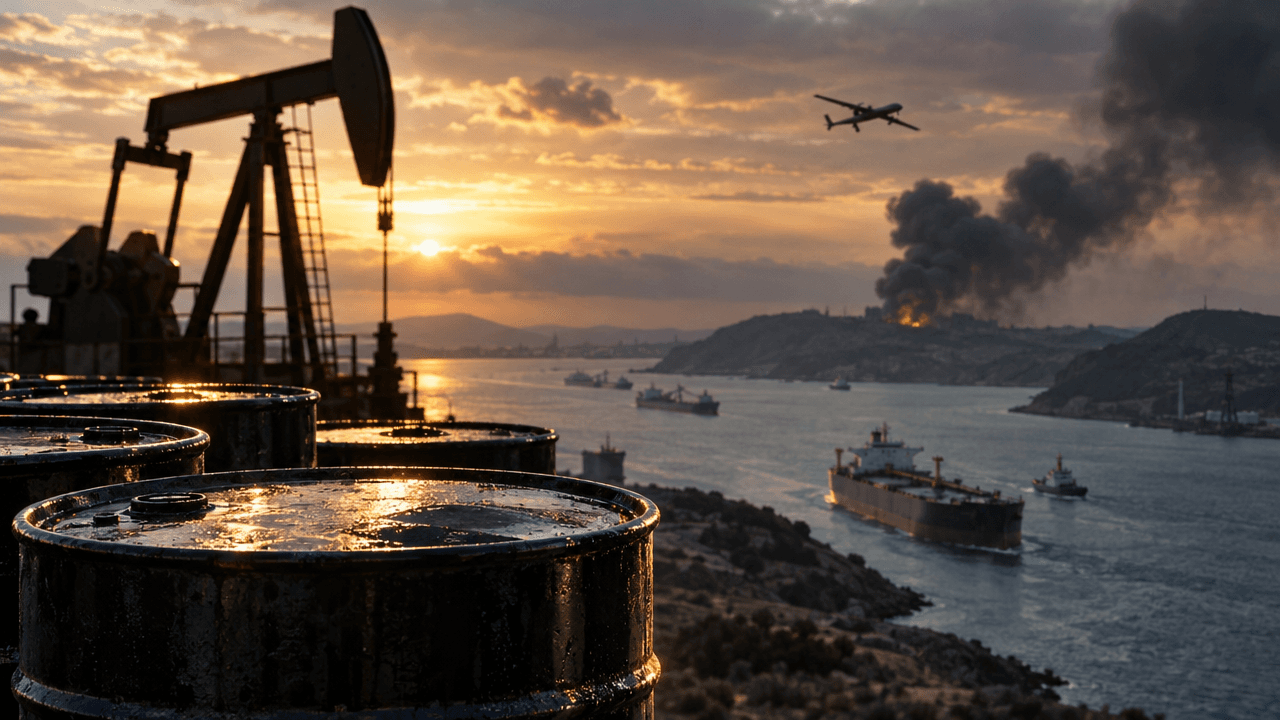
Oil prices are retreating from their recent highs, but the decline has not removed the risks supporting the market. On October 27, Brent crude traded near $114–$115 a barrel, while West Texas Intermediate hovered around $101. The move lower reflected renewed hopes for diplomacy and a possible reduction in immediate supply threats. Yet attacks linked to the regional conflict, fragile shipping conditions, and uncertainty surrounding Middle East production continue to keep a substantial geopolitical premium embedded in prices. [1][6]
What Is Driving The Pullback
The latest decline is best understood as a reduction in risk expectations rather than a decisive shift to bearish market conditions. Reports of diplomatic activity raised the possibility that the conflict could move toward a negotiated resolution. If that happens, traders may expect more predictable production, safer shipping routes, and the gradual return of disrupted barrels.
That possibility encouraged some investors to reduce long positions. Brent fell by roughly 0.9% to 1.3% in recent trading, while WTI declined by around 2% in the preceding session. The retreat also eased immediate concerns about another sharp increase in fuel prices and inflation.
However, diplomacy remains fragile. Continued attacks on Saudi Arabia and threats to vessels operating near key regional waterways have limited the market’s willingness to price in a full return to normal conditions. Reuters reported Brent near $115.15 and WTI near $101.32 during early Tuesday trading, with losses restrained by ongoing security concerns. [1]
Why Prices Remain Elevated
Oil markets respond not only to current production but also to the possibility of future disruption. The Middle East remains central to global energy supply, making any threat to oil fields, export terminals, pipelines, or shipping lanes immediately relevant to international prices.
The Strait of Hormuz is particularly important because it connects major Gulf producers with global consumers. Even when crude continues to move through the waterway, higher security risks can reduce tanker availability, increase insurance premiums, extend delivery times, and raise freight costs. These additional expenses can tighten physical markets without a complete shutdown of exports.
The International Energy Agency has warned that a recovery in Middle East supply could be derailed by attacks on energy infrastructure and tanker traffic. It also noted that record tanker rates are increasing delivery costs and pressuring refinery margins. The agency reported that Brent had already gained approximately 13% since the start of September before reaching the latest elevated levels. [3]
This explains why traders have been reluctant to treat the recent price decline as a lasting reversal. A ceasefire or successful negotiation could remove part of the risk premium quickly, but another attack could restore it just as quickly.
The Inflation Connection
Higher crude prices affect far more than gasoline. Oil is a fundamental input for transportation, petrochemicals, plastics, industrial production, and agriculture. When crude and refined fuel prices rise, businesses often face higher operating costs. Some of those costs are passed on to consumers through more expensive goods and services.
For central banks, the timing is especially important. A temporary energy spike may have limited long-term consequences, but persistent oil inflation can influence household expectations, wage negotiations, and business pricing decisions. That can make it harder for policymakers to reduce interest rates or maintain an accommodative stance.
The latest pullback offers some relief because it reduces the immediate probability of another surge in fuel costs. Still, oil remains high enough to preserve concerns about headline inflation, especially in countries that import most of their energy. The market’s reaction will depend on whether prices continue falling or stabilize at elevated levels.
What Traders Should Watch
The most important variable is the direction of geopolitical risk. Traders should monitor diplomatic discussions, attacks on regional infrastructure, and developments affecting commercial vessels. Headlines can produce sharp intraday moves because oil futures are pricing both physical supply and potential disruption.
Inventory data is another critical signal. Falling crude stocks would suggest that supply remains tight and that buyers are competing for fewer available barrels. The International Monetary Fund has warned that reduced inventories could leave the global economy more exposed to fresh shocks, including infrastructure attacks, shipping disruptions, cyberattacks, and extreme weather. [4]
Refinery activity also deserves attention. Strong refining margins can encourage refiners to purchase more crude, supporting prices even when broader economic growth is uncertain. Conversely, weaker fuel demand or reduced refinery runs could limit the upside.
For SimFi traders, risk management is particularly important in this environment. Avoid treating a one-day decline as confirmation of a sustained downtrend. Consider smaller position sizes, predefined stop-loss levels, and reduced leverage around major geopolitical headlines. Traders should also distinguish between Brent and WTI: Brent is more directly tied to international supply risks, while WTI is influenced more heavily by North American inventories, production, and pipeline capacity.
The Bigger Market Picture
Oil’s retreat is a reminder that markets can move lower even while fundamental risks remain serious. Diplomatic progress may reduce the premium temporarily, but elevated prices indicate that investors still see a meaningful probability of renewed disruption.
The near-term outlook is therefore balanced between two competing forces. De-escalation could release risk premium and pull Brent toward lower levels. Further attacks, shipping interruptions, or production losses could push prices sharply higher, with some analysts identifying $120 Brent as a possible scenario if vessel attacks intensify. [6]
For now, the most reasonable interpretation is not “oil has turned bearish,” but “the market is taking a cautious pause.” Prices remain elevated because supply security has not been restored. Until regional tensions ease convincingly and inventories rebuild, every diplomatic improvement may pressure crude lower, while every new disruption has the potential to reverse that move.