
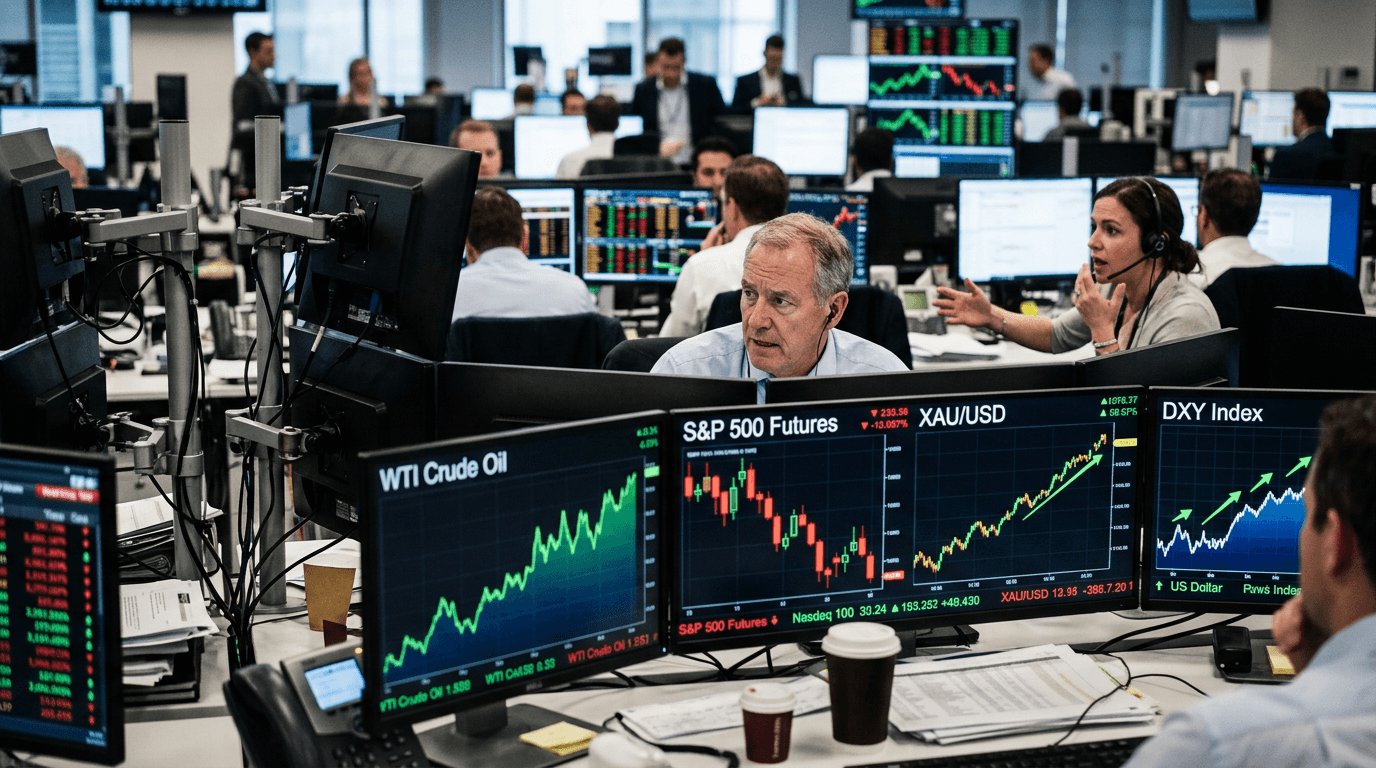
Renewed tensions in the Middle East have pushed oil prices sharply higher, jolting global markets and reminding traders how quickly geopolitical risk can reprice assets across the board.[1] US crude briefly touched multi‑month highs intraday, as investors reassessed the risk of supply disruptions and a wider regional escalation.[1] The spillover was immediate: US equities slipped, higher‑beta currencies weakened, and flows rotated into classic safe havens such as gold and the US dollar.[1][4]
Markets React To Oil Price Shock
Oil acts as both a key input for the global economy and a barometer of geopolitical stress, so sudden price spikes rarely stay confined to the energy complex.[1] When renewed conflict or threats to supply routes emerge in the Middle East, traders quickly price in a higher risk premium for crude, especially when strategically important regions like the Persian Gulf or critical shipping lanes are involved.[2][3]
In this latest episode, crude oil’s intraday jump to multi‑month highs signaled that markets are not only reacting to current disruptions, but also to the possibility of further escalation.[1] Worries include potential damage to production facilities, export terminals, or shipping chokepoints, all of which can tighten supply and push prices higher. This repricing tends to be fast and volatile, as algorithmic and discretionary traders simultaneously chase momentum and hedge risk.
However, history shows that such moves can also unwind quickly if the geopolitical narrative improves.[4] As soon as markets detect credible signs of de‑escalation or diplomatic progress, some of the risk premium embedded in oil prices can evaporate, leading to abrupt reversals.[4] For traders, that means the oil tape around geopolitical events often behaves in sharp bursts rather than smooth trends.
Why Higher Oil Hits Risk Assets
A sudden spike in oil is effectively a tax on global growth. Higher energy costs squeeze corporate margins, reduce consumers’ real spending power, and can complicate central bank inflation goals.[5] Equities, especially in energy‑intensive sectors like airlines, transportation, and manufacturing, are quick to reflect this pressure via lower prices and wider risk premia.[1]
In the latest move, US stocks pulled back as traders reassessed growth expectations and earnings sensitivity to higher input costs.[1] That reaction is amplified when valuations are already rich and volatility has been subdued, because any shock—whether geopolitical or macro—forces investors to reconsider how much risk they are willing to hold. Index futures, sector ETFs, and high‑beta names often become the first line of adjustment.
Currency and emerging‑market assets are also caught in the crossfire. Higher oil prices can worsen the trade balance and inflation outlook for oil‑importing countries, making their currencies less attractive versus the US dollar.[1] Emerging‑market FX and higher‑beta G10 currencies typically weaken as investors rotate away from perceived risk and toward more liquid, defensive assets.[1][4] Local bond markets in EM can also come under pressure as inflation and funding concerns grow.
SAFE‑HAVEN FLOWS: GOLD, DOLLAR AND BEYOND
Whenever geopolitical risks surge, safe‑haven assets tend to benefit from a flight to quality. This time, both gold and the US dollar saw renewed demand as oil spiked and equities slipped.[1] Gold is often treated as a hedge against geopolitical shocks and inflation fears, so it naturally attracts capital when energy prices surge and headlines turn uncertain.
The US dollar, meanwhile, retains its status as the world’s primary reserve currency and safe asset.[1] In periods of heightened tension, global investors frequently unwind carry trades and reduce exposure to higher‑yielding, riskier currencies, moving instead into USD and, to a lesser extent, other havens such as the Japanese yen or Swiss franc. This rotation can be particularly painful for emerging‑market FX, where liquidity can thin and volatility can spike as positions are cut.[1][4]
Another piece of the safe‑haven puzzle is the behavior of government bonds. While the exact reaction can vary depending on inflation expectations and central bank policy, geopolitical shocks that threaten growth often support demand for high‑quality sovereign debt, especially US Treasuries.[5] That demand can help cap yields even when inflation concerns are elevated, creating a complex cross‑current for macro traders to navigate.
Trading Implications For Simulated And Live Markets
For active traders—whether in live markets or simulated finance environments—this kind of cross‑asset repricing is both a risk and an opportunity. Oil spikes driven by geopolitics typically bring wider intraday ranges, gapping risk, and rapid shifts in liquidity conditions. Day traders in energy futures, equity indices, FX, and gold need to be prepared for slippage, larger bid‑ask spreads, and more frequent stop‑outs during headline bursts.
A key discipline in such environments is calibrating position sizing to volatility. Using the same lot size you would in a calm, range‑bound session can be dangerous when average true range and implied volatility have doubled. Simulated accounts are particularly useful here: they allow traders to stress‑test their strategies in real‑time conditions, practicing how to adjust stops, targets, and execution tactics without immediate capital risk.
Event awareness becomes critical as well. Geopolitical risk is inherently headline‑driven, and price can move before the full story is clear. Traders should know when key announcements, briefings, or potential flashpoints are expected and decide in advance whether to trade through them or step aside. Back‑testing performance around similar episodes—such as past Middle East flare‑ups—can help refine this decision.
Finally, correlation regimes can change quickly. In calm markets, traders might rely on familiar relationships—like stocks and yields moving together or oil and certain currencies tracking each other. During a geopolitical shock, those correlations can temporarily break as capital flows are dominated by hedging and de‑leveraging rather than fundamentals.[1][4] Being too anchored to “normal” correlations can be costly when regimes shift.
Key Takeaways For Active Traders
The first takeaway is that geopolitically driven oil spikes are multi‑asset events, not just an energy story. Crude moving to multi‑month highs on Middle East tensions has direct implications for equities, FX, gold, and rates, and traders should think in terms of a portfolio of risk rather than isolated instruments.[1][4]
The second is that risk management must adapt to the environment. Higher volatility calls for smaller sizes, wider but well‑defined stops, and realistic expectations about slippage. Simulated trading can be an effective way to rehearse playbooks for these conditions, from fade‑the‑spike tactics to momentum breakouts, without the added stress of live P&L.
The third is to remain humble about the path of geopolitics. As recent moves and prior episodes show, markets can swing sharply on rumors of escalation and then reverse just as quickly on signs of de‑escalation or negotiation.[4] Building flexibility into your approach—being willing to take profits, reduce exposure, or even flip bias when the narrative changes—is essential.
For traders who can manage the risk, periods of geopolitical tension and oil price shocks can offer rare windows of opportunity. For those who are unprepared, they can expose weaknesses in strategy, risk control, and emotional discipline. Using simulated environments, clear rules, and a cross‑asset lens can help ensure you are in the first group rather than the second when the next headline hits.