
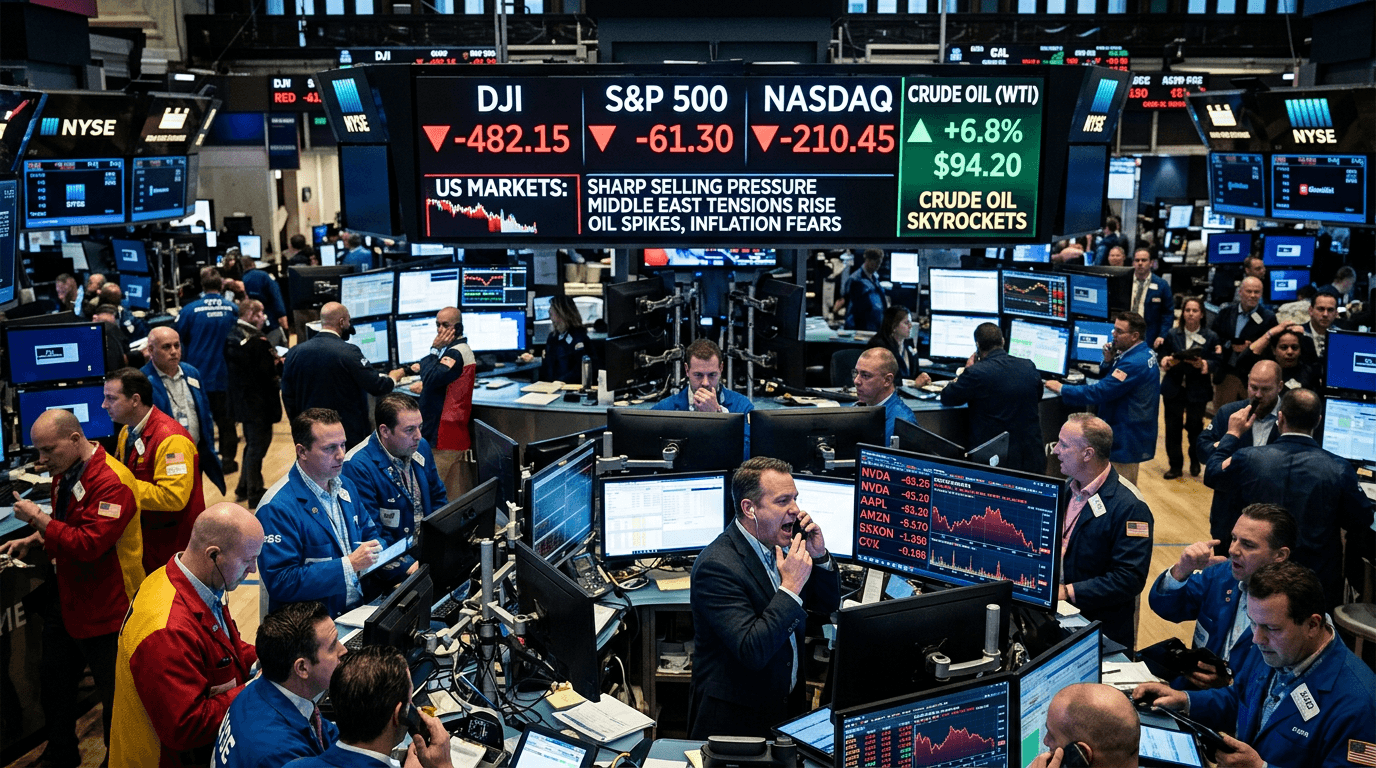
The US stock market experienced sharp selling pressure on Thursday as escalating military tensions between Washington and Iran sent crude oil prices surging 9%, creating a classic risk-off environment that punished equities while benefiting energy commodities. This divergence between stocks and oil reflects growing investor anxiety about supply chain disruptions, inflation acceleration, and the policy complications that come with sustained elevated energy prices. Understanding what's happening in markets today requires looking beyond the headlines to grasp how geopolitical events translate into portfolio losses and trading opportunities.
The Market Selloff: By The Numbers
The Dow Jones, S&P 500, and Nasdaq all retreated from recent highs as traders rushed to reduce equity exposure. This coordinated decline across major indexes signals institutional concern rather than isolated weakness in specific sectors. The real story, however, lies in the energy complex. West Texas Intermediate crude reached $81.64 per barrel while Brent crude climbed to $85.85—representing substantial moves that don't happen without genuine supply disruption concerns.
A 9% surge in oil prices is not minor market noise. This magnitude of move indicates traders are seriously pricing in the possibility that critical energy infrastructure could be affected if the US-Iran conflict escalates further. The Strait of Hormuz remains the focal point for risk assessment, as this waterway handles roughly one-third of global maritime oil trade. Any actual disruption to shipping through this chokepoint would reverberate through global energy markets and corporate profit margins worldwide.
Why Oil And Stocks Moved In Opposite Directions
The inverse relationship between crude prices and equity valuations during this episode illustrates a fundamental market dynamic: when geopolitical risk spikes, investors face a painful reality. Higher oil prices represent an inflation headwind that increases input costs for manufacturers, transportation companies, and virtually every business operating in the global economy. Meanwhile, these same higher energy prices complicate monetary policy decisions and can trigger sell-offs in growth stocks whose valuations depend on lower discount rates.
Energy companies might theoretically benefit from higher crude prices, but the broader market faces headwinds. Most corporations prefer stable, predictable energy costs to volatile oil markets, even if those costs are historically low. Uncertainty about whether oil stays at current levels, spikes further, or drops back down makes forward guidance and earnings projections nearly impossible for CFOs to execute confidently. This uncertainty gets priced into equities through valuation compression and aggressive selling.
The Inflation And Interest Rate Complication
Perhaps the most critical concern for market participants is how persistent oil elevation affects inflation expectations and Federal Reserve policy. Higher crude prices feed through the economy as increased transportation, heating, and petrochemical costs, eventually showing up in consumer price indices. This creates a difficult dynamic for central bankers already navigating complex inflation-growth tradeoffs.
If oil remains elevated for months, the Fed faces pressure to keep interest rates higher for longer to combat renewed inflation pressures. This scenario is particularly painful for equity investors because it means the lower-for-longer interest rate environment many have priced into valuations might not materialize. Long-duration growth stocks would face double pressure: higher discount rates and potentially lower earnings growth if inflation-fighting policies slow economic activity.
The market is essentially pricing in this risk scenario, which explains the sharp pullback in equities alongside the energy rally. Volatility index readings confirm this dynamic—VIX spiked notably as traders increased hedging positions against further downside.
What Traders Should Monitor Closely
The first critical variable to watch is any breaking news regarding actual supply disruptions. So far, this episode represents risk pricing without material infrastructure damage. If that changes, expect more aggressive moves in both energy and equity markets. Second, monitor diplomatic developments religiously. Previous reports of ceasefire negotiations have triggered sharp reversals in both oil and equity prices, highlighting how sentiment-driven this environment has become.
Third, recognize that elevated volatility creates both opportunities and dangers. Options strategies and volatility trades become more attractive when VIX spikes, but directional positioning becomes treacherous. Traders should focus on defined-risk strategies and avoid over-leveraging in uncertain geopolitical situations. For investors with existing equity portfolios, review hedges and consider whether your risk tolerance aligns with current drawdown potential.
Key Takeaways For Your Trading Desk
Today's market action demonstrates that geopolitical events remain powerful drivers of asset prices, capable of triggering significant portfolio moves within hours. The oil-equity inverse relationship is operating textbook perfectly, making this an educational moment for understanding how different asset classes interact during stress periods.
Diversification across uncorrelated assets—including commodities, bonds, and international equities—provides genuine portfolio protection during these episodes. A portfolio heavily weighted toward US equities without energy exposure or defensive hedges is exposed to concentrated risk that events like today can immediately monetize.
As this situation evolves, expect continued market choppiness until geopolitical clarity emerges. Markets hate uncertainty more than bad outcomes, so resolution in either direction—escalation or diplomatic breakthrough—would likely reduce volatility even if it triggers further directional moves.