
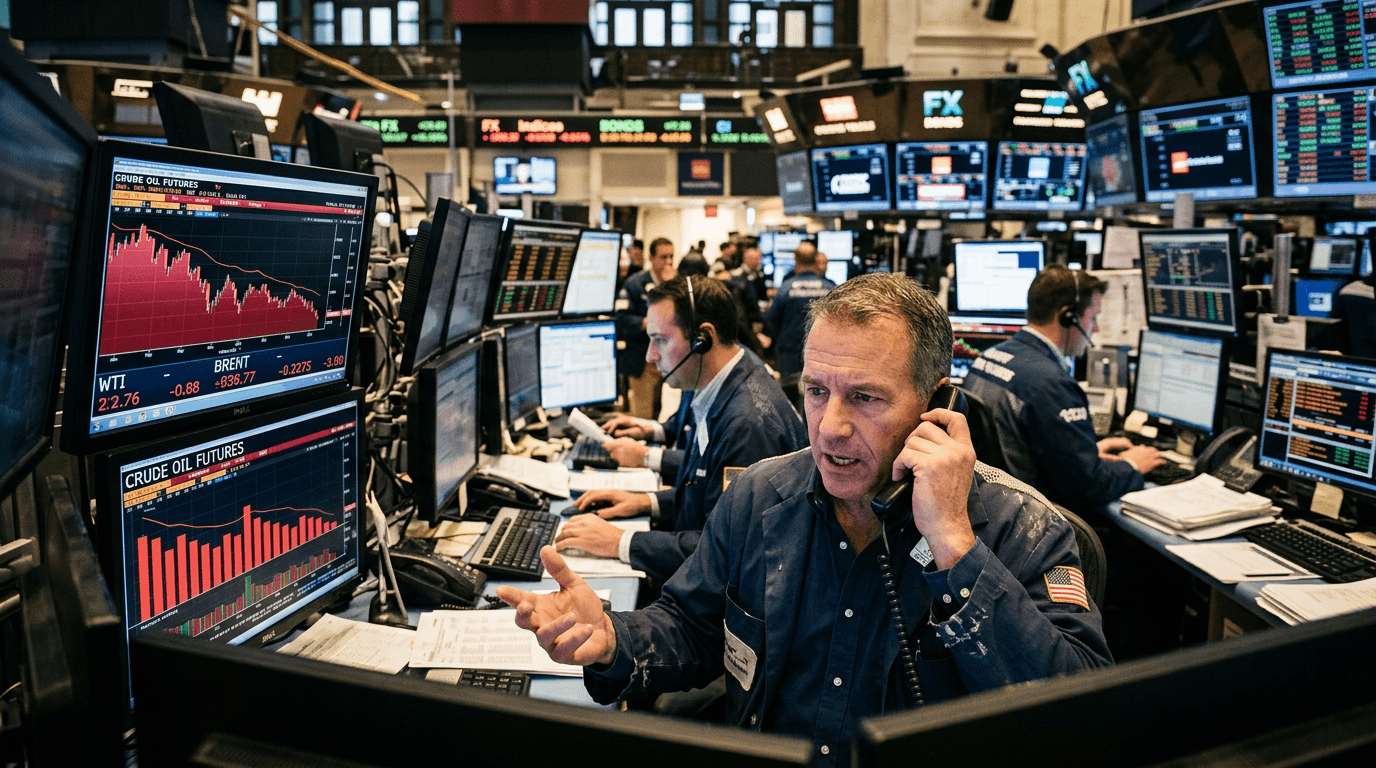
Oil futures are catching their breath after a sharp, war-driven surge, with prices slipping as traders reassess how much Middle East risk really belongs in the barrel and shift their attention back to demand and inventory data. The move is pressuring energy-sensitive currencies like the Norwegian krone (NOK) and Canadian dollar (CAD), while slightly easing inflation fears in bond and equity markets as crude retreats from its latest spike.
Market Move: From War Spike To Pullback
The latest leg higher in crude was fueled by fresh escalation headlines from the Middle East, which triggered an aggressive bid in Brent and WTI as traders rushed to price in potential supply disruptions and shipping risks. In a similar recent episode, Brent crude jumped nearly 6% in a single session as fighting flared, underscoring how quickly geopolitics can reprice the market.[3]
But just as quickly, that risk premium is now being pared back. After the initial surge, crude futures opened the next session on the back foot as traders took profits and began to strip out the most extreme fear scenarios.[1] Negotiation headlines and a lack of concrete evidence of immediate supply loss have seen markets unwind some of the “worst case” narrative that had been priced in around Iran and regional flows.[1][4] The result: a modest pullback that leaves prices still elevated versus earlier in the month, but off the panic highs.
Episodes like this are increasingly common in a market where algorithmic and macro funds respond almost instantly to headlines, often overshooting in both directions. For active traders, recognizing when price has moved from rational repricing to emotionally driven “fear premium” is critical to managing risk and timing entries.
WHAT IS THE MIDDLE EAST RISK PREMIUM?
The Middle East risk premium is the extra amount traders are willing to pay for oil when they perceive a heightened probability of supply disruption from key producers or transit routes. This can reflect worries about direct output losses, sanctions, attacks on infrastructure, or threats to shipping lanes such as the Strait of Hormuz.
In practice, this premium shows up not only in the flat price of Brent and WTI, but also in the shape of the futures curve, spreads between different delivery months, and options implied volatility. When tensions spike, front-month contracts and short-dated options tend to move the most, reflecting the market’s focus on near-term risk.
When evidence accumulates that supplies remain steady, negotiations progress, or military action looks contained, that risk premium can vanish rapidly. Crude has repeatedly sold off sharply once traders judged that geopolitical fears had been overdone, with recent moves seeing the “fear trade” quickly unwound as risk premium faded.[1][4] For traders, distinguishing between durable fundamental shifts and temporary risk premia is key: the former can anchor trends, the latter often create short-lived tactical opportunities.
Demand Data Back In Focus
As the geopolitical dust settles, the market’s attention is swinging back to demand indicators and inventory data. After several sessions of gains, oil has pulled back as traders reassess demand in Asia, scrutinize U.S. stock numbers, and weigh broader growth concerns.[2] This pivot reflects a classic pattern: once the headline shock passes, fundamentals reassert themselves.
Near term, weekly U.S. inventory reports are central. Traders will be watching:
- Crude stock changes at Cushing and nationwide
- Gasoline and distillate inventories
- Refinery utilization rates
- Implied product demand, especially gasoline as the driving season unfolds
A larger-than-expected draw in crude or gasoline would suggest stronger demand or tighter supply, potentially putting a floor under prices. Conversely, surprise builds in stocks—especially if paired with weak refinery margins—could reinforce the current pullback and challenge the bullish narrative.
Beyond the U.S., demand signals from Asia are crucial. Recent price action has already reflected markets reassessing demand in key Asian economies alongside U.S. stock data and growth worries.[2] Soft manufacturing and trade data out of China or weaker activity indicators in other emerging markets can cap rallies, even if geopolitical noise remains elevated.
For traders, this means the game is shifting from headline risk to data risk. Calendar awareness becomes critical: inventory days, macro releases, and key growth indicators can all trigger outsized moves when the market is already on edge.
Cross-asset Ripple Effects
Oil’s retreat is not just an energy story—it is reverberating across currencies, bonds, and equities. Energy-sensitive currencies such as NOK and CAD have come under pressure as crude prices back off their highs. Both economies benefit significantly from energy exports, so swings in oil often translate quickly into exchange rate moves, especially when accompanied by shifts in global risk sentiment.
At the same time, softer oil takes a bit of heat out of inflation expectations. Elevated crude prices feed directly into gasoline and diesel costs and indirectly into transportation and production expenses. As the geopolitically driven spike fades, bond markets can breathe slightly easier, with some relief in inflation breakevens and less perceived pressure on central banks to react aggressively.
For equities, the impact is more nuanced. Lower oil prices can weigh on energy sector earnings but offer relief to energy-intensive industries such as airlines, logistics, and parts of manufacturing. When the pullback is driven by fading war risk rather than collapsing demand, it can be modestly supportive for broader equity indices, removing an inflation threat without signaling a severe growth shock.
How Traders Can Navigate This Environment
For discretionary and systematic traders alike, this episode highlights several practical lessons.
First, clearly separate moves driven by geopolitical risk premium from those grounded in demand and supply fundamentals. When price action is headline-driven, volatility tends to be higher, reversals sharper, and holding periods shorter. Once the focus shifts back to data, technical levels and consensus forecasts often regain influence.
Second, build a structured calendar of catalysts. Weekly U.S. inventory reports, OPEC+ communications, macro releases from major economies, and geopolitical milestones should all be on your radar. Price often moves most when multiple themes collide—for example, an inventory surprise on a day of major geopolitical headlines.
Third, monitor cross-asset signals. Moves in NOK, CAD, energy equities, and inflation breakevens can offer confirmation—or contradiction—of what crude is pricing. If oil is selling off but energy equities and breakevens remain firm, it may signal a temporary position shakeout rather than a structural shift.
Finally, treat periods like this as a chance to stress-test your strategy in a controlled way. In a simulated or low-risk environment, you can practice trading around inventory releases, testing how your approach handles sudden shifts from fear-driven rallies to data-driven pullbacks. Focus on position sizing, stop placement, and scenario planning rather than predicting every headline.
Understanding the tug-of-war between geopolitical risk premium and underlying demand is essential in today’s oil market. As futures slip after a war-driven spike, the balance of power is tilting back toward fundamentals and demand data. Traders who can read both the headlines and the numbers—and manage risk accordingly—will be better positioned for whatever the next move in crude brings.