
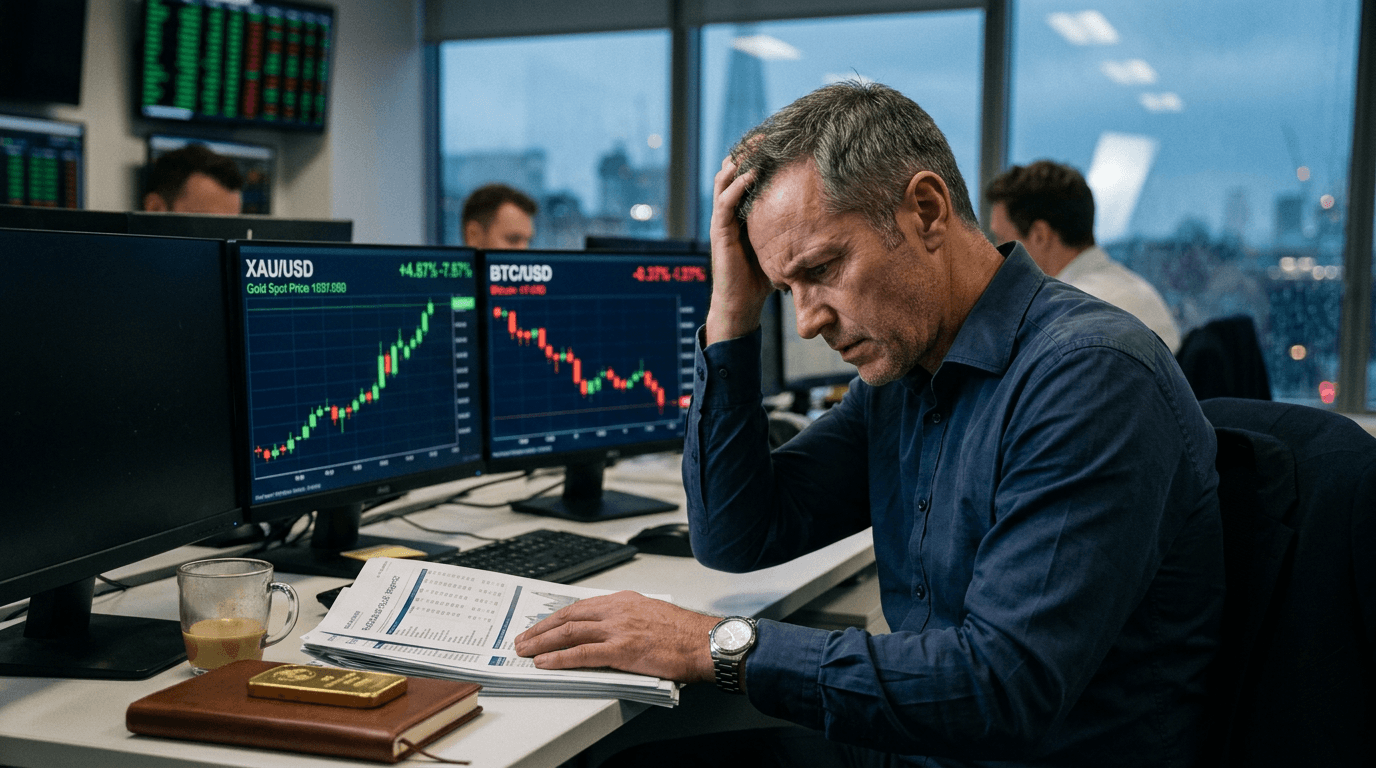
Safe-haven flows are once again reshaping global markets, with gold rebounding sharply while major cryptocurrencies trade defensively near key support levels. Rising tensions in the Middle East and the intensifying conflict involving Iran have pushed oil prices higher and sent investors scrambling for assets perceived as resilient in times of crisis.[2][4] In this risk-off environment, the divergence between traditional safe havens and digital assets is offering an important lesson in how geopolitics can override longer-term narratives.
Markets In Risk-off Mode
When geopolitical risk spikes, markets tend to move into “risk-off” mode: capital rotates out of equities, high-yield credit, and speculative assets into instruments seen as more stable and liquid. Gold futures recently tested the $5,400 per ounce area after bouncing from prior losses, as traders priced in a geopolitical risk premium following US–Israel military actions and Iranian retaliation.[1][4] At the same time, crypto benchmarks such as Bitcoin, Ethereum, and XRP have slipped roughly 2%, consolidating near support as participants brace for further headline-driven swings.[3]
This simultaneous bid in gold and caution in crypto reflects a classic flight-to-quality dynamic. Oil’s sharp move higher on fears of supply disruption in critical shipping lanes further reinforces the risk-off regime, raising concerns about inflation shocks and potential knock-on effects for monetary policy.[4][6] For active traders, understanding that such cross-asset moves are connected—not random—is the first step toward navigating periods of stress more effectively.
Why Gold Shines In Times Of Conflict
Gold’s behavior in this environment is textbook. Historically, the metal has served as both a store of value and a hedge against extreme outcomes, from war and sanctions to currency crises and policy mistakes.[2][5] The latest rally is being driven by a combination of factors: escalating military tensions in the Middle East, a softer US dollar that makes gold more attractive to foreign buyers, and ongoing demand from central banks looking to diversify reserves away from fiat currencies.[1][5]
Central bank purchases are trending near record levels, with estimates in the 900–950 metric ton range for the year and total global demand projected around 4,850 tons, the highest since 2011.[1] That structural bid underpins prices even before geopolitical shocks are layered on top. Analysts now talk openly about a sustained risk premium in gold, with scenarios in which further escalation could push prices another 5–15% higher over relatively short horizons.[1][4] For portfolio builders, this highlights why gold often earns a strategic allocation: it tends to respond positively precisely when other assets are most vulnerable.
Crypto Under Pressure But Not Out
Crypto’s reaction has been more nuanced. Despite some narratives positioning Bitcoin as “digital gold,” recent trading has resembled that of a high-beta risk asset rather than a safe haven. As Middle East tensions intensified, major tokens retreated and then hovered near important technical support, reflecting cautious positioning and thinner liquidity.[3] In practice, many institutional and retail traders still treat crypto as an extension of the risk-on trade, which makes it vulnerable when volatility spikes and margin calls ripple through leveraged positions.
However, the picture is not uniformly bearish. Periods of stress can improve the long-term case for decentralized stores of value, especially if geopolitical conflict undermines confidence in traditional systems or fuels capital controls. The challenge is time horizon: short-term traders must respect price action and correlations, while longer-term allocators may view pullbacks as opportunities, provided they can withstand drawdowns and volatility. In the current backdrop, crypto is more a barometer of risk appetite than a refuge from it.
Practical Takeaways For Traders
First, treat geopolitics as a volatility catalyst, not a side story. Conflicts that affect oil supply routes, regional alliances, or sanctions regimes tend to spill over quickly into FX, rates, commodities, and crypto.[4][6] Building simple scenario maps—“escalation,” “stalemate,” “de-escalation”—and linking each to asset-class responses can help structure decisions rather than react emotionally to headlines.
Second, watch cross-asset signals. A strong gold bid alongside rising oil and a cautious crypto tape is a clear risk-off pattern; if credit spreads widen and equity volatility picks up, the signal strengthens.[1][3] Align your position sizing and leverage with the regime you’re in: risk-off environments generally reward smaller positions, tighter stop-losses, and more attention to correlation risk.
Third, separate strategic hedges from tactical trades. Allocations to gold or defensive sectors can serve as longer-term portfolio ballast, while short-dated options, spread trades, or event-driven crypto positions may be better for expressing short-term views on specific developments. Mixing the two without a clear plan often leads to inconsistent risk management.
Using Simulated Trading To Stress-test Your Strategy
Periods like this are exactly when simulated finance platforms prove their value. A safe-haven-driven market is emotionally charged, and real capital decisions can suffer from overreaction or hesitation. In a simulated environment, traders can test how their strategies behave under sudden gold spikes, crypto drawdowns, and oil shocks—without the consequences of live losses.
You can experiment with questions such as: How does your portfolio respond if gold adds another 10% while crypto drops 15%? What happens to your margin if correlated risk assets sell off together? Are your stops placed where real-world slippage and gaps could still hurt? By running these stress scenarios, traders gain insight into position sizing, diversification, and the robustness of their approach, building a playbook that can be deployed when volatility returns in the real market.
Ultimately, the current episode underlines a familiar lesson with fresh urgency: safe-haven assets like gold tend to shine when uncertainty is highest, while newer, more speculative markets such as crypto are still earning their place in the hierarchy of defensive tools. For traders and investors, the opportunity lies not just in chasing the latest move, but in using episodes of geopolitical stress to refine frameworks, upgrade risk management, and rehearse responses—so that when the next crisis hits, decisions are driven by preparation rather than panic.