
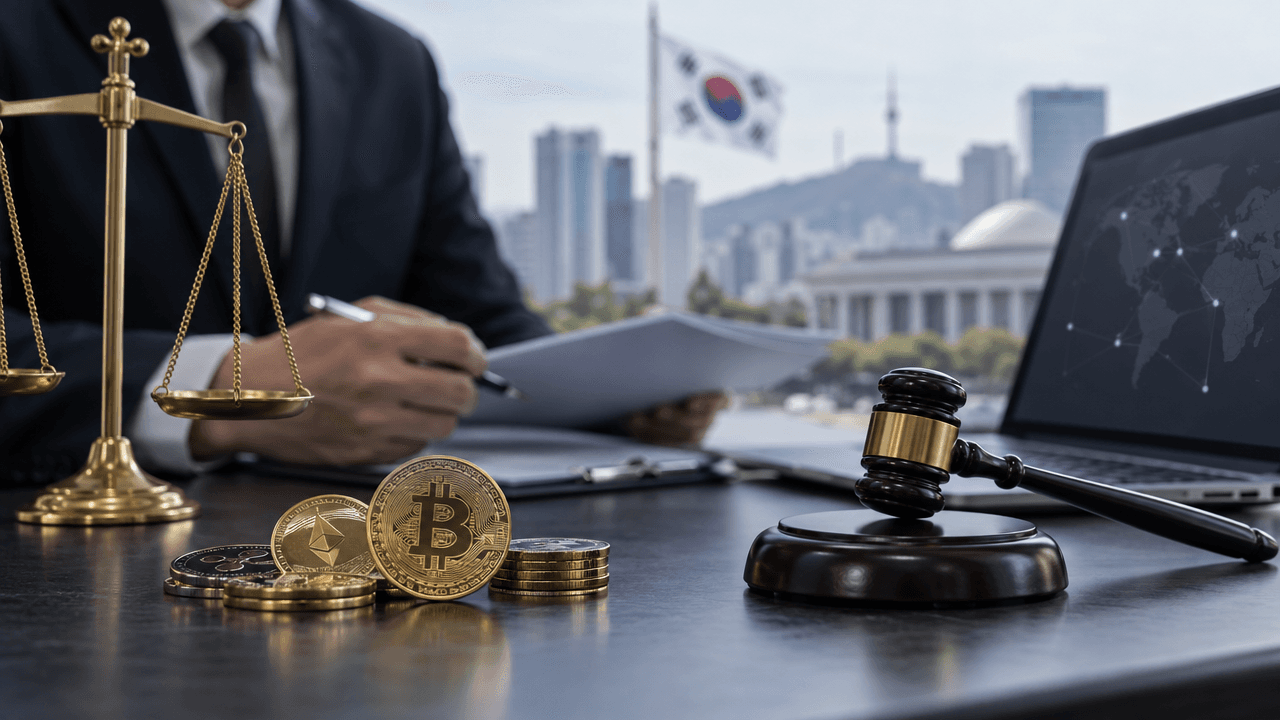
South Korea’s decision to block domestic access to 27 unregistered virtual-asset platforms marks a significant expansion of its crypto enforcement strategy. The action moves beyond restricting mobile applications and targets the websites through which overseas exchanges continue to reach Korean users. For traders, platforms, and market observers, the message is clear: regulatory registration and consumer-protection obligations are becoming central requirements for operating in one of Asia’s most active digital-asset markets. [1]
Why South Korea Is Targeting These Platforms
South Korea’s Financial Intelligence Unit, operating under the Financial Services Commission, said the Korea Communications Standards Commission had decided to block access to, or terminate service for, websites operated by 27 unregistered virtual-asset service providers. The relevant reviews took place on October 6 and 7, with the measure announced on October 13, 2026. [3]
The platforms named include KuCoin, MEXC, Phemex, XT.com, Bitrue, CoinW, Poloniex, BTCC, DigiFinex, Pionex, BloFin, WEEX, BitMart, BingX, Tapbit, BigONE, and others. The full list covers both well-known international exchanges and smaller services that authorities say have been serving Korean users without the required registration. [1]
The legal foundation is South Korea’s Act on Reporting and Using Specified Financial Transaction Information, an anti-money-laundering framework that requires virtual-asset businesses serving the domestic market to register and comply with reporting obligations. Registration is not simply an administrative formality. It places firms within a framework involving customer identification, suspicious-transaction monitoring, and cooperation with financial authorities.
The distinction between the targeted platforms and regulated domestic exchanges is therefore important. The action does not represent a blanket ban on cryptocurrency trading in South Korea. Instead, it is aimed at providers that authorities consider to be operating in the country without meeting local legal requirements.
From App Restrictions To Website Blocking
The latest decision extends measures already taken against the same group of platforms. Previously, South Korean authorities had worked to restrict the downloading, installation, and updating of their applications through Google Play and Apple’s App Store. Website blocking closes another major route through which users could access the services. [5]
The practical effect depends on where each platform is based. Websites connected to operators or servers in South Korea may face service termination, while overseas websites are subject to domestic access blocking. Authorities have also indicated that alternative domains used to bypass restrictions may be blocked in the future. [2]
This escalation reflects a broader regulatory pattern. Authorities are no longer focusing only on formal company registration or app-store availability. They are examining how platforms attract local customers, process transactions, provide services, and attempt to remain accessible after enforcement measures are announced.
The Financial Intelligence Unit has reportedly referred 44 unregistered operators to investigative authorities and plans to continue addressing replacement URLs. That suggests the 27 websites are part of an ongoing enforcement campaign rather than a one-time announcement. [5]
What The Move Means For Traders
For Korean users, the immediate concern is access to accounts and funds. A blocked website may prevent normal logins, deposits, trading, or withdrawals. Reports indicate that affected users will receive withdrawal-related information through the Digital Asset Exchange Alliance, known as DAXA. [7]
Users should not assume that a familiar brand is automatically permitted to serve customers in every jurisdiction. An exchange may operate legally in one country while remaining unregistered or restricted in another. Before opening an account, traders should verify whether the provider is authorized to serve their location, understand the withdrawal process, and review the platform’s terms regarding regional restrictions.
Security risks can increase when a website is blocked. Traders searching for alternative access may encounter phishing pages, fake mirror domains, malicious applications, or individuals promising to recover trapped funds. Attempting to bypass restrictions through unknown links or unofficial software can expose login credentials and digital assets to additional threats.
A sensible response is to keep records of account balances, transaction histories, and withdrawal requests. Users should rely on official platform communications and regulator announcements rather than social-media claims. They should also avoid sending additional funds to an exchange that has become inaccessible simply because a third party promises faster recovery.
Implications For The Regional Crypto Market
South Korea is one of the world’s most important crypto markets, with a large retail trading community and strong domestic exchange infrastructure. Enforcement against overseas platforms could shift activity toward registered local providers, at least among users who prioritize compliance, banking access, and legal clarity.
The move may also influence how international exchanges approach Asia. Platforms seeking to serve Korean customers may need to reassess marketing, language support, local partnerships, customer onboarding, and compliance systems. Simply offering a website accessible from South Korea may increasingly be treated as evidence of domestic targeting.
For the wider market, the announcement is more significant as a regulatory signal than as a direct liquidity shock. The affected platforms represent a broad range of trading venues, but the measure is geographically focused. It does not prohibit global traders from using every named exchange, nor does it change the underlying technology of the assets traded there.
However, it could contribute to fragmentation. Traders may face different access rules, product availability, leverage limits, and disclosure requirements depending on their country. This makes jurisdictional compliance an increasingly important part of risk management.
Practical Takeaways For Traders And Simfi Participants
The first takeaway is to treat platform access as a risk factor. Trading strategy, volatility, and execution quality matter, but so do registration status, custody arrangements, withdrawal procedures, and regulatory exposure.
Second, diversify operational risk without creating unnecessary complexity. Maintain access to compliant services, keep adequate records, and avoid holding more funds on an exchange than necessary for active trading.
Third, separate market risk from platform risk. A profitable position can still become difficult to manage if a website is blocked, withdrawals are delayed, or an account is placed under review.
These lessons apply directly to simulated finance environments. SimFi traders can use events like South Korea’s enforcement action to test whether their strategies account for slippage, liquidity changes, restricted venues, sudden delistings, and interrupted execution. A robust simulation should not measure only theoretical returns; it should also examine what happens when the preferred trading venue is no longer available.
South Korea’s action against 27 unregistered virtual-asset platforms reinforces a broader industry transition. Access and popularity are no longer enough to establish a platform’s legitimacy. As regulators improve their ability to restrict apps, websites, and replacement domains, traders will need to evaluate compliance and operational resilience alongside charts and market narratives. The strongest participants—whether trading real or simulated markets—will be those who treat regulation as part of market structure, not as an afterthought.