
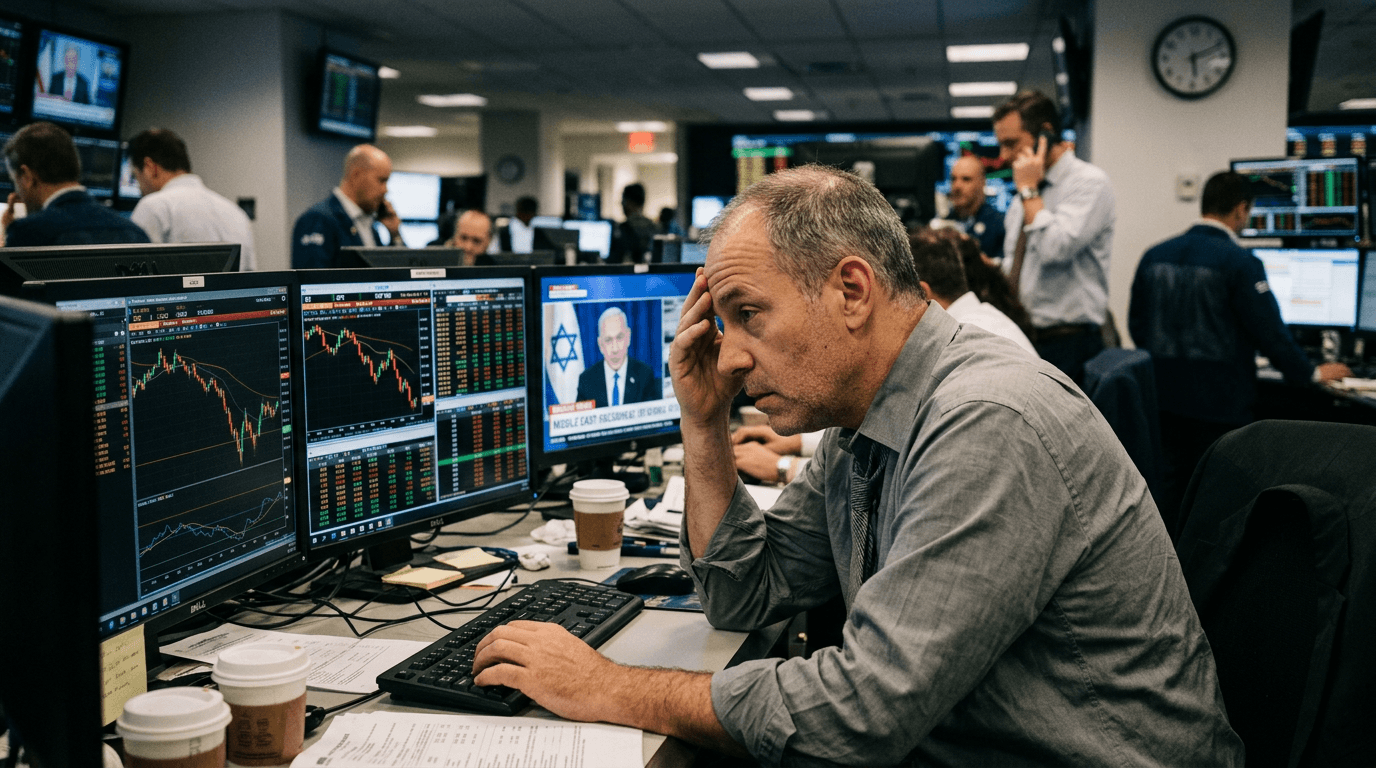
S&P 500 Futures Struggle as Iran Tensions and Overbought Conditions Loom
The S&P 500 futures market is currently navigating a tumultuous phase, with June contract prices teetering near crucial support thresholds. This volatility is largely fueled by escalating tensions between the Trump administration and Iran, which have reverberated across global equity markets. As of March 26, 2026, the June E-Mini S&P 500 futures (ESM26) are hovering around 6,547, having retreated significantly from recent highs. The psychological 6,500 mark is now under scrutiny, serving as a pivotal point that may determine the sustainability of the market rally or signal a deeper correction.
The underlying cause of this market instability is the deteriorating diplomatic relations between the United States and Iran, a situation exacerbated by the Trump administration's disruptive tactics in traditional negotiation avenues. These geopolitical developments are not just political headlines; they have far-reaching implications for crude oil markets, equity valuations, and overall economic expectations. Tensions in the Middle East often trigger oil supply concerns, driving up energy prices. This spike in energy costs cascades through the economy, escalating input expenses for businesses, increasing inflationary pressures, and reducing consumer purchasing power. Traders dread the prospect of stagflation, where economic growth stagnates while inflation persists, rendering traditional hedging strategies ineffective.
Technical Levels And Support Zones
The technical landscape underscores the significance of the 6,500 level, which has captivated traders and analysts alike. March 2026 trading patterns established a range with critical support between 6,390 and 6,430, positioning the 6,500 area as both a psychological and technical fulcrum. A decisive dip below 6,500 in June futures could lead traders to target support levels around 6,460, 6,452, and potentially the 6,390 mark, reflecting recent weekly lows. This technical context is further defined by the 200-period simple moving average, a key long-term trend indicator. A breach of this average in S&P 500 futures could signal a shift from bullish to bearish momentum, possibly triggering automated selling and stop-loss activations.
Currently, the margin requirements for trading E-Mini S&P 500 futures stand at $26,730 for initial and $24,300 for maintenance, with each contract representing $50 times the index value. This leverage structure means that even modest percentage moves can lead to significant financial impacts for traders, intensifying both potential gains and losses in volatile markets. The tick size of 0.25 points, or $12.50 per contract, allows traders to execute precise entry and exit strategies around these pivotal support and resistance zones.
Spillover Effects Into Broader Markets
The fragility in equity index futures is not confined to stocks alone. Data indicates that this uncertainty has permeated cryptocurrency and foreign exchange markets, leading to correlated sell-offs across traditionally unlinked asset classes. This trend is alarming as it suggests a comprehensive repricing of risk across investment portfolios. When equities, cryptocurrencies, and forex markets simultaneously experience downturns, it often reflects systemic risk concerns rather than isolated sector weakness, historically preceding more significant market drawdowns.
Stagflation fears are particularly pertinent for traders considering long-term strategies. Unlike typical recessions, where equities and bonds move inversely, stagflation creates a scenario where both asset classes struggle. Rising interest rate expectations dampen bond performance, while equities contend with margin pressures from increased input costs and subdued consumer demand. The S&P 500 futures are currently grappling with these conflicting pressures.
Implications For Traders And Investors
For traders active on platforms like E8 Markets SimFi, the current market conditions present a dual-edged sword of risks and opportunities. The immediate focus lies on defending the 6,500 level; a decisive breach could pave the way for testing the 6,390 to 6,430 support zone. Short-term traders might leverage these levels for risk management, while long-term investors should assess whether the geopolitical turbulence signals temporary volatility or a more profound reevaluation of equity valuations.
The overarching message for market participants is that the intersection of overbought conditions, technical resistance, geopolitical uncertainties, and cross-asset frailty necessitates vigilance and robust risk management. Traders should define clear thresholds for reducing exposure and refrain from averaging into weakness amid uncertainty. As market dynamics remain fluid, forthcoming sessions are expected to shed light on whether the 6,500 level will hold as support or succumb to further declines.
NEWSIMPACTSCORE: 7