
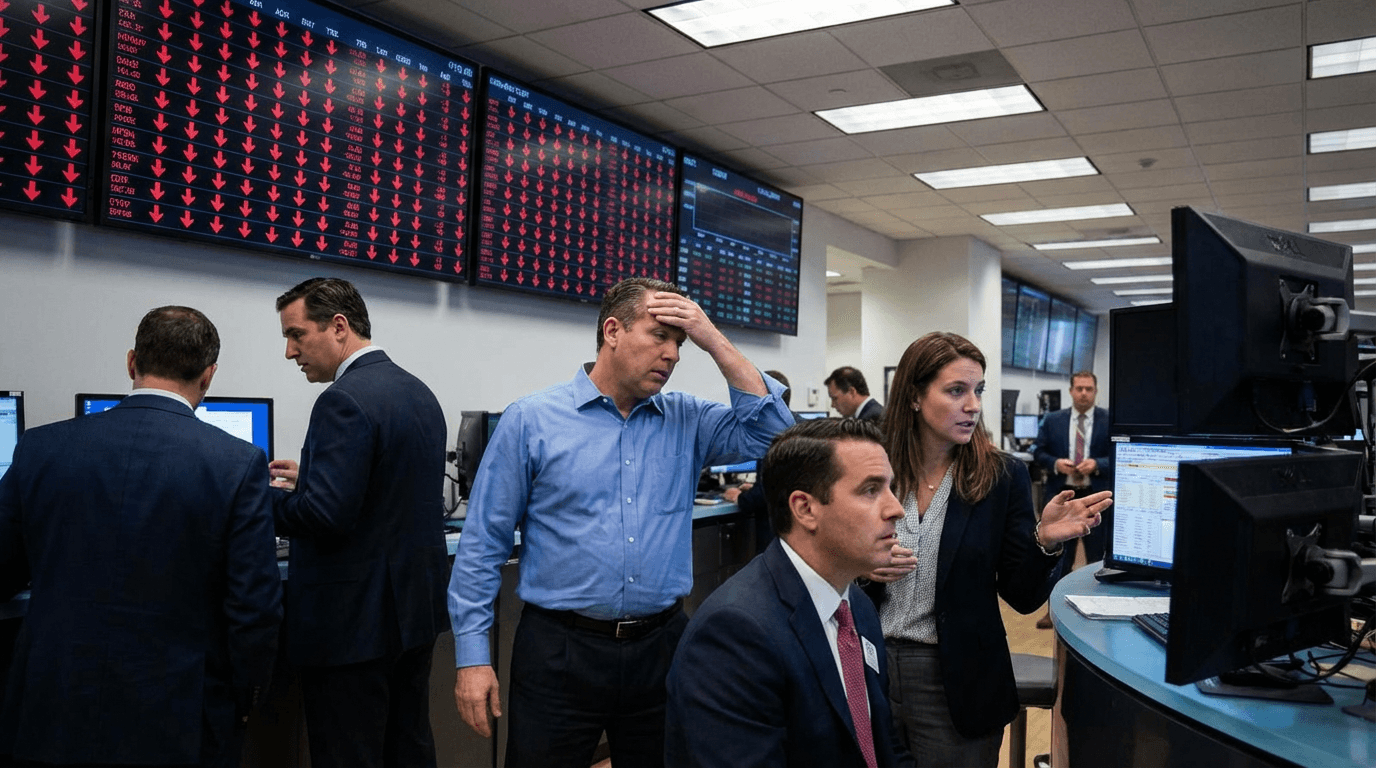
Technology stocks faced significant headwinds on Thursday and Friday, with the sector struggling under the weight of massive artificial intelligence spending announcements from mega-cap companies and growing investor concerns about whether the unprecedented capital commitments will deliver adequate returns. As markets grappled with these developments, the tech-heavy Nasdaq and broader market indices reflected the sector's challenges, signaling a potential shift in investor sentiment toward the AI boom that has driven market performance for much of the past year.
The Ai Spending Reality Check
The primary driver of technology sector weakness stemmed from major announcements regarding enormous capital expenditure plans for artificial intelligence infrastructure and development. Technology giants including Microsoft, Alphabet, Meta, and Amazon collectively are expected to spend more than 500 billion dollars on AI initiatives this year, according to market reports. This staggering figure prompted a significant reevaluation among investors, who began questioning whether these massive investments would ultimately justify the capital outlays and translate into meaningful revenue growth.
Microsoft's quarterly results exemplified the market's concerns, with the software giant's stock plunging 10 percent, marking its worst performance since 2020 and erasing approximately 357 billion dollars in market capitalization. The decline reflected investor anxiety about whether the company's substantial spending commitments would pay off in the competitive landscape of artificial intelligence development. This single stock movement had a ripple effect across the entire technology sector, underscoring the interconnected nature of mega-cap tech valuations and broader market sentiment.
Sectoral Divergence And Mixed Signals
Interestingly, the technology sector's weakness was not uniformly distributed across all companies. While traditional software firms experienced particular pressure, Meta Platforms diverged from the broader trend by jumping 10.4 percent after delivering an upbeat revenue forecast and announcing a 73 percent increase in its capital expenditure budget to as much as 135 billion dollars. This divergence highlights how market participants are differentiating between companies based on their strategic positioning and ability to leverage AI investments for competitive advantage.
Companies like Salesforce, which declined 6.1 percent, and Adobe, which fell 2.7 percent, illustrated investor concerns that traditional software firms risk losing ground to emerging AI competitors. Cloud security firm DataDog fell 8.8 percent, reflecting broader uncertainty about the sustainability of valuations across software and technology services providers. These declines underscore the market's ongoing reassessment of which technology companies are best positioned to capitalize on the artificial intelligence revolution versus those that may see their competitive moats eroded.
Market-wide Implications And Broader Weakness
The technology sector's decline contributed to measurable weakness across major indices on Friday, January 30. The S&P 500 dropped 0.4 percent, while the Nasdaq composite lost 0.9 percent and the Russell 2000 index of smaller companies fell 1.5 percent. These declines followed Thursday's more pronounced weakness, when the S&P 500 technology shares dropped 1.9 percent as investors responded to the cascade of AI spending announcements.
The broader market context matters for understanding the significance of technology's underperformance. Investors were simultaneously grappling with uncertainty surrounding President Trump's nominee to lead the Federal Reserve and what that appointment might mean for interest rate policy throughout 2026. Additionally, a sharp reversal in precious metals markets, with gold dropping 11.4 percent and silver plunging 31.4 percent, indicated shifting investor risk appetite and repositioning across asset classes.
Investment Takeaways For Market Participants
The recent tech sector weakness presents several important considerations for investors. First, the AI boom narrative, while still compelling, requires scrutiny regarding the actual return on investment that companies will achieve from massive spending commitments. Second, the significant divergence between technology stocks performing well and those declining sharply suggests that stock-specific analysis remains crucial rather than broad sector allocation based on sentiment alone.
Third, the volatility in technology stocks and broader indices underscores the importance of portfolio diversification and risk management as investors navigate uncertainty about monetary policy and macroeconomic conditions. Finally, market participants should monitor earnings reports and capital allocation guidance carefully, as companies' ability to articulate clear value creation strategies from AI investments will likely determine their stock performance going forward.
The technology sector's recent struggles serve as a reminder that even momentum-driven narratives like artificial intelligence require underlying fundamental support. As we move through 2026, investors will increasingly focus on tangible evidence that AI spending translates into revenue growth and competitive advantage, not merely on the promise of transformative technology.