
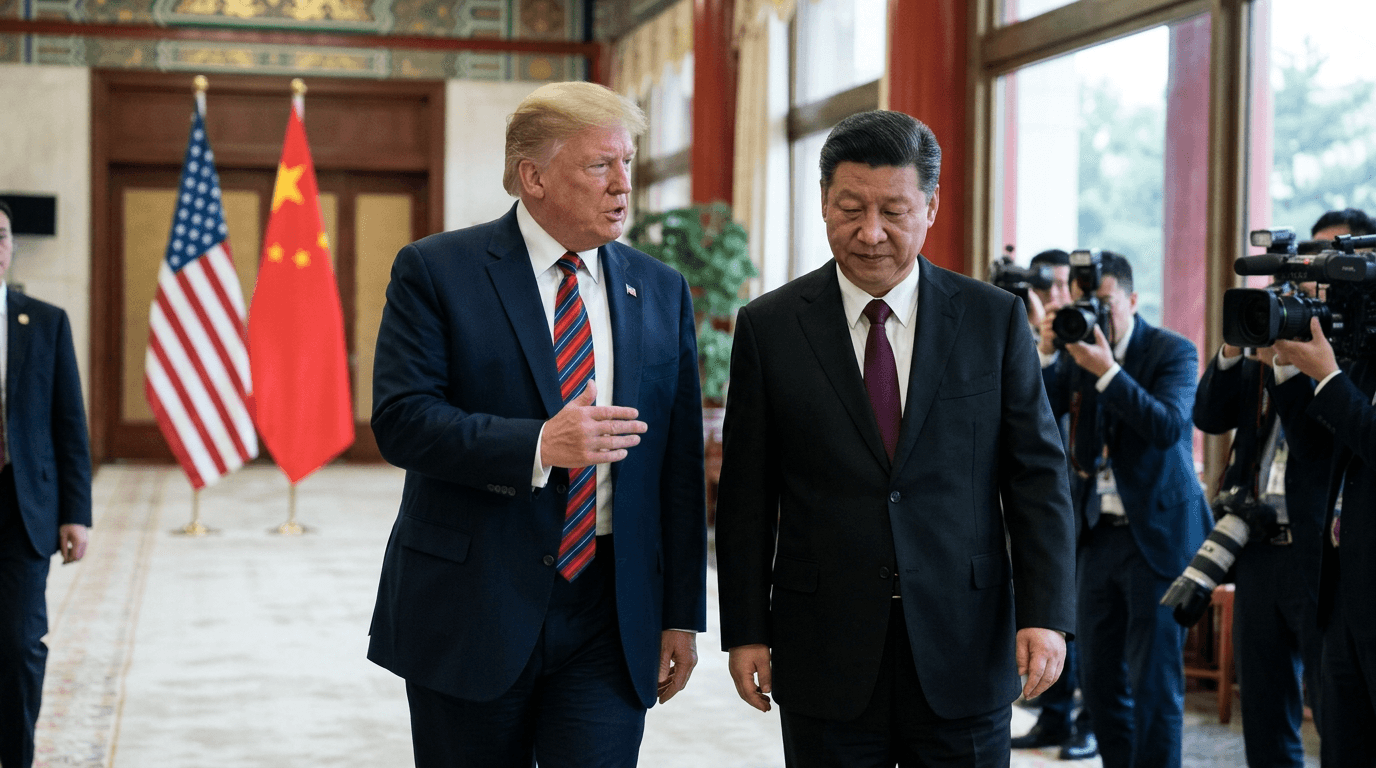
Trump's Beijing Visit: A Glimmer of Hope in the US-China Tariff Standoff?
President Donald Trump's recent diplomatic trip to Beijing at the end of March 2026 offers a promising glimpse into a potential breakthrough in one of the most contentious trade disputes of our time. After months of escalating tensions, strategic negotiations, and multiple rounds of tariff changes, both the United States and China seem poised to move towards a comprehensive trade agreement. Such a development could significantly alter global supply chains and alleviate the looming fears of a recession that have been troubling investors and policymakers around the globe.
Navigating the Shifting Tariff Terrain
The US-China tariff landscape has seen dramatic changes over the past year, leaving businesses and traders in a state of uncertainty. A pivotal moment occurred on February 20, 2026, when the US Supreme Court invalidated Trump's tariffs under the International Emergency Economic Powers Act. This decision effectively removed the 10 percent "fentanyl" tariffs and the reciprocal tariffs on Chinese imports, reaffirming that the power to levy import tariffs rests solely with Congress.
In reaction, Trump announced a temporary 10 percent global tariff commencing February 24, with plans to increase it to 15 percent. This new tariff, imposed under a different statute, will require congressional consent to extend beyond 150 days. Notably, the existing tariffs on Chinese goods under Section 301 of the Trade Act remain unchanged, leading to an approximate five percentage point reduction in the overall tariff rate.
Signals from the Beijing Meeting
Trump's visit to Beijing marks the most substantial diplomatic engagement in trade between the two economic powerhouses in recent months. Reports suggest that this meeting "could see the two sides reach a broader trade agreement and the US agree not to impose further tariffs." The timing is particularly crucial, with hearings scheduled in April and May to determine if further tariff actions are necessary, potentially reigniting tensions.
This development follows a period of relative calm in the US-China trade conflict. In October 2025, after a meeting between Trump and President Xi Jinping in Busan, South Korea, both nations agreed to extend the reduced 10 percent tariff rate until November 10, 2026, alongside certain tariff exemptions. The progression from that agreement to the Beijing visit indicates a pattern of de-escalation, though significant issues remain unresolved.
Market Implications and Recession Concerns
The financial markets are closely monitoring these developments, as tariff uncertainty directly influences inflation expectations, consumer spending power, and corporate profits. The US goods deficit with China was a modest US$13.1 billion in February 2026, continuing a trend of decoupling and remaining historically low. While this seems positive, it conceals deeper concerns about the costs of the trade war and supply chain disruptions contributing to economic instability.
The halt on additional tariffs suggests that policymakers are aware of the economic fragility confronting markets. Recession fears have heightened among investors as rising tariffs could exacerbate inflation, potentially curtailing the Federal Reserve's ability to cut interest rates. By signaling that a deal is near, Trump aims to alleviate this uncertainty and stabilize market sentiment. For traders and investors, this creates a delicate balance between optimism about a resolution and the reality that significant tariffs persist.
Key Factors for Investors to Watch
As negotiations continue, several factors require close attention. First, the April and May hearings on US trade practices will be pivotal. If investigators recommend additional tariffs, Trump will face pressure to implement them despite ongoing negotiations. Second, congressional approval of extended tariff measures will be necessary, introducing political dynamics that could delay or alter agreements. Third, the specific terms of any final deal—particularly regarding modifications or elimination of Section 301 tariffs—will determine the true market impact.
Additionally, keep an eye out for announcements on tariff exclusions for specific products. The US Trade Representative previously extended exclusions on 178 Chinese products until November 10, 2026, indicating that selective relief is possible even within a broader framework of maintained tariffs.
Implications for Traders and Businesses
For SimFi traders and real-world business managers, this situation highlights the importance of scenario planning and risk management. A successful deal could provide clarity that benefits sectors exposed to tariffs, such as autos, technology, and manufacturing. Conversely, negotiation failures could trigger significant market volatility. The strategic pause in new tariff implementations offers a respite for markets to adjust without the shock of sudden new trade barriers, but underlying uncertainties persist.
The way forward hinges on whether both sides can move beyond symbolic gestures toward substantive compromises on intellectual property protections, forced labor investigations, and market access issues that have divided them. Trump's signals suggest optimism, but history has shown that US-China trade negotiations often encounter unexpected challenges. Stay tuned as developments unfold in April and May.
News Impact Score: 7