
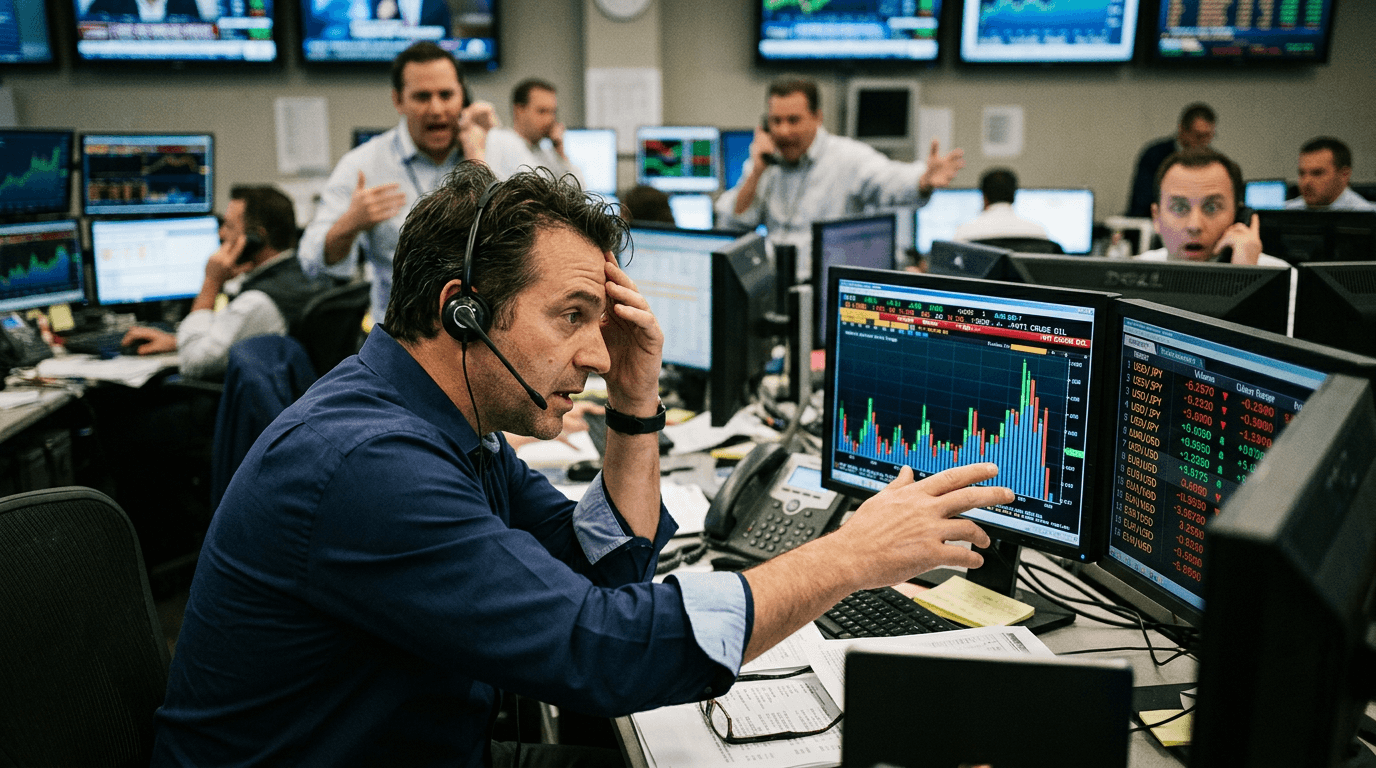
When President Trump delivered a 48-hour ultimatum to Iran, insisting on the reopening of the Strait of Hormuz, global markets were immediately thrust into a state of volatility. This threat, which included the destruction of Iranian power plants if Tehran did not comply by Monday evening, March 24, sent shockwaves through energy, currency, and futures markets. As one of the most pivotal risk events for traders in 2026, it underscored the geopolitical tensions that have been brewing since the Middle East conflict flared up on February 28.
The Ultimatum: Trump's Demand
On the evening of March 22, Saturday, President Trump issued a direct warning via Truth Social, presenting Iran with an ultimatum and a precise deadline. He insisted that Iran must fully reopen the Strait of Hormuz to international maritime traffic, free from threats or limitations. His threat was explicit: failure to comply would lead to U.S. strikes on Iran’s power plants, beginning with the largest. Trump emphasized this as a non-negotiable demand, setting a deadline of roughly 8 p.m. Eastern on March 24.
This ultimatum was the latest in a series of escalating tensions between the U.S., Israel, and Iran since the military campaign commenced at February's close. Israeli leaders have articulated objectives such as undermining Iran's nuclear and missile capabilities, disrupting their support of armed proxies, and instigating regime change. Despite these goals, over 2,000 casualties have been reported without any significant Iranian uprising or governmental collapse.
Market Reactions: Energy And Safe Havens
The immediacy and severity of Trump's threat reverberated through global financial markets. Energy prices spiked as traders anticipated potential supply disruptions. Annually, about one-fifth of the world's oil traverses the Strait of Hormuz, so any blockade or closure poses a significant risk to global energy security. The possibility of unilateral U.S. military action against Iranian infrastructure heightened uncertainty about the conflict's duration and scope.
Currency markets reacted by bolstering the U.S. dollar as investors sought refuge in safe-haven assets. Typically, the USD strengthens amid geopolitical risks, and Trump's ultimatum spurred a classic flight-to-safety response. Volatility indexes soared across forex and futures markets as traders braced for either escalation or rapid de-escalation. For those in simulated finance platforms, this event highlighted how quickly geopolitical news can alter risk appetites and asset valuations.
Iran's Defiant Stance And Counter-threats
Instead of yielding, Iran countered with threats and military maneuvers of its own. The Islamic Revolutionary Guard Corps warned that any assault on Iranian power plants would prompt swift retaliation against American and Israeli power plants, as well as Gulf energy infrastructures that supply U.S. military bases. Iran's National Defense Council escalated the situation by threatening to deploy naval mines across the Persian Gulf if its coasts or islands were attacked, potentially halting all maritime traffic.
These were not mere bluffs. Iran had already launched weekend attacks on both Israeli and Gulf state targets, showcasing its readiness for military engagement. The prospect of mining the Persian Gulf posed a potentially more severe threat than the original ultimatum, as it could extensively disrupt commerce beyond any targeted Iranian action.
Diplomatic Shift: Talks And Delay
In a notable turn of events on the morning of March 24, Trump announced a five-day postponement of the deadline. He cited productive discussions aimed at a comprehensive resolution of Middle Eastern hostilities. The Department of War was instructed to delay any military strikes on Iranian power plants and infrastructure during this period, contingent on successful ongoing diplomatic engagements.
This change indicated significant behind-the-scenes diplomatic efforts. Although Iran initially denied direct negotiation with Washington, a senior Iranian Foreign Ministry official later confirmed that Iran had received points from the U.S. through mediators under review. This suggested a potential diplomatic off-ramp from confrontation, despite both sides maintaining strong public stances.
Insights For Traders And Investors
For those involved in simulated finance or real markets, this situation underscores several crucial points. Firstly, geopolitical events can swiftly alter valuations in energy, currency, and volatility indexes. Secondly, ultimatums and deadlines may be extended or abandoned as diplomatic efforts ramp up. Thirdly, the threat of supply chain disruptions in key commodities like oil can transform market structures within hours. Lastly, safe-haven demand for currencies and gold rises in line with perceived military threats.
The Strait of Hormuz ultimatum remains a fluid scenario with significant market implications as negotiations continue during the extended five-day window.
NEWS IMPACT SCORE: 9