
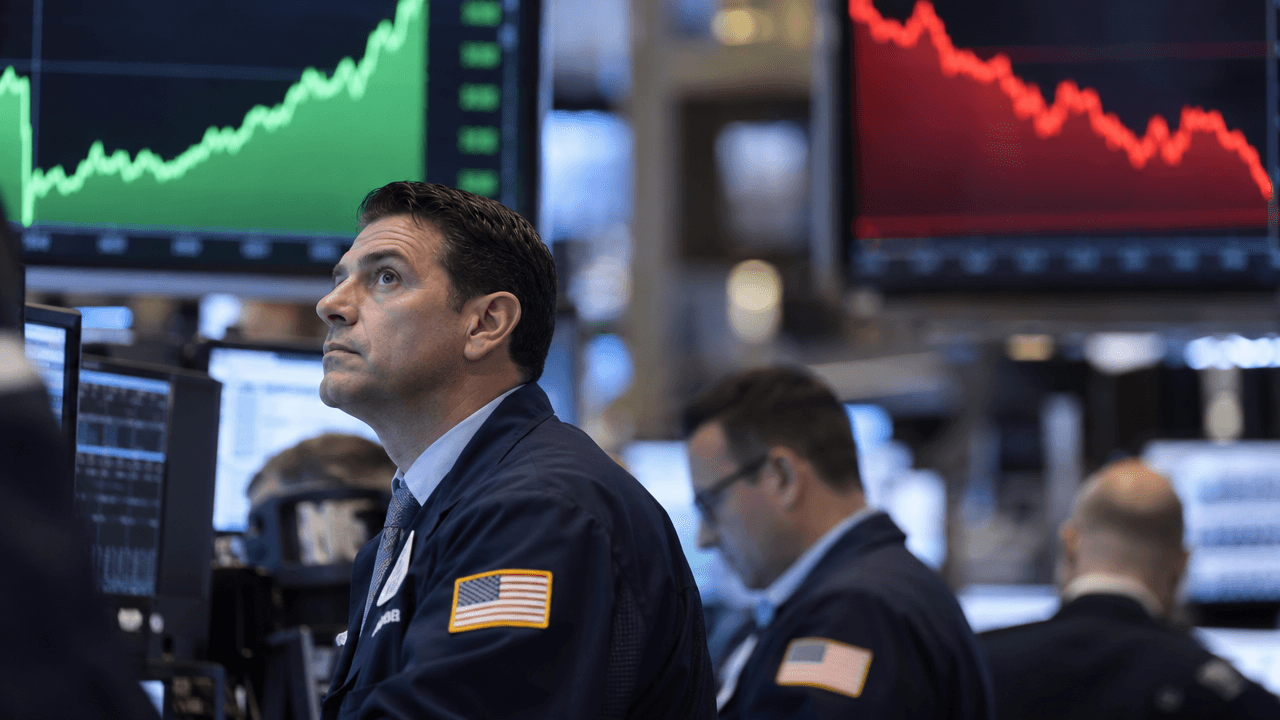
US equities delivered a powerful rebound, but the headline gains concealed a significant shift beneath the surface. The Dow climbed about 3.0%, the S&P 500 rose 1.6%, and the Nasdaq advanced roughly 1.4% in the latest session. Soon afterward, however, Nasdaq-linked futures weakened while Asian technology shares came under pressure. The contrasting moves highlighted a market rotation: investors were willing to buy stocks, but increasingly selective about paying high valuations for artificial intelligence and semiconductor exposure.
This distinction matters for traders. A rising index does not always mean broad-based confidence. When capital moves from growth-oriented technology shares into industrials, financials, energy, consumer companies, or other more economically sensitive sectors, the market can rally even as some of its most influential names decline. The latest action is a useful example of why traders should examine leadership, sector performance, and futures positioning rather than relying solely on the headline index levels.
Rotation, Not A Simple Rally
The Dow’s strong performance compared with the Nasdaq suggests that investors were rotating toward established, economically sensitive companies and away from the most crowded technology trades. The S&P 500’s 1.6% gain sat between the two, reflecting its broader composition.
This type of rotation can occur for several reasons. Traders may believe that industrial and financial companies have more room to benefit from economic growth, while technology valuations already reflect optimistic expectations. Alternatively, investors may simply be reducing exposure to positions that have become too concentrated after an extended rally.
Recent market commentary has emphasized that massive artificial intelligence infrastructure spending has prompted questions about how quickly companies can convert capital expenditure into cash flow. The Nasdaq 100 had already entered correction territory after falling more than 10% from its October peak, underscoring how quickly sentiment can change when expectations become stretched. [9][14]
For SimFi traders, the practical lesson is to distinguish between index direction and market leadership. A long position in the Dow may behave very differently from a long position in a semiconductor exchange-traded fund, even when both are part of a broadly positive session.
Why Nasdaq Futures Weakened
The weakness in Nasdaq futures and Asian technology markets was linked to renewed concerns about potential regulation of artificial intelligence and Big Tech. Reports indicated that Nasdaq 100 futures fell as much as 2.4% before paring part of the decline, while the move was sharper than the declines in S&P 500 and Dow futures. [2][3]
The concerns extend beyond traditional antitrust questions. Investors are also considering possible rules affecting data-center construction, energy consumption, semiconductor exports, and the scale of capital spending by large technology companies. Any policy that increases compliance costs, delays infrastructure projects, or restricts access to key markets could affect future earnings expectations.
Markets often react to anticipated policy changes well before legislation becomes final. That is because asset prices reflect expected future cash flows. If investors believe regulation could reduce the growth rate of an industry, they may lower the prices they are willing to pay today, even if current earnings remain strong.
The move does not necessarily mean that the artificial intelligence investment cycle is over. It does mean that traders are reassessing risk. Strong demand for chips and cloud infrastructure can coexist with greater political scrutiny, higher expenses, and more uncertainty about the eventual return on investment.
Reading The Signal Through Futures
Index futures provide an early indication of how investors are positioning before the next cash-market session, but they should not be treated as a guaranteed forecast. Overnight markets can be thinner, more volatile, and more sensitive to breaking news than regular trading hours.
A sharp decline in Nasdaq futures alongside steadier Dow or S&P futures can signal a rotation rather than a broad market panic. Traders should compare the size and persistence of the moves across contracts. If Nasdaq weakness deepens while defensive sectors also sell off, the market may be shifting from sector rotation toward a wider risk reduction. If industrials, banks, and value stocks remain firm, the more likely explanation is selective repricing.
The latest pattern also shows why a single strong session should not automatically be interpreted as a trend reversal. The Nasdaq can rise during one cash session and still face selling pressure in the following overnight period. Conversely, a futures decline can reverse once investors receive new earnings information or conclude that regulatory fears were overstated.
Practical Takeaways For Traders
First, monitor breadth. Compare the number of advancing and declining stocks, not just the performance of the major indexes. Strong breadth generally provides healthier confirmation than a rally led by a narrow group of companies.
Second, track sector leadership. Industrial, financial, energy, and consumer sectors may benefit when investors reduce exposure to expensive growth stocks. However, leadership can change quickly, so traders should avoid assuming that one session establishes a permanent market regime.
Third, manage concentration risk. A portfolio heavily weighted toward AI beneficiaries and semiconductor names may be more vulnerable to policy headlines than a diversified portfolio. Position sizing, stop-loss planning, and exposure limits become especially important when futures markets are moving sharply overnight.
Finally, separate fundamental risk from headline volatility. Regulation can affect business models over time, but the initial market reaction may be exaggerated. Traders should look for confirmation in company guidance, capital-spending plans, earnings revisions, and credit conditions before treating a policy headline as a lasting investment thesis.
What This Means For Simfi Participants
Simulated Finance provides a useful environment for testing these ideas without putting real capital at risk. Traders can build scenarios around a continued rotation into value stocks, a rebound in semiconductor shares, or a broader technology selloff. The objective should not be to predict every headline, but to create a plan for multiple outcomes.
A disciplined approach might involve defining the maximum acceptable loss, reducing leverage during event-driven volatility, and comparing the performance of several sectors rather than focusing on a single trade. Keeping a journal can also reveal whether decisions were based on confirmed market structure or an emotional reaction to overnight futures.
The central message is clear: US equities can surge while technology futures weaken because markets are not moving as one uniform asset. The latest session showed strong demand for stocks overall, but less enthusiasm for the most expensive and policy-sensitive areas of the market. For traders, recognizing that difference may be more valuable than the headline rally itself.