
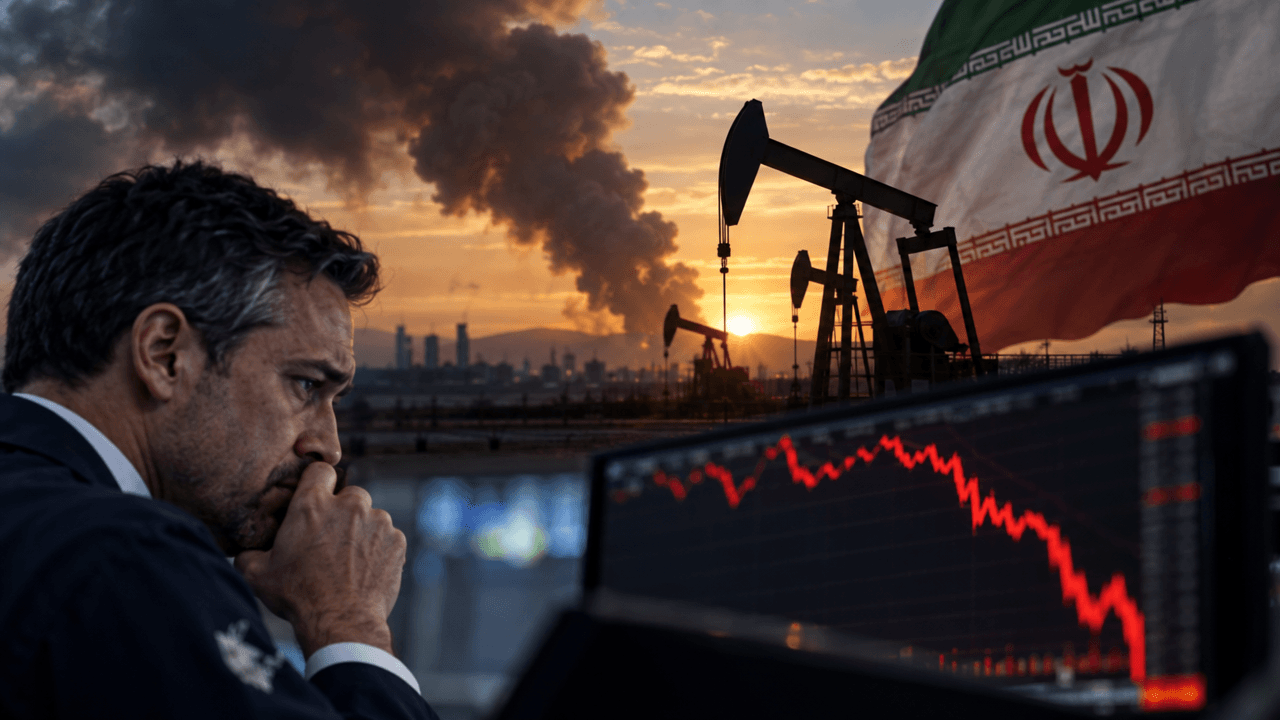
US equity futures are signaling a risk-off start to the week, with S&P 500 futures down roughly 0.5%, Dow futures off about 0.4%, and Nasdaq 100 futures lower by just over 1%. [4][2][11] The move reflects a dual shock: renewed tensions involving Iran that have pushed crude oil prices higher, and a market reassessment of inflation and interest-rate risks as energy becomes a fresh source of uncertainty. [2][8][14]
Market Snapshot
The most immediate story is the divergence across indices: the tech-heavy Nasdaq 100 is underperforming as traders trim exposure to long-duration, growth-sensitive assets, which are more vulnerable when the market prices in higher future interest rates. [2][4][11] Meanwhile, the broader S&P 500 and the Dow are also weaker, but their declines are more modest, reflecting a rotation out of risk rather than panic selling. [4][7][11]
Rising oil prices sit at the center of this move. Brent crude futures have recently traded in the high‑80s to around $90 per barrel, with episodes where prices have pushed closer to or above $100 as Middle East tensions and supply disruptions intensified. [8][14] Reports of threats to shipping routes and export infrastructure, alongside stalled diplomacy around reopening the Strait of Hormuz, have reinforced a geopolitical risk premium in energy markets. [10][6][14]
For traders, this combination—equity futures down, crude up—is a classic signal that markets are re-pricing macro risks rather than reacting to idiosyncratic corporate news. [2][9][11] It is also occurring ahead of key economic releases, making investors even more sensitive to any data that could confirm or challenge the inflation narrative now being driven by energy. [2][7]
Why Geopolitics And Oil Matter For Equities
Geopolitical shocks that threaten energy supply tend to reverberate through multiple asset classes at once. [13][1] When tensions rise in the Middle East—especially around critical choke points like the Strait of Hormuz—markets quickly embed a premium into oil prices to reflect the perceived risk of disrupted flows. [8][10][6] Central bank research shows that oil-related geopolitical shocks can trigger price spikes of 30% or more in the weeks following major conflict events, and those elevated prices can persist for several quarters. [13][1]
For equities, the mechanism is straightforward but powerful. Higher oil prices raise input costs for transportation, manufacturing, and many services, squeezing margins and potentially reducing corporate earnings growth. [9][13] At the same time, consumers face higher fuel and heating bills, which can dampen discretionary spending and slow overall economic activity. [9][13] As growth expectations soften while inflation expectations stay sticky or rise, risk premia demanded by investors tend to increase, pushing equity valuations lower. [13][1]
This is why periods of Middle East stress have often coincided with weaker equity indices. War‑related jumps in crude prices have previously revived inflation fears and led markets to price in tighter monetary policy, adding pressure to stocks in the process. [9][13] Today’s move in futures fits this broader historical pattern, even though the specific trigger—renewed US‑Iran tensions and shipping uncertainties—is unique to the current cycle. [8][10][14]
Inflation Risks And Interest-rate Expectations
The core concern behind the latest futures decline is not geopolitics in isolation, but geopolitics as a potential driver of renewed inflation. [2][9][13] After a period in which many investors were positioning for disinflation and a gradual easing of monetary policy, a sustained rise in energy prices forces a rethink of that narrative. [9][13] If crude remains elevated or spikes further, there is a risk that headline inflation re-accelerates and feeds into inflation expectations, making central banks less comfortable with cutting rates—or even prompting discussions of renewed hikes. [9][13]
Analyses of past shocks show that when oil supply is disrupted, prices rise, activity slows, and risk premia increase across financial markets. [13][1] This dynamic can be especially challenging for growth and technology names, which are often valued on the basis of cash flows far into the future. [11][2][4] Higher expected interest rates increase the discount rate applied to those cash flows, mechanically lowering present valuations even if the underlying business outlook has not changed. [11][2][4]
Moreover, the current episode is unfolding alongside other sources of uncertainty, including developments in frontier artificial intelligence and regulatory environments, which have prompted periodic reassessments of risk appetite in tech. [2][4] When multiple risk narratives converge—geopolitical, inflationary, technological—market moves can become more pronounced as investors rush to rebalance portfolios. [2][9][11]
Key Takeaways For Traders
In the near term, there are several practical focal points for traders and investors tracking this move in US equity futures.
First, monitor the correlation between equity indices and crude oil. When futures sell off as oil rallies, the market is signaling that energy is being treated as an inflation risk, not just a sector‑specific story. [2][9][13] This correlation can help in constructing hedges or relative value trades—for example, considering whether energy equities or commodity exposures might partially offset broader index risk. [9][14]
Second, watch implied volatility and options skews across the major indices. Periods of geopolitical stress often manifest in higher downside protection demand and steeper volatility term structures, providing information about how deep and how long markets expect the drawdown risk to be. [9][11][13] These metrics can guide decisions on whether to use options to manage tail risks or to take advantage of dislocations in volatility pricing. [11]
Third, pay attention to sector rotation. Defensive areas such as utilities, staples, and certain healthcare names may outperform high‑beta growth segments when inflation and rate concerns dominate the narrative. [9][11] Energy and materials can benefit from higher commodity prices, but that trade must be evaluated carefully, since extreme geopolitical outcomes can also hurt global demand and eventually weigh on resource-linked earnings. [13][14]
Finally, keep an eye on fixed-income markets and breakeven inflation measures. Moves in bond yields and inflation-linked securities provide a real‑time read on how seriously markets are treating the risk of an inflation resurgence. [9][13] Equity strategies that ignore these signals risk being blindsided if the rate path repricing accelerates. [13]
Navigating Uncertainty With Simulated Finance
Episodes like this highlight the value of practicing trading and risk management in a realistic but consequence‑free environment. Simulated finance platforms allow traders to test how portfolios might perform under scenarios where equity futures drop, oil spikes, and interest-rate expectations shift quickly. [13][9] By constructing and stress‑testing strategies that respond to geopolitical shocks and inflation surprises, market participants can build playbooks before capital is on the line. [13][1]
For both newer traders and experienced market participants, scenario analysis across asset classes—equities, commodities, and rates—can help clarify how positions are exposed to macro themes rather than just ticker‑level stories. [13][1] Simulated environments can replicate historical episodes, such as prior Middle East conflicts or other energy supply shocks, offering a structured way to learn from past market behavior while preparing for future uncertainty. [13]
Conclusion
US equity futures are under pressure as investors confront a familiar but potent mix of higher oil prices, geopolitical friction, and renewed inflation anxiety. [2][4][11] While the headline move is modest in index terms, the underlying message is significant: markets are reminding traders that the path of inflation and interest rates remains sensitive to shocks emanating well beyond traditional economic data releases. [9][13]
For traders, the opportunity lies in understanding these linkages, monitoring cross‑asset signals, and building strategies that can adapt as geopolitical and macro narratives evolve. [9][13] Whether through live markets or simulated finance environments, the ability to navigate such complex risk regimes is becoming an essential skillset for modern market participants. [13][1]