
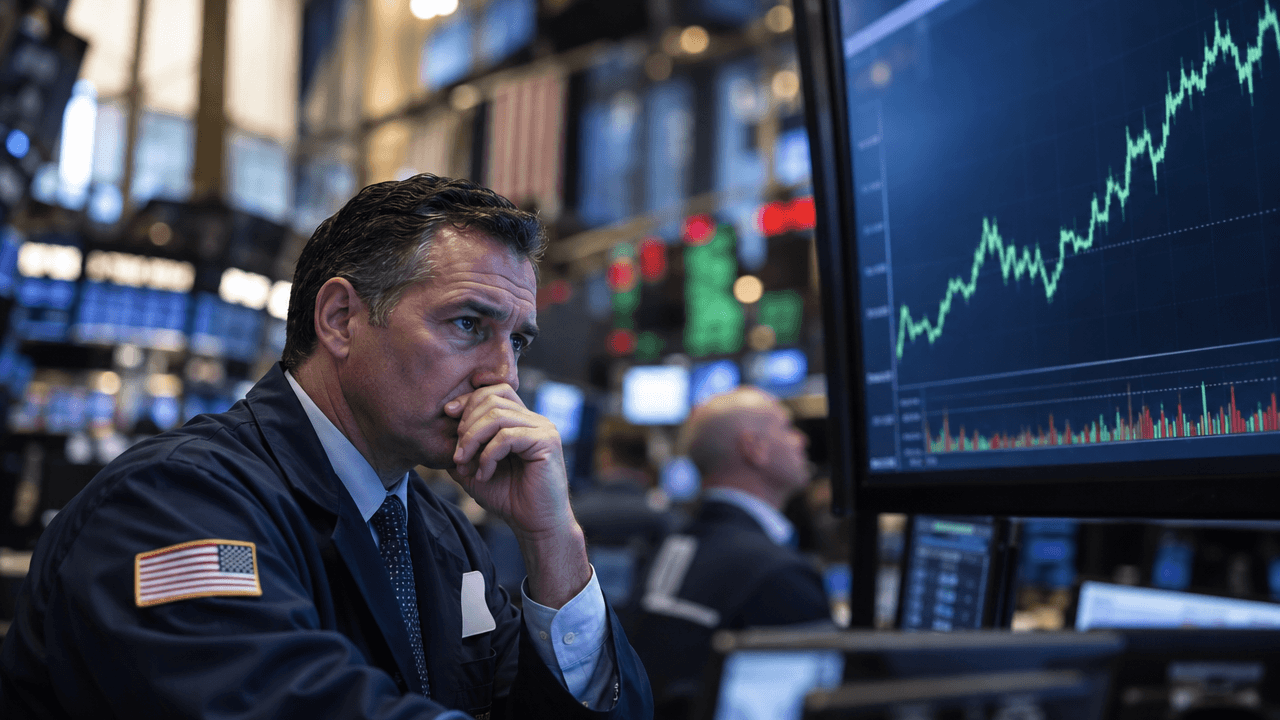
U.S. stock futures are trying to regain balance after a brutal technology-led selloff, but Friday’s early moves show that investors remain cautious. Dow futures were down roughly 0.7%, while S&P 500 futures gained about 0.3% and Nasdaq-100 futures rose approximately 1% as traders waited for the October employment report. The uneven performance suggests that some investors were buying beaten-down technology shares, even as confidence in the broader market remained fragile. [1]
THE MARKET’S UNEVEN PREMARKET SIGNAL
Futures trading provides an early indication of investor sentiment, but it does not guarantee how markets will perform after the opening bell. Friday’s split between the major index contracts is especially revealing.
The Dow’s decline points to continued pressure on economically sensitive and established companies. By contrast, the rebound in Nasdaq-100 futures suggests that traders were selectively returning to technology and semiconductor stocks after Thursday’s steep losses.
This divergence can reflect several forces at once. Investors may view the technology selloff as excessive and begin looking for short-term opportunities. At the same time, they may remain concerned about the economic outlook, interest rates, or the durability of corporate spending on artificial intelligence.
The result is a market attempting to stabilize without yet demonstrating that a durable recovery has begun.
Why The Selloff Matters
The previous session’s losses were not simply a routine pullback. Technology shares came under intense pressure as investors reassessed the enormous capital spending required to build artificial-intelligence infrastructure and data centers. Concerns about slowing construction and uncertainty over future AI spending contributed to a sharp decline across the sector. [1]
Reports indicated that the Nasdaq-100 lost roughly 6.3% on Thursday, while the S&P 500 fell about 4.4%, wiping trillions of dollars from the value of U.S. equities. [15] Such a move can alter market psychology quickly. Traders who had been willing to pay premium prices for growth stocks may become more sensitive to valuation, earnings expectations, and evidence that AI investments will produce sufficient returns.
A major selloff can also create forced selling. Leveraged traders may reduce positions to meet risk limits, while portfolio managers rebalance after a sharp decline in technology holdings. Those mechanical flows can increase volatility even when there is no single new piece of fundamental information.
For that reason, a positive futures reading should be interpreted as an attempt to find a floor, not proof that the market has fully recovered.
The Jobs Report As The Next Catalyst
The central event for Friday is the U.S. employment report, scheduled for release before the market opens. Economists were expecting the economy to have added approximately 65,000 jobs in October, compared with 29,000 in September, while the unemployment rate was projected to remain at 4.2%. [2]
Employment data can influence stocks through its impact on Federal Reserve expectations. A stronger-than-expected report could suggest that the economy remains resilient, but it could also reduce expectations for lower interest rates or increase concern that monetary policy will remain restrictive. Higher interest rates tend to weigh most heavily on growth stocks because they reduce the present value of future earnings.
A weaker report could produce the opposite reaction. Investors might anticipate a more accommodative Federal Reserve, supporting rate-sensitive technology shares. However, an unexpectedly weak labor market could also revive fears of an economic slowdown, limiting the benefit of lower-rate expectations.
The market response will therefore depend not only on the headline payroll number, but also on unemployment, wage growth, revisions to prior months, and the composition of job creation.
What Traders Should Watch
The first priority is market breadth. If technology shares rise while most stocks remain under pressure, the rebound may be narrow and vulnerable. A healthier recovery would involve participation from multiple sectors, including financials, industrials, consumer companies, and smaller-cap stocks.
Traders should also monitor volume and price action after the opening bell. A strong open followed by persistent selling would suggest that investors are using the rebound to reduce exposure. Conversely, gains that hold throughout the session could indicate that buyers are beginning to absorb the available supply.
Options markets and volatility measures can offer additional clues. Elevated volatility signals that traders are still paying a premium for protection against large price swings. Until volatility declines and index levels stabilize, position sizing and risk controls remain more important than attempting to predict the exact market bottom.
For SimFi traders, the session offers a useful lesson in disciplined execution. Rather than chasing a sharp premarket move, define the trade’s entry, invalidation level, and maximum acceptable loss before taking a position. Consider reducing leverage when economic data and overnight headlines can produce rapid price changes.
A practical approach is to wait for confirmation. That could mean allowing the first reaction to the jobs report to settle, observing whether support levels hold, and comparing leadership across sectors. Simulated trading provides an opportunity to practice these decisions without exposing real capital.
The Bigger Picture
Friday’s futures action reflects a market caught between bargain hunting and renewed risk aversion. The Nasdaq-100’s attempted rebound shows that investors have not abandoned technology, but the Dow’s weakness indicates that confidence has not returned across the entire market.
The employment report may determine the next short-term direction, yet one data release is unlikely to resolve broader questions about AI valuations, corporate investment, economic growth, or interest rates. Those themes will continue to shape trading well beyond Friday.
The key takeaway is straightforward: stabilization is not the same as recovery. Traders should focus on confirmation, manage exposure carefully, and treat volatility as a condition to navigate rather than an invitation to overtrade.