
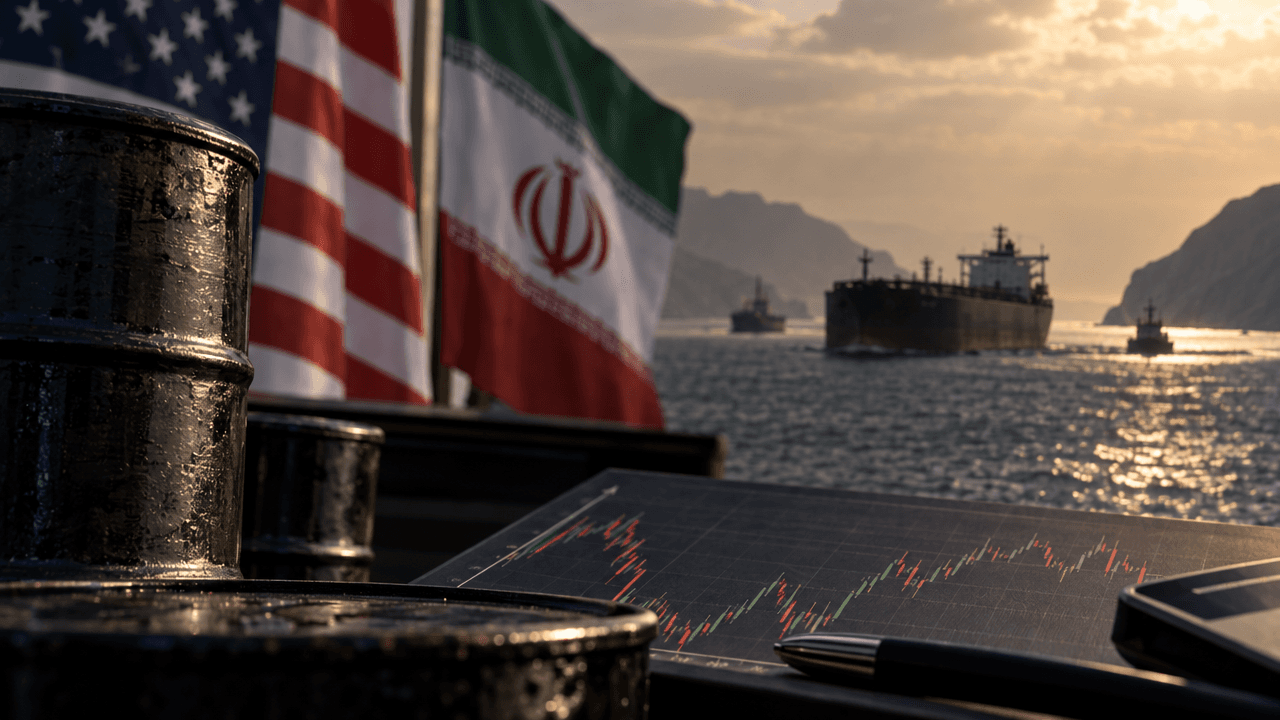
Crude futures are being pulled in opposite directions as U.S.–Iran negotiations introduce the possibility of easing Middle East supply risks while unresolved military and shipping concerns continue to support prices. Reports of progress toward a potential agreement have limited oil-market gains, but the situation remains highly fluid. A favorable diplomatic development could send prices lower quickly, while a breakdown in talks could restore a substantial geopolitical premium.
For traders, the central issue is not simply whether negotiations exist. It is whether they produce verifiable changes in sanctions, exports, shipping activity, and regional security. Until those questions are answered, crude markets are likely to remain sensitive to headlines, official statements, and signs of disruption around key transportation routes.
Diplomacy Caps The Geopolitical Premium
Oil prices have recently shown how rapidly diplomatic expectations can change market direction. On November 10, Brent settled at $91.49 per barrel and West Texas Intermediate at $86.04 after U.S. officials played down the need for additional military action against Iran. Both benchmarks reached their lowest levels since August 31 as traders reduced expectations of an immediate supply shock. [3]
The following day, however, prices recovered as Iranian security officials delivered messages that complicated expectations for a quick settlement. Brent rose to $92.76 and WTI to $86.53 after Iran indicated it would not allow enriched nuclear material to leave the country. [1]
This price action illustrates the market’s current balance. Negotiations reduce the probability of further escalation, which can remove some risk premium from crude. At the same time, disagreements over nuclear policy, sanctions, frozen assets, naval activity, and shipping routes make a comprehensive agreement difficult to price with confidence.
As a result, traders may respond more aggressively to incremental headlines than they would during a stable diplomatic process. A report of technical progress can pressure futures, while a disputed statement or military incident can trigger a rapid rebound.
Supply Expectations Matter More Than Headlines
The long-term market impact of negotiations will depend on whether they change the physical flow of Iranian oil. Sanctions have historically constrained Iran’s access to international markets, although Iranian crude shipments have continued, particularly to China. The U.S. Energy Information Administration has noted that sanctions previously displaced more than 1 million barrels per day of Iranian crude from the global market. [7]
A credible agreement that relaxes restrictions could allow Iran to increase production and exports. Even if additional barrels arrive gradually, the expectation of future supply can weigh on futures prices immediately. Oil markets trade anticipated balances, not only current inventories.
The opposite is also true. If negotiations fail or military tensions intensify, traders may focus on the possibility of lower exports, damaged infrastructure, or restricted passage through the Strait of Hormuz. The EIA has reported that recent policies and sanctions were expected to restrict Iranian exports and production, while regional crude flows remained vulnerable to disruption and rerouting. [12]
This creates two distinct risks. A diplomatic breakthrough could produce a bearish repricing based on higher future supply. A breakdown could produce a bullish repricing based on immediate supply uncertainty. The size of the move would depend on how much of either outcome is already reflected in prices.
Inflation And Currency Transmission
Crude volatility does not stay confined to energy markets. Higher oil prices can raise transportation, manufacturing, and heating costs, influencing headline inflation and consumer expectations. If markets begin to anticipate sustained energy inflation, investors may reduce expectations for interest-rate cuts or increase demand for inflation protection.
A diplomatic breakthrough could have the opposite effect. Lower crude prices would ease fuel costs and potentially reduce near-term inflation pressure. That could support expectations for easier monetary policy, although central banks would still need to evaluate broader wage, services, and economic data.
Commodity-linked currencies are also sensitive to the oil outlook. The Canadian dollar, Norwegian krone, and other energy-related currencies may benefit when traders expect stronger crude prices and higher export revenues. Conversely, a sharp decline in oil can weaken those currencies, particularly if it coincides with lower global growth expectations.
However, currency reactions are not automatic. Interest-rate differentials, risk sentiment, domestic economic data, and the U.S. dollar can overwhelm the oil signal. Traders should therefore treat crude as one input into currency analysis rather than a standalone forecast.
Practical Takeaways For Traders
First, monitor the difference between diplomatic language and operational change. Statements about progress are important, but sanctions relief, resumed shipping, port access, and confirmed export volumes provide stronger evidence that the supply outlook is changing.
Second, watch both Brent and WTI. Brent reflects the international market and is particularly sensitive to Middle East developments, while WTI is more closely tied to U.S. production, inventories, and domestic logistics. A widening or narrowing spread can reveal whether the market is pricing a global supply concern or a more localized U.S. factor.
Third, prepare for volatility rather than assuming a single directional trend. Traders using futures, options, or leveraged SimFi positions should define risk before entering a trade, account for gap moves, and avoid treating one headline as confirmation of a lasting trend.
Finally, track related markets. Inflation expectations, Treasury yields, the U.S. dollar, energy equities, and commodity-linked currencies can help confirm whether a crude move reflects a broad macroeconomic repricing or a temporary geopolitical reaction.
Conclusion
U.S.–Iran negotiations have created uncertainty rather than a clear bullish or bearish signal for crude futures. Progress toward an agreement can limit oil gains by reducing the probability of further disruption and raising the prospect of additional Iranian supply. Yet unresolved disputes and vulnerable shipping routes leave the market exposed to sudden upside risks.
The most reliable approach is to separate headlines from measurable changes in supply and security. Until negotiations produce concrete policy and operational outcomes, crude futures are likely to remain highly reactive, with consequences reaching inflation expectations, interest-rate pricing, currencies, and broader risk sentiment.