
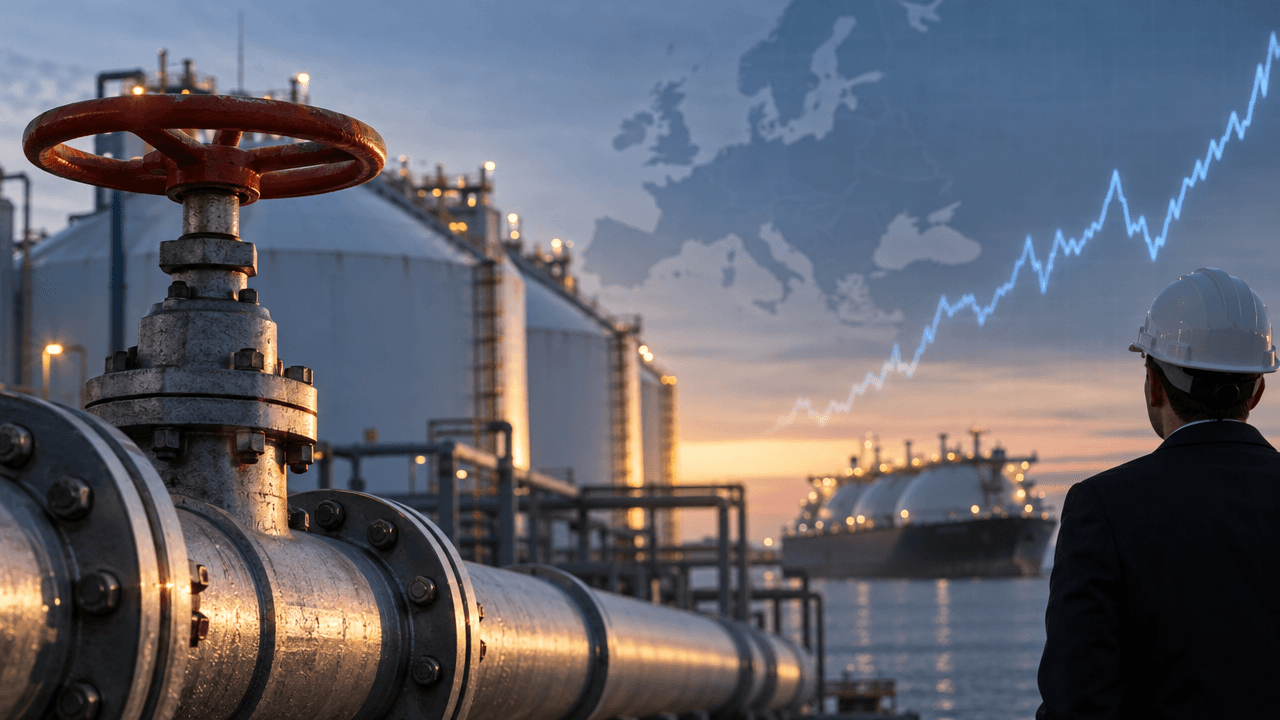
European natural-gas prices have crossed a psychologically important threshold. The Dutch TTF front-month contract briefly reached €100 per megawatt-hour on October 28, marking its highest level since December 2022, when Europe was still dealing with the initial shock from the collapse of Russian pipeline-gas supplies. The move reflects a fresh combination of tight inventories, rising winter demand and fears that Middle East conflict could disrupt liquefied natural-gas shipments. [2]
For households, manufacturers and policymakers, the timing is particularly uncomfortable. Europe is entering the heating season with less gas in storage than normal, leaving the market more exposed to colder weather or another supply interruption. For traders, the rally is a reminder that energy markets can reprice rapidly when physical availability, geopolitics and seasonal demand begin reinforcing one another.
Why European Gas Prices Are Rising
The immediate issue is supply security. European storage facilities were approximately 75% full in late October, compared with about 83% at the same point last year and a five-year average near 86%. Inventories stood at roughly 849 terawatt-hours, around 100 terawatt-hours below last year’s level. Germany’s storage was near 61.65%, while France and Italy were in a stronger position at approximately 87.34% and 90.77%, respectively. [10]
Those figures do not mean Europe is about to run out of gas. They do mean the region has less of a buffer. Storage normally provides protection when temperatures fall, demand increases or imports are interrupted. With reserves below seasonal norms, the market must compete more aggressively for additional cargoes before and during winter.
The second factor is the threat to LNG supply. Disruptions to Middle East shipping routes have raised concerns about deliveries from major exporters, particularly Qatar. Even if cargoes are not permanently lost, delays, insurance costs and rerouting can tighten the market. Europe also competes with Asian buyers for flexible LNG supplies, meaning colder weather in Asia could lift prices on both continents. [11]
A third factor is weather. Forecasts for colder conditions across Europe and parts of Asia have increased expectations for heating demand. When storage is already below normal, a cold spell can affect prices disproportionately because buyers have fewer reserves to draw upon.
WHY €100/MWH MATTERS
The €100/MWh level is not a magical boundary, but it is an important market signal. It represents a sharp increase in the cost of energy for utilities and large industrial consumers. Gas-fired power plants may face higher generation costs, while electricity prices can rise where gas remains an important marginal fuel.
For households, the impact depends on national energy policies, regulated tariffs and the speed at which wholesale prices pass through to retail bills. Consumers with fixed-price contracts may initially be protected, while those on variable contracts could see higher costs later. Governments may also respond with subsidies, tax adjustments or targeted support, but such measures can place additional pressure on public finances.
Industry faces a more direct challenge. Chemicals, fertilizer producers, glass manufacturers, metals companies and food processors all use substantial amounts of energy. Higher gas prices can reduce profit margins, encourage production cuts or make European facilities less competitive against overseas rivals. Companies may attempt to pass costs on to customers, contributing to broader price pressures.
The Inflation And Ecb Connection
Energy is one of the fastest channels through which geopolitical shocks reach the wider economy. Higher gas prices raise household utility bills and increase the operating costs of businesses. Those costs can then spread through transportation, manufacturing, food production and services.
The European Central Bank has already warned that the Middle East conflict is generating inflation pressure. ECB projections published in September indicated that euro-area inflation could peak at 3.6% in the fourth quarter of 2026 because of higher energy prices, including wholesale gas and electricity costs. [8]
This creates a difficult policy trade-off. If the ECB focuses on inflation, it may need to keep interest rates higher for longer or delay reductions. If it focuses on slowing growth, it risks allowing an energy shock to become embedded in wages and prices. Monetary policy cannot produce more gas or repair shipping routes, but it can influence demand and inflation expectations.
The danger is particularly significant if the energy shock lasts. A brief price spike may have a limited effect on underlying inflation. A prolonged period above €100/MWh could create second-round effects as businesses revise prices and workers seek compensation for lost purchasing power.
What Traders Should Watch
The most important indicator is the relationship between storage levels and weather forecasts. Storage withdrawals that begin earlier or run faster than expected would signal rising winter stress. Traders should also monitor regional differences because low inventories in Germany, for example, may create more vulnerability than higher reserves in France or Italy.
The TTF forward curve is another essential tool. If near-term contracts trade well above later deliveries, the market is signaling immediate scarcity. If prices remain elevated across the curve, participants may be pricing a longer-lasting supply problem.
LNG flows, shipping activity and developments around the Strait of Hormuz should also remain central to any analysis. A ceasefire, restored shipping or additional cargo availability could quickly reduce the geopolitical premium. Conversely, further disruption could push prices materially higher.
For SimFi traders, the event offers a useful risk-management lesson. Avoid treating a headline level as a guaranteed entry signal. Instead, define the scenario, identify invalidation points and size positions so that a sudden reversal does not dominate the portfolio. Gas markets are highly sensitive to weather updates and geopolitical headlines, making stop placement and exposure limits especially important.
The Broader Market Takeaway
European gas prices above €100/MWh reveal how quickly a market can move when tight inventories meet geopolitical uncertainty. The rally is not only an energy story. It affects inflation, interest-rate expectations, industrial competitiveness, consumer spending and the euro-area growth outlook.
The key question is whether the price surge becomes a short-lived risk premium or develops into a sustained winter energy shock. Traders should focus less on the round number itself and more on the evidence behind it: storage withdrawals, temperatures, LNG deliveries and the duration of supply disruptions.
For now, Europe has entered winter with less inventory protection than usual and a market unusually sensitive to bad news. That combination means volatility is likely to remain elevated. The most disciplined approach is to follow the physical data, respect scenario risk and avoid confusing a compelling narrative with a complete trading plan.