
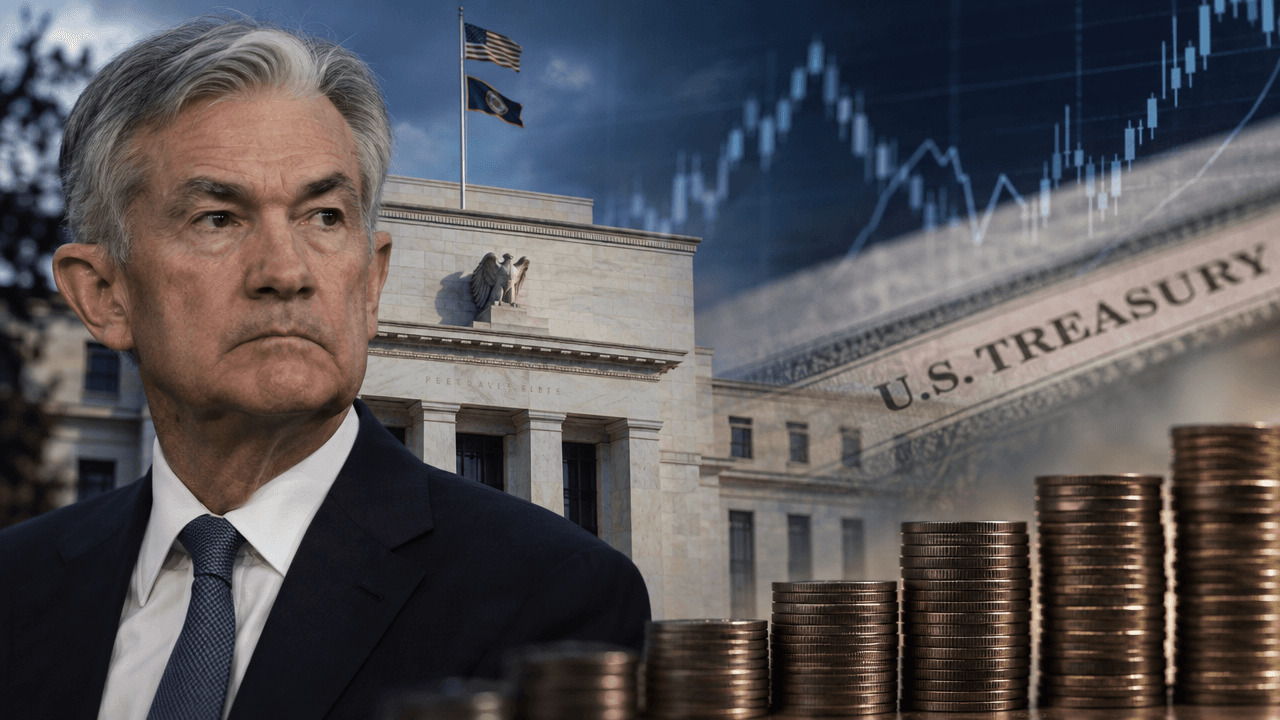
The Federal Reserve is approaching its October policy meeting with markets focused less on whether rates will change this week and more on what comes next. Investors widely expect policymakers to leave the federal funds target range unchanged at 3.75% to 4.00%, but persistent inflation and resilient economic activity have revived expectations for a possible quarter-point hike in December. [1][5]
That combination has produced a cautious market outlook. The likely October pause is being interpreted as a temporary assessment of incoming data rather than a clear shift toward easier monetary policy. At the same time, elevated Treasury yields are reminding investors that financial conditions may remain restrictive even without an immediate rate increase.
Why Markets Expect A Pause
The Federal Open Market Committee is scheduled to meet October 27–28, and market pricing strongly favors no change in interest rates. Futures markets recently placed the probability of an October hold near 90%, while economists surveyed by USA Today overwhelmingly expected the target range to remain at 3.75% to 4%. [1][2]
A pause would give policymakers more time to evaluate the effects of earlier rate increases. Monetary policy works with a lag, meaning higher borrowing costs can continue slowing demand months after a rate decision. Holding steady also allows the Fed to observe whether recent inflation pressures are temporary or becoming embedded in wages, services, housing, and consumer expectations.
However, a pause does not necessarily mean the Fed believes inflation is under control. Recent commentary has emphasized that inflation remains above the central bank’s 2% objective, while economic growth has remained relatively resilient. That creates a difficult policy balance: raising rates too quickly could weaken employment and spending, but waiting too long could allow price pressures to persist. [5]
Inflation Keeps December In Focus
The main reason investors are discussing a December rate hike is that inflation has not cooled consistently enough to remove the need for further restraint. Energy costs, services inflation, and renewed pricing pressure in parts of the economy have made the path back to 2% more uncertain.
A December hike would signal that the Fed is willing to tolerate slower growth in order to restore price stability. Several market analysts now view December as the most plausible opportunity for additional tightening if upcoming inflation and labor-market data remain firm. Trading Economics reported that markets were assigning approximately 75% to 80% odds to a December increase, depending on the pricing date and contract used. [6][14]
Traders should be careful when interpreting these probabilities. Fed funds futures reflect market expectations, not guaranteed outcomes. Pricing can change rapidly after a consumer inflation report, employment release, energy-market shock, or major shift in financial conditions.
For that reason, the most important part of the October meeting may be the Fed’s communication. A statement that emphasizes continued inflation risks could reinforce expectations for December tightening. Conversely, language that highlights weakening growth or increased downside risks could reduce the probability of another hike.
Why Treasury Yields Matter
The 10-year Treasury yield has remained unusually high, trading near 4.99% amid concerns about inflation, government borrowing, and the additional compensation investors demand for holding longer-term bonds. [5][8] Long-term yields do not move only because of the Fed’s current policy rate. They also reflect expectations for future interest rates, economic growth, inflation, Treasury debt issuance, and the term premium.
This distinction is important. Even if the Fed holds rates steady in October, elevated 10-year yields can continue tightening financial conditions. Higher Treasury yields generally increase borrowing costs across the economy, influencing mortgages, corporate debt, asset valuations, and consumer credit.
For bond traders, a cautious Fed outlook creates two-sided risk. A hotter inflation report could push yields higher as markets price a greater chance of a December hike. A weaker growth or employment report could produce a rally in Treasuries as investors anticipate slower future rate increases. The result may be increased volatility, particularly around major economic releases.
What This Means For Traders
The current environment rewards preparation rather than aggressive predictions. Traders should monitor the interaction between short-term and long-term yields instead of focusing on the Fed decision in isolation.
First, watch the two-year Treasury yield because it is especially sensitive to expectations for near-term Fed policy. A rise in the two-year yield alongside a stable or falling 10-year yield may indicate expectations for tighter policy but weaker future growth. If the 10-year yield rises faster than the two-year yield, markets may instead be expressing concern about inflation, government borrowing, or the term premium.
Second, track the U.S. dollar. A more hawkish Fed outlook can support the dollar by making U.S. assets more attractive, while a softer policy signal may weaken it. The relationship is not automatic, however, because global risk sentiment and demand for safe-haven assets can also drive currency markets.
Third, treat equity-market rallies with caution when yields remain elevated. Higher discount rates can place pressure on growth stocks and highly valued companies, even when corporate earnings remain solid. Defensive sectors and companies with strong cash flow may attract greater interest if investors expect rates to stay higher for longer.
Finally, risk management matters more than choosing the perfect forecast. Define entry points, invalidation levels, and position sizes before volatility increases. In a SimFi environment, traders can use the event to test how different assets respond to a hold, a hawkish statement, or a repricing of December expectations without exposing real capital.
Conclusion
Markets are pricing a Federal Reserve that is cautious, not necessarily dovish. An October rate hold appears likely, but persistent inflation and resilient growth have kept a December hike firmly in the conversation. At the same time, a 10-year Treasury yield near 4.99% shows that financial conditions remain restrictive even without an immediate policy move.
The key takeaway is that the market reaction may depend less on the October decision itself and more on the Fed’s guidance about the months ahead. Traders should follow inflation data, labor-market conditions, Treasury yields, and dollar strength as connected parts of the same policy story. In this environment, flexibility and disciplined risk control are more valuable than committing too early to a single outcome.