
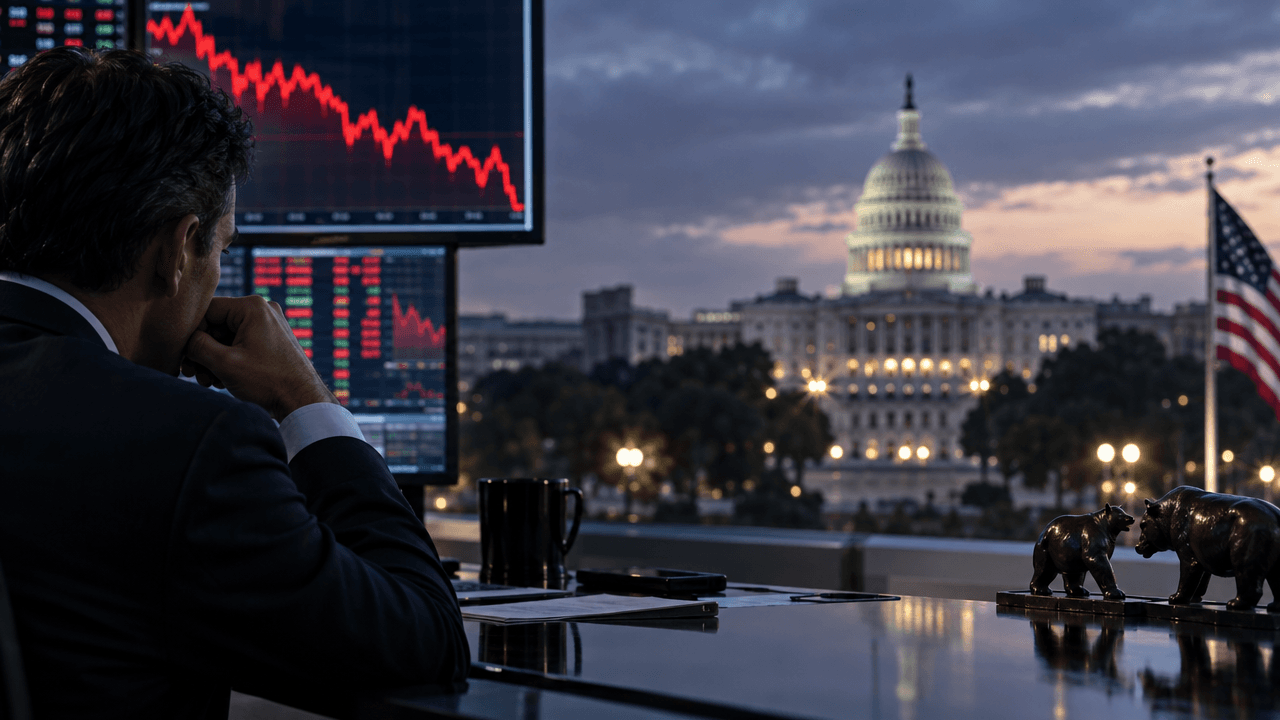
U.S. equity futures weakened as investors awaited results from the U.S. midterm elections, reflecting a familiar market instinct: reduce risk when the political outcome—and its potential impact on policy—is still unclear. S&P 500 futures fell about 0.3%, while Nasdaq 100 futures declined roughly 0.6% in reported trading. The heavier pressure on technology futures showed that investors were particularly cautious around expensive growth stocks and AI-linked companies. [3]
Why Election Uncertainty Matters
Financial markets do not necessarily react to elections based on political preference. Instead, investors attempt to price the economic consequences of a potential change in congressional control. Those consequences can include shifts in taxation, government spending, regulation, trade policy, energy policy, and oversight of major industries.
The immediate concern is uncertainty. When the likely result is unclear, investors may reduce exposure to volatile assets until more information becomes available. This can produce weaker index futures even before any policy change has occurred.
The market is also assessing whether the election could produce divided government or unified control of Congress. A divided government may make major legislation more difficult to pass, potentially limiting changes to taxes and spending. A decisive result, by contrast, may offer greater clarity but could also increase concern about aggressive policy action.
For traders, the key takeaway is that election-driven volatility often reflects changing expectations rather than confirmed economic damage. A futures decline is a signal that risk is being repriced, not necessarily proof that a lasting bear market has begun.
Technology And Ai Stocks Face Extra Pressure
Technology shares were especially vulnerable because many have risen sharply on expectations for continued artificial intelligence investment and strong earnings growth. When investors become more defensive, high-valuation companies are often among the first positions to be reduced.
AI-related stocks also face a second layer of uncertainty. A change in congressional power could lead to new discussions around technology regulation, competition policy, data privacy, semiconductor controls, energy consumption, and the concentration of computing infrastructure among a small group of companies. Some investors may therefore be taking profits while they wait to see whether the election changes the regulatory outlook.
Recent trading illustrated how quickly sentiment can shift. Reports indicated that early election results put pressure on several AI-linked names, while chip stocks and major technology companies moved lower in overnight trading. [13] At the same time, strong corporate earnings, including better-than-expected results from chipmaker AMD, demonstrated that company-specific fundamentals can still offset broader political anxiety. [2]
This creates an important distinction for traders. A decline in an AI stock may result from election risk, valuation concerns, profit-taking, or changing expectations for capital spending. These forces should not automatically be treated as evidence that the company’s long-term business outlook has deteriorated.
Crypto And Broader Risk Sentiment
The weakness in equity futures also added pressure to cryptocurrencies and other risk-sensitive assets. Markets often group stocks, digital assets, and high-yield instruments together when assessing overall appetite for risk. If investors begin moving toward cash, defensive equities, or government bonds, several speculative markets may decline at the same time.
Crypto prices can be particularly sensitive to political headlines because traders often operate around rapid changes in liquidity and sentiment. Election uncertainty can increase volatility even when the final policy implications for digital assets remain unclear.
A simultaneous decline in equity futures and crypto does not guarantee that both markets will continue falling. It does, however, indicate that traders are responding to a common macroeconomic catalyst. Monitoring whether the correlation persists can help distinguish a short-lived headline reaction from a broader reduction in risk appetite.
How Simfi Traders Can Respond
Simulated Finance traders should treat election volatility as a risk-management exercise rather than an invitation to predict every headline. The first step is to reduce unnecessary exposure. Smaller position sizes allow traders to remain flexible if futures reverse direction after new results emerge.
The second step is to identify invalidation levels before entering a trade. A trader expecting technology stocks to rebound should decide in advance what price action would disprove that view. Without a predefined exit, a short-term political trade can quickly become an unmanaged long-term position.
It is also important to avoid excessive leverage. Futures markets can move sharply when vote counts, projections, or policy expectations change. A trade that appears modest during normal conditions may become much larger in practical risk terms during an overnight gap or fast intraday reversal.
Finally, traders should separate the headline from the trend. Election results may create an initial move, but subsequent price action will depend on earnings, interest rates, economic data, bond yields, and guidance from company executives. Waiting for confirmation can mean missing part of the first move, but it may also reduce the chance of trading a temporary reaction.
What To Watch Next
The market’s next test will be whether investors continue selling technology and AI shares after election results become clearer. A stabilization in futures would suggest that uncertainty, rather than a fundamental shift, drove the initial decline. Continued weakness could indicate that investors are reassessing valuations, regulation, or the cost of AI-related expansion.
Traders should also monitor Treasury yields, the U.S. dollar, semiconductor shares, and crypto. These markets can provide additional clues about whether the dominant theme is political uncertainty, inflation concern, or a broader retreat from risk.
U.S. equity futures weakening ahead of election results is a reminder that markets price expectations before facts are fully known. For SimFi traders, the most durable advantage is not guessing the political outcome. It is managing exposure, respecting volatility, and waiting for price action to reveal whether uncertainty is producing a temporary pullback or a more significant change in market direction.