
Us Midterm-election Uncertainty Keeps Markets Volatile
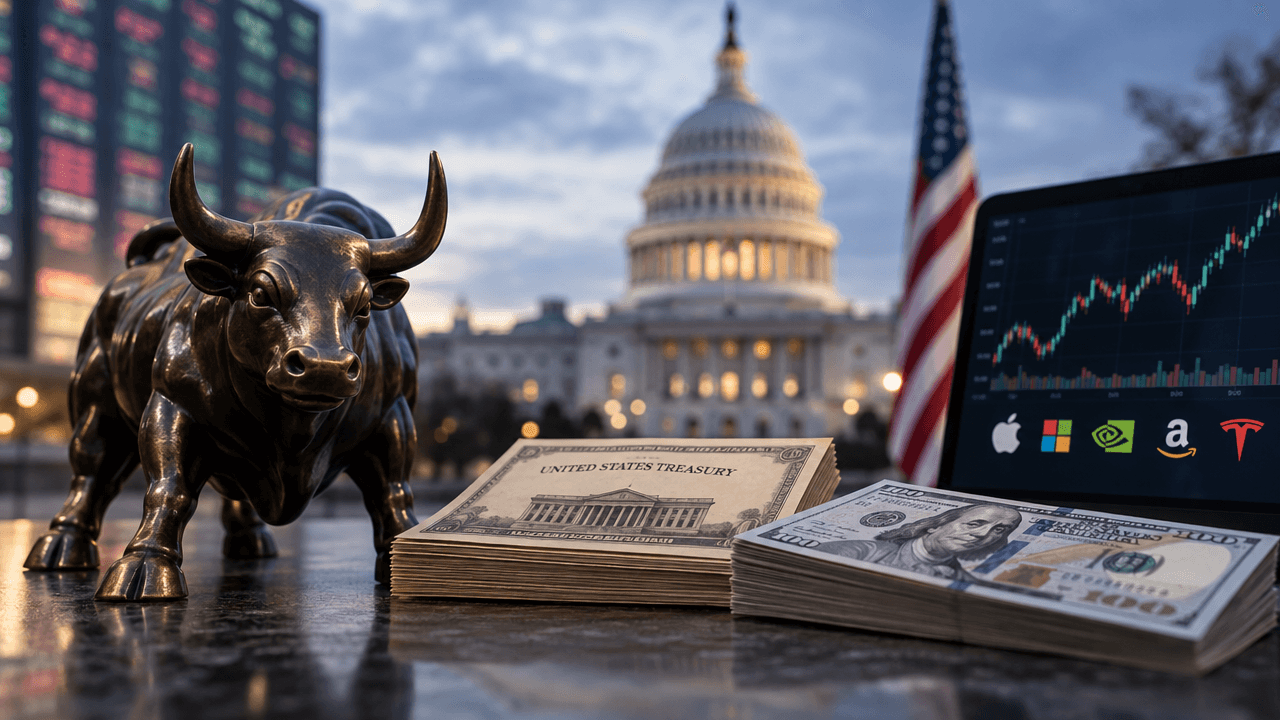
Markets rarely wait patiently for political clarity. As investors position around the US midterm-election results, stocks, bonds, currencies and futures are reacting not only to the vote itself but also to what it could mean for fiscal policy, inflation, regulation and economic growth. US index futures and Asian equity futures have been mixed, reflecting a market caught between caution and the possibility of a post-election relief rally.
The uncertainty arrives at an already complicated moment. Investors are assessing elevated Treasury yields, geopolitical risks, shifting expectations for interest rates and renewed concerns about the sustainability of technology and artificial-intelligence spending. The election is therefore an important catalyst, but it is competing with several powerful market forces.
Why The Midterms Matter To Markets
The midterm elections determine control of Congress, making the result relevant to the government’s ability to pass spending plans, tax changes, regulatory measures and legislation affecting major industries. A unified government could make it easier to advance a broad policy agenda. A divided government, by contrast, may limit the scale of new fiscal initiatives and encourage investors to focus more heavily on existing economic data and Federal Reserve policy.
That policy uncertainty can increase volatility before the results are known. Investors may reduce risk, delay large allocations or hedge portfolios until the political outlook becomes clearer. This can produce sharp moves even when the long-term economic picture has not changed.
History suggests that midterm years are often more volatile than other years in the presidential cycle. Research cited by CNBC found median annualized volatility near 16% during midterm years since 1970, compared with approximately 13% in other years. At the same time, markets have often performed better after the election, when uncertainty begins to fade. The S&P 500 has recorded positive returns in the six months following each midterm election since 1974, according to historical analysis from Schwab cited by CNBC. [13]
Equities Face A Policy And Valuation Test
For equity traders, the key question is whether the election changes expectations for corporate earnings, taxes, regulation and economic growth. Financial, energy, healthcare, defense and infrastructure companies could respond differently depending on the anticipated policy direction. Companies with high valuations may be especially sensitive to changes in interest-rate expectations because the present value of their future earnings depends heavily on bond yields.
Technology stocks are facing an additional challenge. The recent pullback in the artificial-intelligence trade has raised questions about the scale of corporate spending and whether expected future returns justify current valuations. Recent market coverage noted that technology weakness was occurring alongside election caution, making it difficult to determine how much of the selling was political and how much reflected concerns about AI investment and company financing plans. [2][6]
This distinction matters. If technology stocks decline because of election uncertainty, they may recover quickly once the results are known. If the decline reflects deeper concerns about earnings, capital expenditure or valuation, political clarity alone may not be enough to restore momentum.
Treasuries And The Dollar Are Signaling Caution
The bond market is watching the election through the lens of government borrowing and inflation. Policies that imply larger deficits could place upward pressure on Treasury yields, particularly at the long end of the yield curve. Higher yields can increase borrowing costs for households and companies while also reducing the relative appeal of stocks.
Conversely, expectations of divided government or restrained fiscal expansion could ease concerns about additional spending. That scenario may support Treasury prices by reducing the perceived risk of a further increase in government borrowing. Analysts have also suggested that limited fiscal stimulus could help contain inflation pressure and place a ceiling on how far yields rise. [12]
The dollar can respond in several ways. Political uncertainty may support the greenback if investors seek liquidity and safety, but expectations of weaker growth, larger deficits or falling yields could weigh on it. Recent reporting showed the dollar moving lower ahead of the election as Treasury yields retreated, while safe-haven demand and uncertainty surrounding technology shares continued to influence trading. [6]
How Traders Can Manage The Volatility
Election-driven markets reward preparation more than prediction. Traders should begin by identifying the assets most exposed to the result and defining acceptable risk before volatility accelerates. That means using position sizes appropriate for wider price swings, avoiding excessive leverage and recognizing that stop orders can be filled at less favorable prices during fast markets.
It is also useful to separate the immediate reaction from the underlying trend. A first move in stocks, bonds or the dollar may reflect positioning rather than a durable change in economic expectations. Traders can monitor Treasury yields, inflation expectations, sector leadership, credit spreads and the dollar alongside headline index moves.
For SimFi participants, the election provides a practical environment for testing disciplined decision-making. A trader might build several scenarios: one for unified government, one for divided government and one for a delayed or disputed result. Each scenario can include expected reactions in equities, Treasury yields, the dollar and technology shares. The objective is not to predict perfectly, but to establish a plan for managing uncertainty.
The Bigger Market Picture
The election is significant, but it does not operate in isolation. Interest rates, inflation, corporate earnings, energy prices, geopolitical developments and the durability of AI investment may ultimately have a greater influence on market direction. Analysts at JPMorgan have similarly emphasized that growth, inflation, earnings and Federal Reserve policy are likely to remain the larger drivers of returns. [12]
The most important takeaway is that volatility does not automatically mean opportunity. Political uncertainty can create attractive prices, but it can also magnify losses when traders react emotionally or overlook the broader economic backdrop. Once the results are known, markets may experience relief, disappointment or an initial reaction that later reverses.
A disciplined approach is therefore essential. Track the policy implications, compare price action across markets and wait for confirmation rather than treating every headline as a trading signal. The midterms may remove one layer of uncertainty, but successful market participation will still depend on understanding the forces that remain after the votes are counted.