
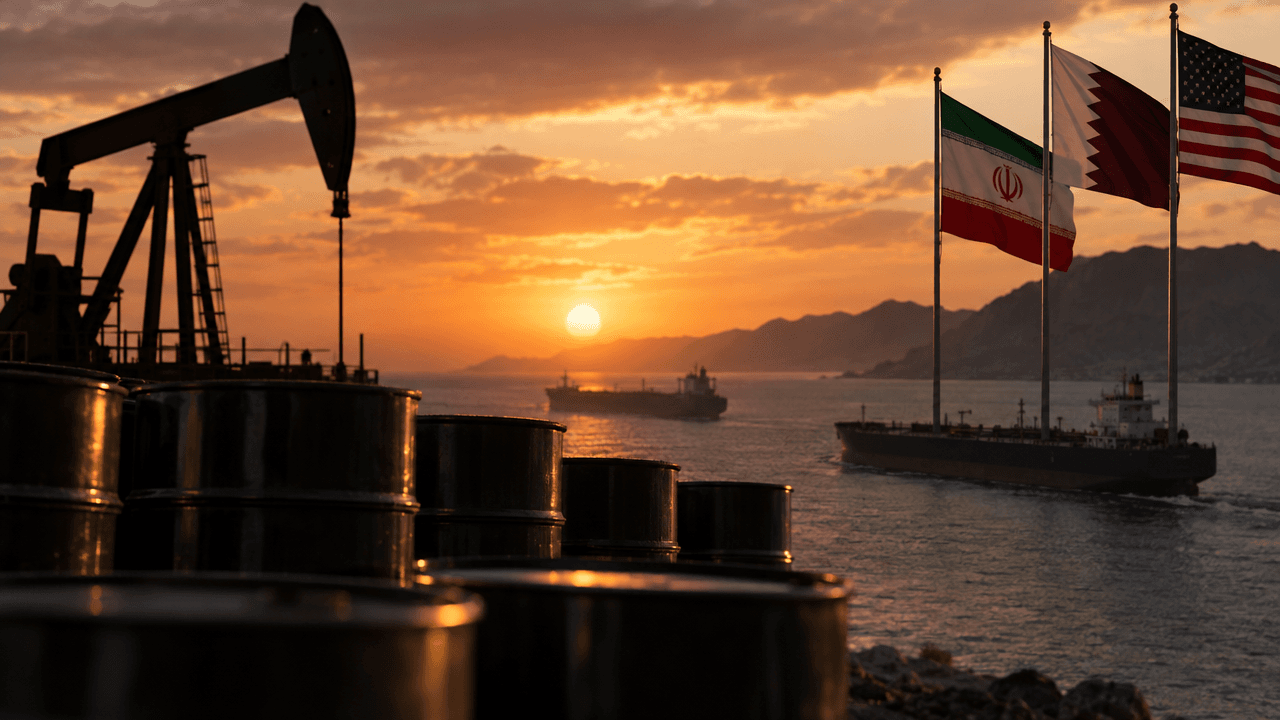
Oil futures remain highly sensitive to every development in the U.S.–Iran relationship, with traders rapidly repricing crude as the probability of escalation or diplomacy changes. The latest market moves demonstrate how quickly geopolitical risk can shift from a powerful price premium to a source of selling pressure. Brent crude and West Texas Intermediate (WTI) both suffered steep weekly declines, even as fresh security concerns triggered intermittent rebounds. [1]
THE MARKET’S TWO-WAY REACTION
On November 6, Brent crude settled at $98.32 per barrel, while WTI finished at $90.83. Those modest daily gains did little to offset the broader sell-off: Brent lost more than 16% for the week, and WTI declined nearly 13%. [1]
The sharp weekly drop reflected changing expectations about the potential duration and severity of the U.S.–Iran conflict. Earlier in the week, reports of discussions between Iranian and Qatari officials raised hopes that diplomacy could reduce the threat to oil production and shipping. Oil prices fell more than 4% on November 2 as traders began pricing in the possibility of a negotiated de-escalation. [2]
This reaction illustrates a central feature of geopolitical oil markets. Prices do not respond only to barrels already removed from the market. They also respond to the perceived probability of future disruption. When traders believe a conflict may spread, they add a risk premium. When diplomatic channels appear credible, that premium can unwind quickly.
Why Iran Matters To Crude Prices
Iran is important to the global oil market because of its production, export capacity, and location near critical shipping routes. Any threat to Iranian energy infrastructure, regional supply lines, or commercial tankers can influence crude prices well beyond the immediate area.
The Strait of Hormuz is especially important. A substantial share of global oil and liquefied natural gas shipments passes through or near this waterway. Even without a complete closure, military incidents, threats, or higher insurance costs can make transportation more expensive and disrupt normal delivery schedules.
That is why markets can rally on reports of tanker attacks or renewed military action, even when the immediate impact on physical supply is uncertain. Recent coverage showed that tanker attacks and skepticism about a durable peace agreement continued to provide a floor under prices during the weekly sell-off. [3]
At the same time, a geopolitical premium cannot remain permanently elevated if actual supply continues to reach consumers. Refiners, governments, and traders monitor inventories, shipping activity, export volumes, and spare production capacity to determine whether a headline represents a temporary threat or a lasting supply shock.
The Role Of Qatar-led Mediation
Qatar’s mediation efforts have become a major variable for oil traders. Reports that Iranian officials sent a nuclear proposal to Washington through Qatar increased expectations that diplomatic negotiations could prevent further escalation. [1]
This explains the unusual two-way volatility in crude. Diplomacy can push prices lower by reducing the likelihood of attacks, sanctions expansion, or shipping interruptions. However, negotiations can also produce sharp rebounds if talks stall, military action resumes, or either side issues a more aggressive statement.
For traders, the important distinction is between a headline and a confirmed change in market fundamentals. A report about negotiations may alter expectations immediately, but it does not guarantee an agreement. Similarly, a warning from a government official may increase risk perception without causing a measurable loss of supply.
Professional market participants therefore evaluate several questions at once:
Has physical production been disrupted?
Are tankers moving normally through regional shipping routes?
Are sanctions likely to change export volumes?
Do diplomatic contacts have support from all relevant parties?
Is the military risk increasing, stabilizing, or declining?
The answers help determine whether a price move is likely to persist or reverse.
What Traders Should Watch Next
The most important near-term catalysts are official statements from Washington and Tehran, evidence of progress in Qatar-led negotiations, and any reports involving military deployments or commercial shipping. Traders should also monitor Brent-WTI spreads, futures-market structure, refinery demand, and inventory data.
A widening backwardation, where nearby contracts trade above later deliveries, can signal concern about immediate supply availability. By contrast, a weaker structure may suggest that traders expect the current risk premium to fade or that inventories are becoming more comfortable.
Price behavior can offer another useful signal. If crude rallies briefly after a threatening headline but quickly gives back the gains, the market may be treating the event as temporary. If prices hold their gains and volume increases, traders may be assigning greater importance to the potential supply impact.
For SimFi traders, this environment is a valuable lesson in risk management. Avoid treating a single geopolitical headline as a complete trading thesis. Define the scenario before entering a position, identify the price level that invalidates the idea, and account for wider spreads or rapid price gaps. Smaller position sizes can help manage the uncertainty surrounding overnight developments.
A practical approach is to build a scenario plan
In a diplomatic breakthrough, the geopolitical premium could continue to unwind, pressuring Brent and WTI.
In a limited military escalation, prices could rebound as traders reassess shipping and supply risks.
In a broader regional disruption, crude could experience a much more aggressive surge, especially if major export routes are affected.
Conclusion
Oil futures remain highly sensitive to U.S.–Iran developments because the market is balancing two opposing forces: the possibility of severe supply disruption and the possibility that diplomacy will prevent a broader conflict. The recent weekly losses show how quickly an easing risk premium can overwhelm prices, while intermittent rebounds demonstrate that traders have not dismissed the threat of renewed escalation. [5]
For traders, the key is to separate immediate headlines from lasting changes in supply and demand. Monitoring negotiations, shipping conditions, official policy, and market structure can provide a clearer framework than reacting emotionally to every price swing. In a market shaped by uncertainty, disciplined scenario planning is often more valuable than attempting to predict the next headline.