
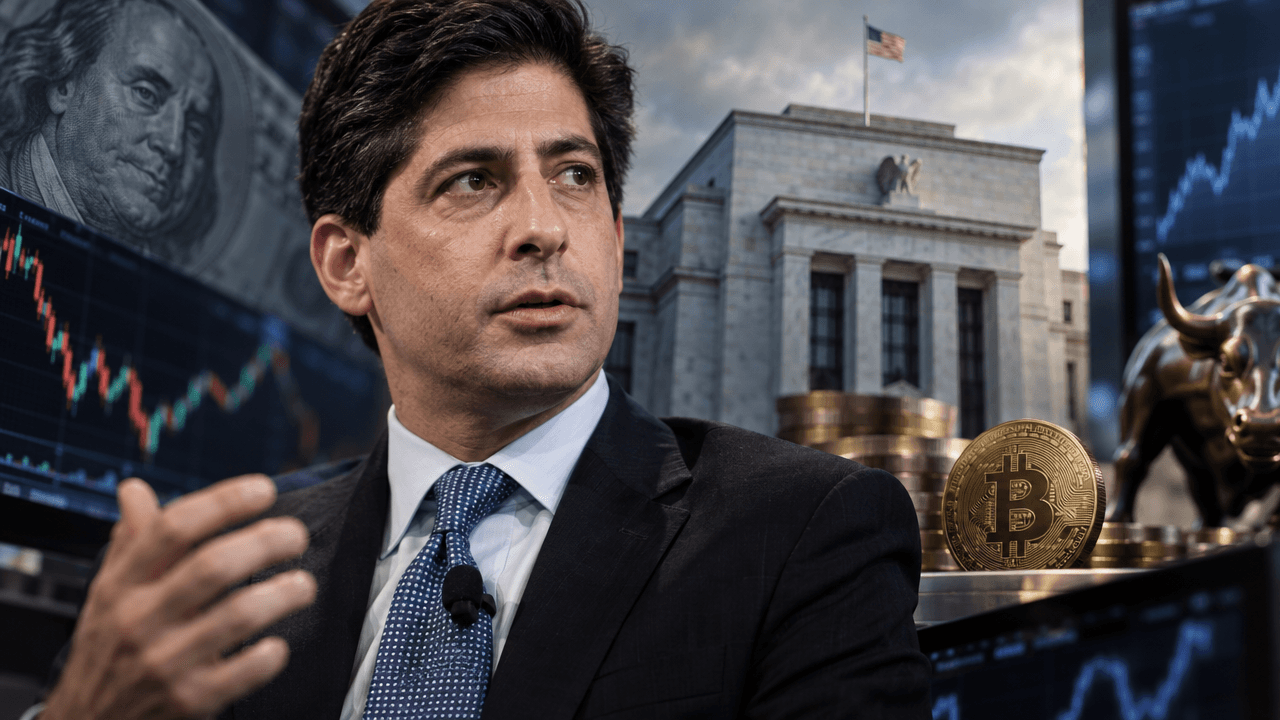
A single speech can reset expectations across nearly every major asset class. On Monday, November 16, markets are watching Federal Reserve Chair Kevin Warsh for clues about the central bank’s next move, particularly after hotter-than-expected inflation data and increasingly hawkish comments from Fed officials.
The immediate question is no longer whether the Fed will raise rates in December. Market pricing has moved toward a quarter-point increase as the base case. The bigger debate is whether policymakers could deliver a larger 50-basis-point hike, and whether additional increases may follow in early 2027. [1][12]
WHY WARSH’S SPEECH MATTERS
Central-bank communication can be as influential as the policy decision itself. Traders will listen for Warsh’s assessment of inflation, consumer demand, labor-market conditions and the risks created by keeping interest rates too low for too long.
The speech is reportedly focused on artificial intelligence and productivity rather than serving as a formal policy announcement. That means Warsh may avoid giving markets a direct forecast for December. Even so, small changes in his language could affect expectations. Words such as “persistent,” “broad-based” or “upside risks” would likely be interpreted as hawkish, while emphasis on economic weakness or improving supply conditions could reduce expectations for aggressive tightening. [4][15]
Warsh’s communication style is especially important because markets have been forced to reprice rapidly. Investors had previously treated a December hike as likely but not fully certain. After the latest inflation report and several hawkish speeches, a 25-basis-point increase is now broadly reflected in prices. The probability of a 50-basis-point move has also risen from effectively zero to roughly 13.5%, according to market pricing cited by Goldman Sachs. [12]
Inflation Has Changed The Rate Debate
The latest Consumer Price Index report showed consumer prices increasing 0.4% in October, exceeding economists’ 0.3% forecast. It was the third consecutive monthly gain of at least 0.4%, following a 0.6% rise in September. [6]
That pattern matters because central bankers are less concerned with one isolated monthly increase than with evidence that inflation is proving difficult to control. A sustained series of upside surprises can encourage businesses and households to expect higher prices, potentially making inflation more persistent.
Fed Governor Christopher Waller has added fuel to the debate. He indicated that a December rate increase should remain on the table even if inflation cooled, and suggested that a 50-basis-point move should be considered if core inflation remained around 0.3% or higher. Other officials, including Dallas Fed President Lorie Logan, have also indicated that rates may need to rise more quickly than previously expected. [2][15]
However, a larger move is not guaranteed. A half-point increase would represent a significant acceleration in policy tightening and could unsettle financial markets. Policymakers must weigh the benefit of reinforcing their inflation-fighting credibility against the risk of weakening employment, investment and consumer spending too aggressively.
How Markets May Respond
Currencies are likely to react first. A more hawkish Warsh could support the U.S. dollar as traders price higher short-term interest rates and stronger returns on dollar-denominated assets. The euro, yen and other currencies could weaken against the dollar if their central banks appear less likely to match the Fed’s pace.
Treasury yields may also rise, particularly at the front end of the yield curve. Two-year yields are highly sensitive to expectations for the federal funds rate, while longer-term yields depend more heavily on inflation, economic growth and government borrowing. A speech that strengthens expectations for several additional hikes could push short-term yields higher and flatten the yield curve.
Equity futures may face pressure if investors interpret Warsh’s remarks as a warning that rates will remain restrictive for longer. Higher yields raise the discount rate applied to future corporate earnings, which can weigh particularly heavily on growth stocks and technology companies. On the other hand, a measured speech could support equities by reducing fears of an abrupt policy shift.
Crypto markets are similarly sensitive to liquidity expectations. Higher interest rates tend to reduce demand for speculative assets by increasing the appeal of cash and government bonds. Bitcoin and other digital assets could therefore experience volatility if traders move quickly to price a 50-basis-point hike.
What Simfi Traders Should Watch
For SimFi traders, the goal should not be to predict every word in Warsh’s speech. The more useful approach is to build a scenario plan before volatility increases.
First, identify the market’s existing expectation. If a 25-basis-point hike is already fully priced, a neutral speech may produce only a limited reaction. A stronger move could require a meaningful change in the expected path beyond December.
Second, monitor cross-market confirmation. A genuinely hawkish repricing would typically involve a stronger dollar, higher Treasury yields and weaker equity futures. If only one market reacts while the others remain stable, the initial move may be less reliable.
Third, manage exposure around the release. Wider spreads, rapid price swings and short-lived breakouts can make oversized positions particularly dangerous. Traders should consider smaller position sizes, predefined stop levels and reduced leverage.
Finally, distinguish between direction and volatility. Even if the long-term implication is higher rates, markets may initially move in the opposite direction as traders take profits or interpret the speech differently. Patience can be more valuable than forcing a trade immediately after the headlines.
The Bigger Policy Signal
The most important takeaway is that markets are repricing the entire rate path, not simply one December meeting. Recent data have increased the likelihood of a hike, while official comments have opened the door to a larger move and potentially back-to-back increases. [12][15]
Warsh’s speech may not settle the debate. It could, however, reveal how the chair views the trade-off between inflation credibility and economic growth. For traders, the critical signal will be whether he validates the market’s increasingly hawkish expectations or pushes back against them.
Until that becomes clear, volatility is likely to remain elevated across currencies, bonds, equities and crypto. The best preparation is a disciplined plan based on scenarios, confirmation and risk control rather than a single headline-driven forecast.