
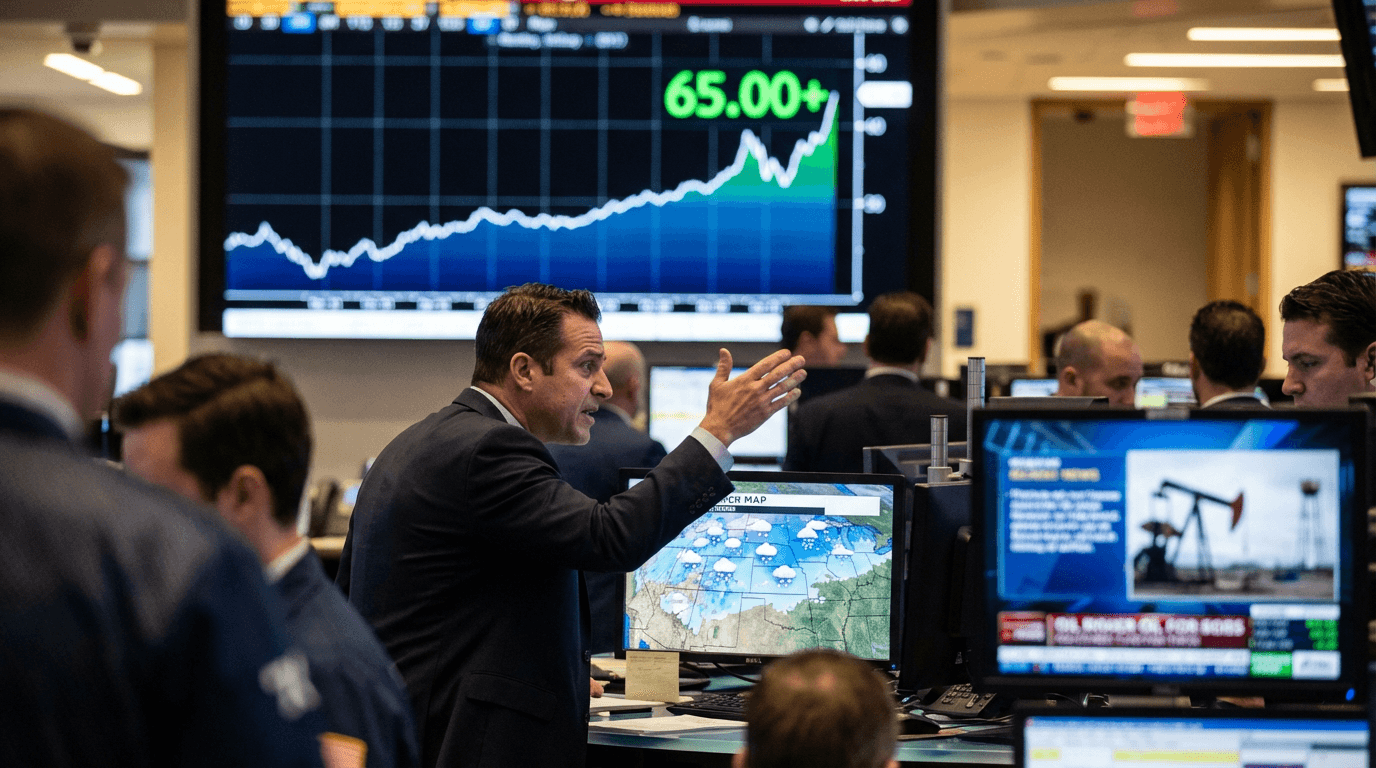
Energy markets have experienced significant volatility in recent weeks, with West Texas Intermediate (WTI) crude oil climbing above the $65 per barrel threshold amid a confluence of supply concerns and geopolitical tensions. This surge marks a meaningful recovery from pandemic-era lows and reflects the complex interplay of physical market disruptions and risk premiums that traders must navigate. For both institutional investors and those trading on simulated finance platforms, understanding the drivers behind this price movement is essential for making informed trading decisions.
The Geopolitical Premium Reshaping Oil Markets
The most immediate catalyst for WTI's climb above $65 has been escalating tensions in the Middle East, particularly involving Iran. Throughout late January and early February 2026, markets have grappled with uncertainty surrounding US-Iran relations, with these dynamics creating a substantial risk premium on crude prices. When geopolitical concerns spike, traders add an additional cushion to crude valuations to account for potential supply disruptions. Iran, as OPEC's fourth-largest producer, commands outsized importance in global oil supply calculations, making any threat to its production capacity a serious concern for energy markets.
However, it's crucial to note that these geopolitical tensions have been somewhat alleviated by ongoing diplomatic discussions. As of early February, negotiations between the US and Iran have reportedly progressed, with both sides indicating serious engagement in talks. This development has actually contributed to downward pressure on crude prices in the immediate term, demonstrating how quickly sentiment can shift in energy markets. Traders must remain vigilant to developing news around these negotiations, as any breakthrough or escalation could trigger sharp price movements in either direction.
Winter Weather And Production Disruptions
Beyond geopolitical factors, seasonal weather patterns have played a crucial supporting role in WTI's recent strength. Winter storms across North America have the potential to disrupt oil production and refinery operations, particularly in the Gulf of Mexico and onshore Texas operations. These physical constraints on supply, even if temporary, provide fundamental support to prices during the winter months. Production interruptions from weather events create immediate supply tightness, forcing buyers to bid higher for available barrels.
The combination of winter weather risks and geopolitical uncertainty has created a "perfect storm" scenario for oil prices. Markets price in both the immediate threat of weather-related production losses and the longer-term uncertainty about Middle East supplies. This dual concern explains why crude managed to sustain levels above $65, despite the typically bearish influence of seasonally mild winter conditions in many regions or potential demand weakness during colder months.
Market Momentum And Technical Factors
Technical analysis reveals that WTI's push above $65 also benefited from momentum trading and market positioning. After establishing a multi-month high earlier in February, traders who had been cautious on crude reassessed their positions, leading to short-covering and fresh buying interest. The move above $65 represented a critical technical level that, once breached, triggered additional buying from trend-following traders and algorithmic systems. This technical strength has been particularly evident in futures markets, where open interest often increases during periods of rising prices and heightened volatility.
It's important for traders on SimFi platforms to recognize that momentum can work in both directions. The same technical factors that propelled crude higher can reverse course if key support levels are breached or if fundamental drivers change. Monitoring technical indicators alongside fundamental analysis provides a more complete picture for decision-making.
Implications For Energy Traders And Portfolio Managers
For those actively trading energy markets or managing diversified portfolios, the WTI price environment presents both opportunities and challenges. The current volatility creates potential for profitable trades but also demands disciplined risk management. Traders should consider how geopolitical developments, seasonal weather patterns, and technical levels interact to create trading opportunities. Position sizing becomes critical when dealing with commodities as volatile as crude oil, particularly when multiple risk factors are in play simultaneously.
Additionally, the month-over-month gains in crude prices have implications for related markets. Energy sector stocks, shipping costs, and inflation expectations all respond to crude price movements. Understanding the nuances of what's driving WTI higher helps traders position across multiple asset classes more effectively.
Looking Ahead
As winter progresses and diplomatic discussions continue, WTI prices will likely remain range-bound between support levels around $60 and resistance near $65-67. Key catalysts to monitor include updates on US-Iran negotiations, weather forecasts affecting production, and the broader strength or weakness of the US dollar, which influences crude competitiveness globally. Whether crude sustains above $65 or retreats will depend on which factors dominate market sentiment in coming weeks.