
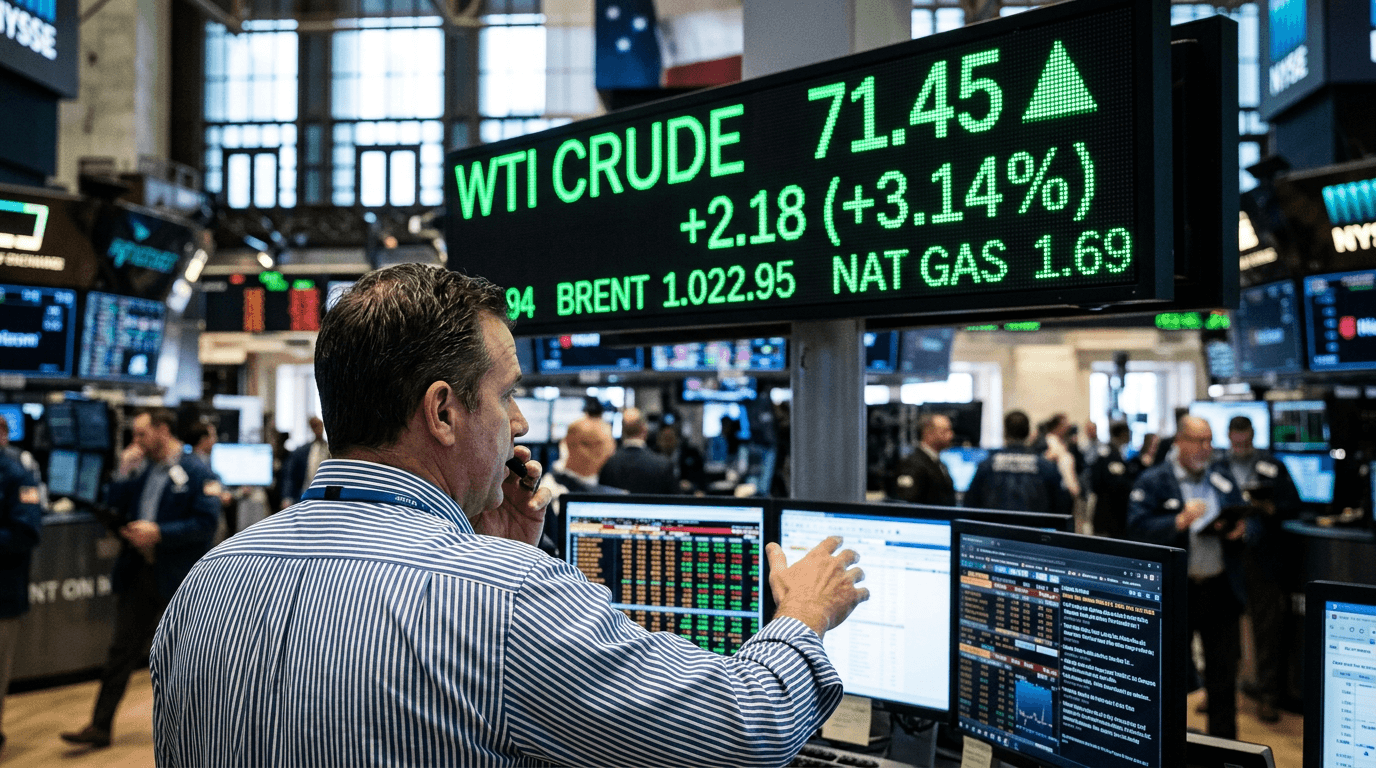
West Texas Intermediate crude oil has surged to its highest levels in months, capturing the attention of energy traders and market analysts worldwide. Recent trading activity shows WTI climbing to approximately $67 per barrel, representing a significant rally that reflects mounting geopolitical tensions and shifting market dynamics in the Middle East.[3][5] This spike marks an important moment for energy markets, as investors reassess their positioning in response to geopolitical developments that have historically proven capable of disrupting global oil supply chains.
The Geopolitical Catalyst
The primary driver behind WTI's recent surge centers on escalating tensions in the Middle East, specifically concerns regarding potential US military action against Iran.[3][5] These geopolitical risks have prompted a significant reassessment of crude oil valuations across the energy complex. Market participants are responding to reports of massive deployments of US forces in the region, which has heightened uncertainty surrounding future oil supply and regional stability.[3][5] In commodity markets, geopolitical risk carries substantial weight, particularly when it threatens production infrastructure or shipping routes critical to global energy supply.
The relationship between geopolitical tension and oil prices follows a predictable pattern: uncertainty about supply typically drives investors toward protective positions, increasing demand for crude contracts and pushing prices higher. This premium reflects what traders call "geopolitical risk premium," essentially a price cushion that markets build in when facing uncertain but potentially disruptive global events. The magnitude of the current rally suggests market participants view these tensions as material enough to warrant meaningful position adjustments.
Technical Momentum And Price Levels
The recent price action has been characterized by sharp rallying momentum, with April WTI futures closing up 1.81 points or 2.78% on recent trading sessions.[3][5] This strength is noteworthy because crude oil posting a 7-month high indicates that current prices are elevated relative to recent trading ranges.[3][5] When commodities establish multi-month highs on expanding volume and geopolitical news flow, it typically signals conviction among market participants about the directional bias.
Beyond the near-term spike, technical analysts are monitoring critical resistance and support levels. The current price action suggests that if momentum continues, WTI could test higher resistance levels established earlier in the trading cycle. Traders should monitor weekly and monthly price charts to identify whether this rally represents a sustainable trend shift or a tactical bounce within a broader consolidation pattern. Historical precedent shows that geopolitical rallies in energy markets can be volatile but sometimes short-lived if the underlying political situation de-escalates unexpectedly.
Supporting Factors Beyond Geopolitics
While geopolitical tension dominates headlines, other market factors are contributing to the rally's sustainability. Currency movements have played a supporting role, as a weaker US dollar makes crude oil more attractive to international buyers holding other currencies.[3][5] When the dollar weakens, oil becomes cheaper for foreign purchasers, potentially supporting demand and prices. This technical factor, combined with geopolitical risk premium, creates multiple tailwinds supporting the current price level.
Additionally, the energy complex has shown broad-based strength, with gasoline futures also posting 8-month highs.[3][5] This breadth of strength across refined products suggests the rally reflects genuine concern about supply dynamics rather than isolated interest in crude alone. When both crude and refined products move higher together, it typically indicates market-wide conviction about energy valuations.
Implications For Market Participants
For traders and investors monitoring energy markets, the current environment presents both opportunities and risks. Long positions benefit from the current rally, but elevated prices near multi-month highs often attract profit-taking and increased volatility. Risk management becomes particularly important in geopolitically-driven rallies, as sentiment can shift rapidly if political developments change direction unexpectedly.
Short-term traders should focus on technical support and resistance levels, volume patterns, and economic calendar events that might shift risk sentiment. Longer-term investors might view elevated oil prices as a signal to monitor production trends and inventory levels, as these fundamentals ultimately determine whether high prices persist or compress back toward longer-term averages.
The Path Forward
WTI crude oil's climb to 6-month and near 7-month highs reflects legitimate geopolitical concerns that have captured market attention.[3][5] The combination of Middle East tensions, massive military deployments, currency headwinds favoring oil, and technical momentum creates an environment where crude prices deserve investor attention. However, geopolitically-driven rallies historically prove volatile, making prudent risk management essential for market participants.
As markets digest ongoing developments, traders should remain alert to headlines from the region while simultaneously monitoring technical price levels and broader market sentiment. The current environment exemplifies why energy remains a critical asset class worthy of active monitoring and thoughtful position management.