
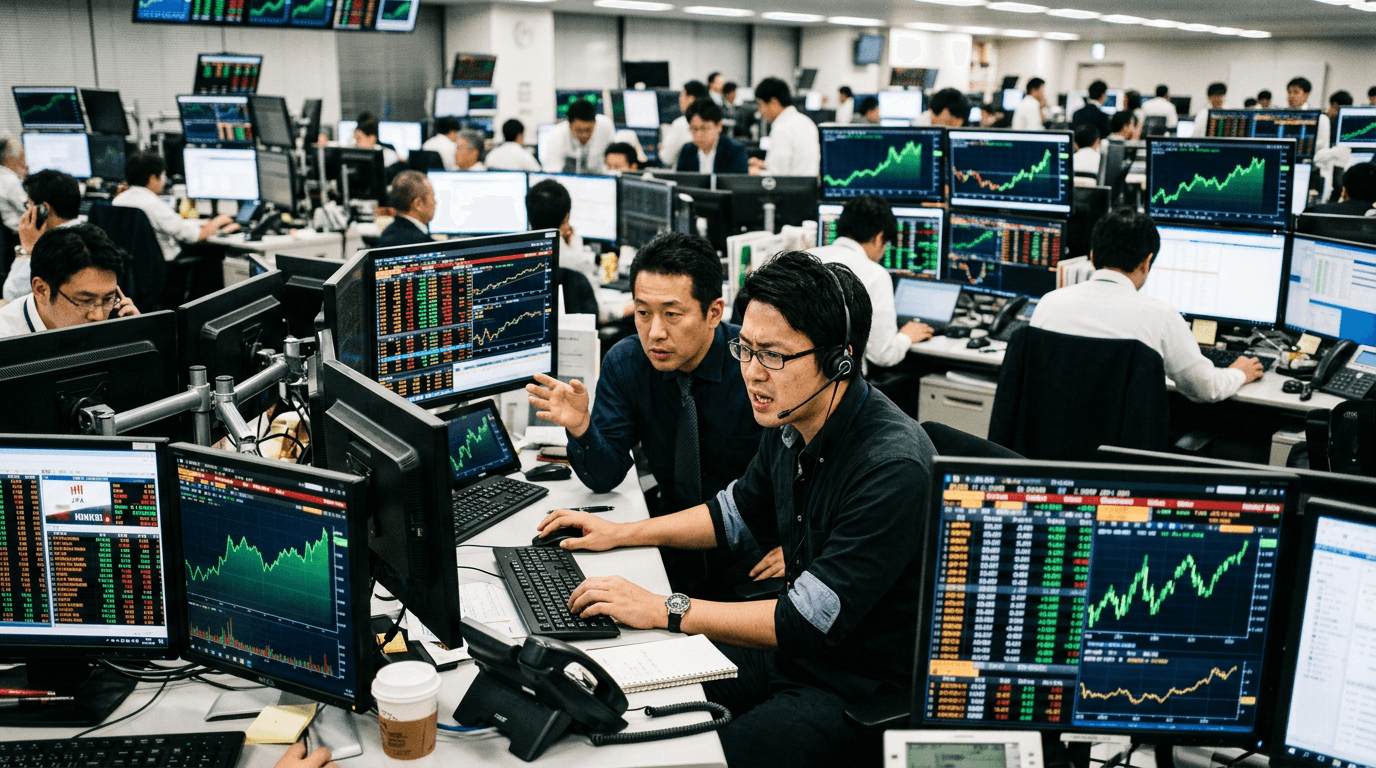
Asia-Pacific markets delivered a powerful reminder of how quickly sentiment can turn when a dominant theme like artificial intelligence regains momentum. After a period of consolidation, AI-related semiconductor stocks staged a sharp rebound, pulling major regional indices higher and reawakening risk appetite across equity and derivatives markets. At the same time, traditionally defensive assets such as the yen and Japanese government bonds were in demand, reflecting a more nuanced story beneath the headline rally.
Ai Chip Rebound Ignites Asia-pacific Rally
The core driver of the latest upswing was a renewed bid for AI chip makers in Japan and Korea, where semiconductor giants anchor their domestic equity markets. As investors rotated back into the AI theme, liquidity flooded into hardware suppliers, memory makers, and foundry names that sit at the heart of global data-center and GPU supply chains. This created a rising tide that lifted broader indices, with Japan’s Nikkei and Korea’s Kospi leading the move.
For traders, the AI chip rebound underscores how concentrated market leadership has become. A handful of semiconductor and technology names can now significantly influence regional benchmarks, index futures, and sector ETFs. When sentiment on AI flips from cautious to optimistic, correlation across growth stocks tends to rise, and systematic strategies keyed to momentum and volatility often increase their participation. In a SimFi environment, this is an ideal backdrop to practice trading around thematic rotations.
Japan: Nikkei, Yen And Jgbs Move Together
Japan’s role in this session was particularly interesting because equity strength coincided with a firmer yen and gains in Japanese government bonds. Normally, a stronger currency can be a headwind for export-heavy indices like the Nikkei, as it compresses overseas earnings in yen terms. Yet the AI rally and expectations for structural pension reforms appeared to outweigh those concerns, allowing equities to rise even as the yen appreciated.
The bid in JGBs suggests investors are positioning for a future in which domestic pension flows become more active and potentially more flexible. Talk of reforms can trigger anticipatory rebalancing by both local and foreign participants, who may see long-term demand for Japanese assets as supportive for bond markets and the currency. For traders, this creates a classic cross-asset puzzle: equity indices up, safe-haven currency firm, and bond yields stabilizing or drifting lower.
In practice, the combination of a stronger Nikkei and firmer yen sets up interesting relative value trades. SimFi participants can explore strategies such as long Nikkei index futures hedged with long yen exposure, testing how different hedge ratios perform under scenarios where AI optimism or policy expectations change. It is also a useful case study in why simple “risk-on equals weak yen” assumptions can fail during regime shifts.
Korea: Semiconductor Strength And Currency Swings
South Korea’s Kospi joined Japan at the front of the rally, again driven by AI-related semiconductor stocks. The market has been a global focal point for AI hardware and memory production, and its benchmark index is highly sensitive to earnings expectations and capex cycles in the broader tech ecosystem. When global investors regain confidence in AI demand, Korean chip makers often become early beneficiaries, amplifying moves in the Kospi.
However, Korea’s currency tends to be more volatile around policy signals and comments from officials. The rally in equities occurred against a backdrop of swings in the won, reflecting ongoing efforts by authorities to manage FX stability while preserving competitive export conditions. This mix of strong equity performance and choppy FX creates fertile ground for active trading in Kospi index futures and USD/KRW pairs.
For simulated traders, Korea offers a textbook environment to study how equity and FX markets interact in a small but globally important open economy. Scenario testing around earnings revisions, guidance from currency officials, and global risk events can help build intuition about when equity-led optimism overwhelms FX concerns, and when currency stress begins to bleed back into stock performance.
Cross-asset Flows And Derivatives Activity
One of the striking features of the session was the pickup in trading activity across equity index futures and FX pairs linked to Japan and Korea. When a clear narrative emerges—AI chip recovery, pension reform hopes, contained geopolitical risk—cross-asset flows tend to cluster around the markets most exposed to that story. Macro funds, quant models, and retail traders alike gravitate toward liquid instruments such as Nikkei and Kospi futures, USD/JPY, and USD/KRW.
This clustering of flow can reinforce price moves as liquidity deepens and spreads tighten in the most actively traded contracts. It also increases the importance of understanding basis, roll dynamics, and implied volatility in index futures, especially for traders using leverage or intraday strategies. In a SimFi framework, players can replicate these conditions by designing simulated sessions that emphasize cross-asset relationships and liquidity-driven feedback loops.
Importantly, the coexistence of risk-on equities with a bid in defensive assets highlights that market moves are rarely one-dimensional. Some participants are chasing upside in AI and growth, while others position defensively through yen and JGBs, anticipating potential policy surprises or valuations mean reversion. Recognizing these overlapping narratives is essential for avoiding overly simplistic trade ideas.
Practical Takeaways For Traders And Simfi Participants
There are several actionable lessons traders can draw from this kind of session:
First, identify the dominant theme. The AI chip rebound was the clear catalyst, and recognizing its centrality early would have helped focus attention on semiconductor-heavy indices and related futures contracts. In simulated trading, practice scanning for which sectors or stories are driving index-level moves.
Second, respect cross-asset signals. A firmer yen and stronger JGBs alongside rising Japanese equities send a message that equity optimism is tempered by demand for safety and potential structural change. Instead of ignoring the conflict, traders can build hedged strategies or relative value positions that explicitly incorporate these signals.
Third, monitor policy expectations. Hopes for pension reforms in Japan and currency management in Korea show how anticipation of policy can be as influential as enacted decisions. SimFi environments are ideal for testing “what if” scenarios, such as more aggressive reform timelines or shifts in FX intervention patterns, and observing how virtual portfolios respond.
Fourth, use simulations to refine risk management. Rapid moves driven by a single theme can reverse just as fast if sentiment changes, earnings disappoint, or regulatory headlines emerge. Practicing position sizing, stop placement, and diversification under simulated stress helps prepare traders for real-world swings in AI-sensitive markets.
Finally, remember that regional moves are part of a global tapestry. Asia-Pacific rallies in AI chips do not occur in isolation; they interact with US tech valuations, European demand, and broader macro conditions. Treat each session as a datapoint in the evolving story of how AI reshapes capital flows, sector leadership, and volatility regimes.