
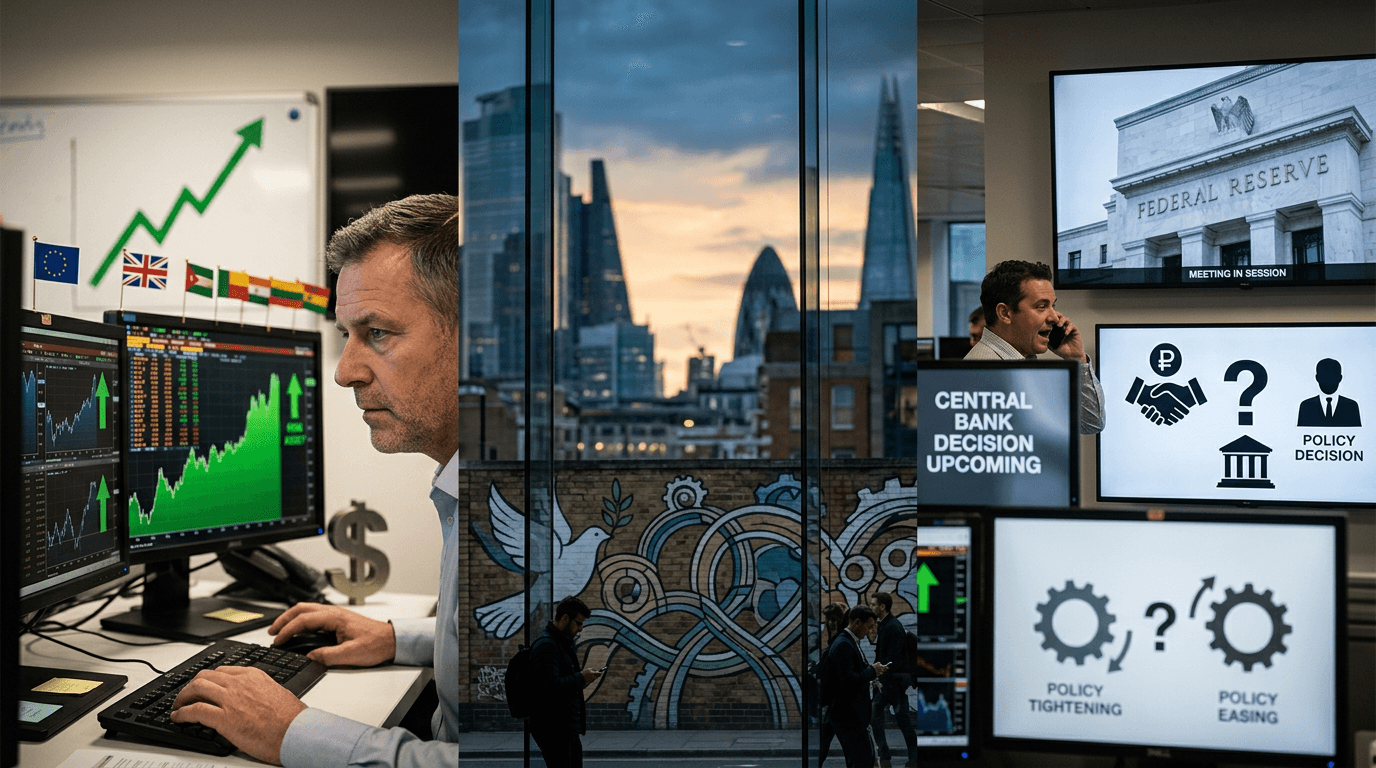
The U.S. dollar is softening as hopes for progress in U.S.–Iran peace talks ease geopolitical fears and encourage investors back into riskier assets.[4][5] With the immediate tail risk of further escalation perceived as lower, safe-haven demand for the greenback is fading, even as traders brace for a dense calendar of central-bank decisions and key U.S. data that could quickly reshape the outlook.[1][3] The result is a more cautious, two-way market in the dollar: weaker for now, but highly sensitive to incoming headlines and numbers.
Market Overview: Dollar Under Pressure As Risk Appetite Returns
Recent price action shows a clear pattern: as headlines point to renewed diplomatic channels between the U.S. and Iran, the dollar has retreated from recent highs while equities, oil-sensitive assets, and higher-beta currencies have found support.[4][5][6] Reports of progress toward a possible deal, or at least a de‑escalation, have led investors to pare back defensive positioning accumulated during the height of geopolitical tension.[4][6]
This shift is visible not just in FX, but across global markets. Equities have rallied as the perceived probability of a severe disruption to Middle East oil supply falls, while crude prices have given back some of their risk premium.[5][6] At the same time, the broader dollar indices have eased after earlier gains tied to flight-to-safety flows during the worst of the conflict phase.[3][5] For traders, the message is straightforward: geopolitics can move currencies quickly, but those moves can reverse just as fast when the narrative changes.
Why Iran Peace Hopes Matter For Currencies
To understand the dollar’s current weakness, it helps to revisit two core concepts: safe-haven demand and risk appetite. In periods of heightened geopolitical risk—especially in energy-sensitive regions like the Middle East—investors often rush into perceived safe assets such as the U.S. dollar and Treasuries.[4][5] When the risk backdrop improves, those flows typically run in reverse as capital rotates into higher-yielding or growth-sensitive assets.[4][6]
Iran-related headlines matter because they directly affect both perceived global security and the outlook for oil prices. A credible path toward a U.S.–Iran deal reduces the odds of supply disruptions, which in turn lowers the inflation and growth risks that central banks must manage.[5][6] Lower geopolitical risk also compresses the “risk premium” embedded in assets like crude and defense-related stocks, and reduces the urgency for investors to hold dollars as a hedge.
We are seeing exactly that play out: as optimism around diplomatic progress grows, higher-beta currencies—such as those of commodity exporters and some emerging markets—have strengthened against the dollar, supported by a rebound in risk appetite and, in some cases, better local data.[4][5] Meanwhile, traditional safe havens such as the dollar have given back part of their earlier gains, even if they remain supported by relatively high U.S. yields compared with many peers.[3][5]
Central Banks, Data, And The Limits Of Dollar Weakness
Geopolitics is only half the story. The current move is unfolding just as markets prepare for a cluster of major catalysts: forthcoming central-bank meetings and a run of important U.S. releases on inflation, employment, and activity.[1][3] This combination introduces a crucial nuance: while easing Iran risk weighs on the dollar, rate expectations and data surprises can either amplify or cap that weakness.
If upcoming U.S. data come in soft—especially on inflation or jobs—markets may price in a more dovish Federal Reserve path, narrowing the dollar’s yield advantage and reinforcing the current downward pressure.[1] Conversely, stronger-than-expected numbers could push Treasury yields higher, offsetting some of the risk-on dollar selling and potentially triggering a short squeeze in crowded anti-dollar positions.[3]
Other central banks add another layer. If institutions like the European Central Bank, Bank of England, or major emerging-market central banks signal they are in no rush to cut rates, relative yield dynamics could further favor their currencies over the dollar. If they sound more dovish than the Fed, however, the dollar’s downside may prove limited. In other words, peace optimism may define the near-term tone, but rate differentials still anchor medium-term FX trends.
Winners, Losers, And Positioning Across Fx
Not all currencies respond the same way when geopolitical clouds lift. Historically and in the current environment, several themes tend to stand out:
Higher-beta and commodity currencies often benefit most. As risk appetite improves, investors are more willing to hold currencies like the Australian dollar or select Asian and emerging-market FX, especially when domestic data or central-bank rhetoric are supportive.[4][5] Recent upside surprises in growth or employment in some of these economies have reinforced that move by encouraging markets to price a more resilient outlook.[5]
Equity-linked and carry-trade currencies also see inflows. When volatility falls and risk sentiment improves, strategies that borrow in low-yield currencies to invest in higher-yielders become more attractive. That can channel additional flows away from the dollar and into currencies offering higher real yields, provided geopolitical risks continue to recede.[4][6]
By contrast, the dollar and other safe havens can underperform once the initial shock fades and fears of escalation subside.[3][5][6] However, these moves can be uneven and temporary: a single negative headline, disappointing data print, or hawkish surprise from the Fed can quickly restore demand for the greenback. For traders, this environment favors tactical, nimble positioning over “set-and-forget” trades.
Practical Takeaways For Traders
For both live and simulated traders, the current backdrop offers a clear set of lessons:
1) Separate narrative from numbers. Iran peace headlines are driving the short-term narrative, but central-bank decisions and U.S. data will likely determine whether the dollar’s weakness becomes a sustained trend or just a brief correction.[1][3]
2) Focus on the interaction between geopolitics and yields. When geopolitical risk falls but U.S. yields remain relatively high, the dollar may drift lower rather than collapse. That argues for scaling positions and respecting key technical levels rather than chasing every headline move.
3) Watch higher-beta FX and cross rates. Currencies with strong linkages to risk sentiment and commodities can offer more pronounced opportunities than simply trading the dollar index, especially when local data support the global risk-on mood.[4][5][6]
4) Use simulated environments to stress-test scenarios. In a SimFi setting, traders can rehearse how portfolios might behave under alternative paths: a successful Iran deal and deeper dollar decline, a breakdown in talks and renewed flight to safety, or a scenario where strong U.S. data abruptly reassert dollar strength. This kind of scenario testing builds discipline before real capital is at stake.
Ultimately, the dollar’s recent weakness underscores how quickly FX markets can pivot when geopolitical risk perceptions change. Iran peace hopes have improved risk sentiment, weakening the greenback and breathing life into higher-beta currencies, but the next chapter will be written by central banks and data. Traders who can connect these dots—geopolitics, yields, sentiment, and macro releases—will be better positioned to navigate the next phase of volatility.