
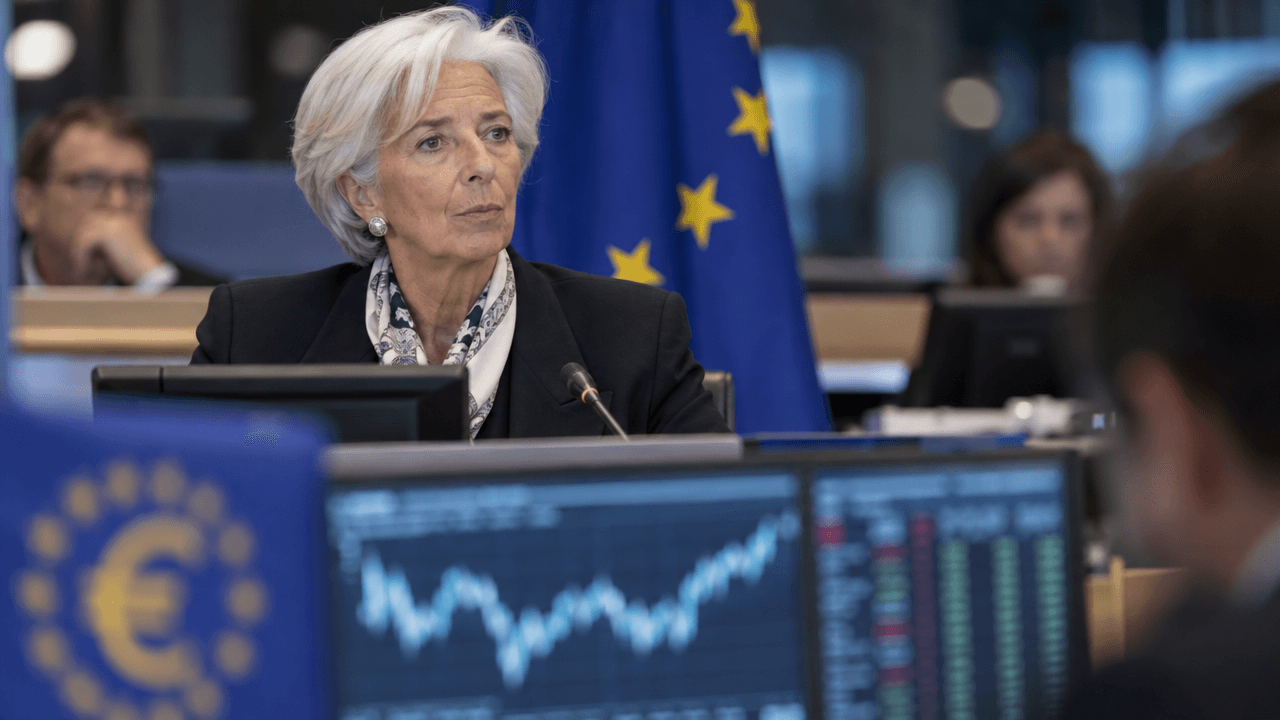
When a central bank speaks, markets listen, and that is especially true for the European Central Bank and the euro. Over the coming sessions, scheduled ECB communication – including President Christine Lagarde’s appearance before the European Parliament and remarks from other Executive Board members – has the potential to reshape expectations for euro-area interest rates and ripple through EUR/USD and European bond futures[10][13][15]. For traders, understanding how this kind of communication works is just as important as reading the latest data release.
Why Ecb Communication Matters For The Euro
Central banks move markets in two main ways: through actual policy decisions and through the guidance they provide about the future. ECB speeches, hearings and interviews fall into that second category, offering clues about how policymakers see inflation, growth and financial conditions evolving. When investors revise their expectations for the path of rates, the euro and bond yields can adjust quickly, even if no immediate policy change is announced.
Research on ECB exchange rate communication shows that the central bank tends to talk about the euro’s level when it diverges from what policymakers consider its equilibrium value[12]. That means explicit references to the exchange rate can signal discomfort with either excessive strength or weakness, and prompt the market to reassess how the ECB might respond. At the same time, the same research finds that the immediate impact of such communication on the euro is generally limited and fades relatively quickly, particularly when interest rates are near their effective lower bound[12]. In practice, the market reacts most strongly when communication is perceived as shifting the broader policy stance rather than just commenting on the currency.
Recent statements from ECB officials underscore that the euro’s exchange rate is monitored as a key factor for inflation, with internal models suggesting that the full impact of currency moves can take years to work through the economy[15]. Officials have also highlighted that policy remains firmly data-dependent and is not mechanically tied to decisions by the US Federal Reserve, reinforcing the idea that euro-area conditions drive ECB choices[15]. Together, these messages frame how traders interpret upcoming remarks: as potential updates to the ECB’s reaction function, rather than isolated sound bites.
WHAT TRADERS ARE WATCHING IN LAGARDE’S HEARING
Christine Lagarde is scheduled to speak before the European Parliament’s Committee on Economic and Monetary Affairs, answering questions from lawmakers, with the hearing starting at 16:00 CET on 28 September[10][13]. Although this is not a policy-setting meeting, it is an opportunity for the ECB President to explain the current monetary stance, defend recent decisions and signal how the Governing Council is thinking about the next stages of the cycle. Markets will parse every phrase for hints about whether rates are likely to stay on hold, rise further or begin to decline.
Questions from members of Parliament tend to probe inflation dynamics, growth risks, financial stability, and topics such as the digital euro or climate-related policies[2][5][6][14]. While some of these areas are more structural than cyclical, Lagarde’s responses can still influence perceptions of how cautious or confident the ECB is about the outlook. A stronger emphasis on upside inflation risks or the need to “stay the course” could be read as hawkish, supporting the euro and pushing yields higher. Conversely, highlighting downside growth risks or the need to avoid overtightening could be interpreted as dovish, weighing on EUR/USD and supporting bond prices.
Parallel remarks from other Executive Board members, including those responsible for banking supervision and financial stability, complement this picture by clarifying how the ECB views the transmission of policy through the banking system[15]. If officials sound comfortable with the current level of rates and stress that inflation is converging sustainably toward the 2% target, markets may reinforce expectations that the peak in the cycle has already been reached[15]. If they emphasize uncertainty or keep the door open to further moves, volatility around EUR crosses and European bond futures can rise sharply.
HOW COMMUNICATION TRANSLATES INTO EUR/USD AND BOND FUTURES
The transmission channel from an ECB speech to EUR/USD and European bond futures runs primarily through rate expectations. If traders conclude that the ECB is likely to tighten more than previously assumed, short- and medium-dated yields in the euro area usually move higher, and the euro tends to appreciate against currencies like the US dollar. If expectations shift toward earlier or deeper easing, the opposite reaction is typical, with lower yields and a softer euro.
However, the impact of pure “exchange rate talk” is more nuanced. The ECB’s own research indicates that while mentioning the exchange rate can draw attention and trigger short-term moves, these effects often dissipate once investors re-focus on fundamental drivers such as relative interest rates, growth differentials and risk sentiment[12]. For traders, this implies that the most durable signals in Lagarde’s hearing and related communication will likely be about the outlook for inflation and the policy path, rather than specific comments on EUR/USD.
European bond futures – from Bunds to BTPs – are particularly sensitive to any change in the perceived timing and pace of future rate adjustments. A subtly more hawkish tone can steepen yield curves and pressure peripheral spreads, while a dovish tilt may flatten curves and support higher-beta sovereigns. Because futures embed expectations over a horizon of months and years, even small shifts in language can lead to outsized price moves if they challenge consensus positioning.
Practical Takeaways For Traders And Simfi Participants
For active traders and those using simulated finance platforms, the upcoming ECB communication is a valuable test case in central bank watching. There are several practical steps to consider:
1) Prepare scenarios. Before the event, map out hawkish, neutral and dovish communication scenarios, and outline how EUR/USD, EUR crosses and key bond futures might respond in each. This helps avoid emotional decision-making in real time.
2) Focus on core themes. Pay special attention to how Lagarde and other officials describe inflation’s trajectory, wage developments, and growth risks, as well as any discussion of the appropriate “restrictiveness” of current rates[2][5][6][14][15]. These elements directly inform the market’s rate path assumptions.
3) Distinguish signal from noise. Not every phrase is a game-changer. Single comments about the exchange rate or short-term data surprises should be weighed against the broader narrative and past communication, including prior hearings and speeches[2][5][6][14]. Consistency or meaningful deviation from earlier messages is what really matters.
4) Use simulated environments to rehearse. On a SimFi platform, traders can practice responding to different communication outcomes without capital at risk. For example, they can simulate a hawkish surprise in Lagarde’s tone and test how quickly to adjust EUR/USD and Bund futures exposure, or explore the risk of overreacting to statements that ultimately prove transitory.
Conclusion: Listen Closely, React Carefully
ECB communication may not always deliver dramatic surprises, but it frequently nudges market expectations in ways that accumulate over time. With Lagarde’s scheduled appearance before the European Parliament and complementary remarks from other officials, traders have a fresh opportunity to refine their understanding of the ECB’s reaction function and its implications for the euro and European rates[10][13][15]. The most effective approach is to listen carefully, anchor decisions in the medium-term policy narrative rather than isolated sound bites, and use both live and simulated trading to turn central bank language into actionable strategy. In an environment where data and guidance are evolving together, those who can interpret the message – and distinguish it from the noise – will be best positioned to navigate EUR volatility.